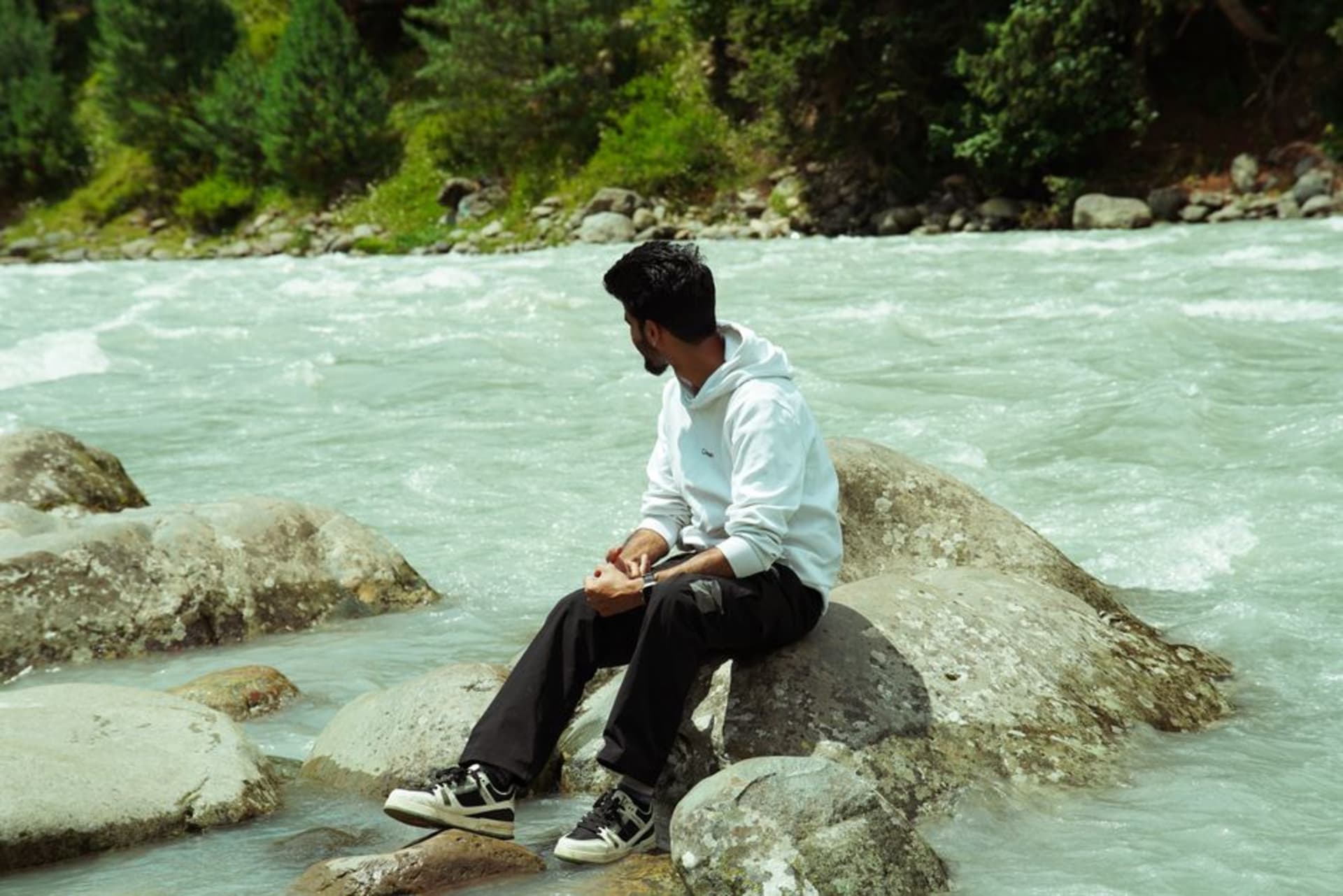
A pine-scented valley town on the Lidder river where Kashmir's meadows open up green and the air finally cools after the plains.
I arrived in Pahalgam off the back of ten sweating days in Delhi and Agra, and the change hit me before I even got out of the car. The window was down, and the air coming through it smelled like a different country — pine resin, cold river water, woodsmoke from a shepherd’s fire somewhere up the slope. The Lidder river runs straight through the middle of town, fast and glacier-green, and I stood on the footbridge near the taxi stand for a good ten minutes just listening to it, doing nothing else, because after the honking and the heat of the plains the silence felt like it needed to be earned.
Pahalgam’s whole identity is built around being a threshold. Every July and August it becomes the base camp for the Amarnath Yatra, the Hindu pilgrimage to the ice lingam cave shrine high in the mountains, and the town fills with pilgrims in saffron, army checkpoints, and the particular hum of a place organizing itself around faith and logistics at the same time. I happened to pass through just before the Yatra season opened, and the preparations alone — tents going up in fields, registration booths, langar kitchens being tested — gave the town an energy that had nothing to do with tourism.
Betaab Valley and the Bollywood ghost
A short drive out of town is Betaab Valley, named after the 1983 film shot there, and it is the kind of meadow that looks digitally enhanced until you are standing in it. Steep pine slopes fold down to a stream, horses graze loose, and the light comes through in shafts that would embarrass a cinematographer for being too on the nose. Half of Bollywood’s mountain romance sequences from the 70s and 80s were shot in and around these valleys, and locals will point out specific rocks and bends in the river with the casual authority of people who watched the crews work.
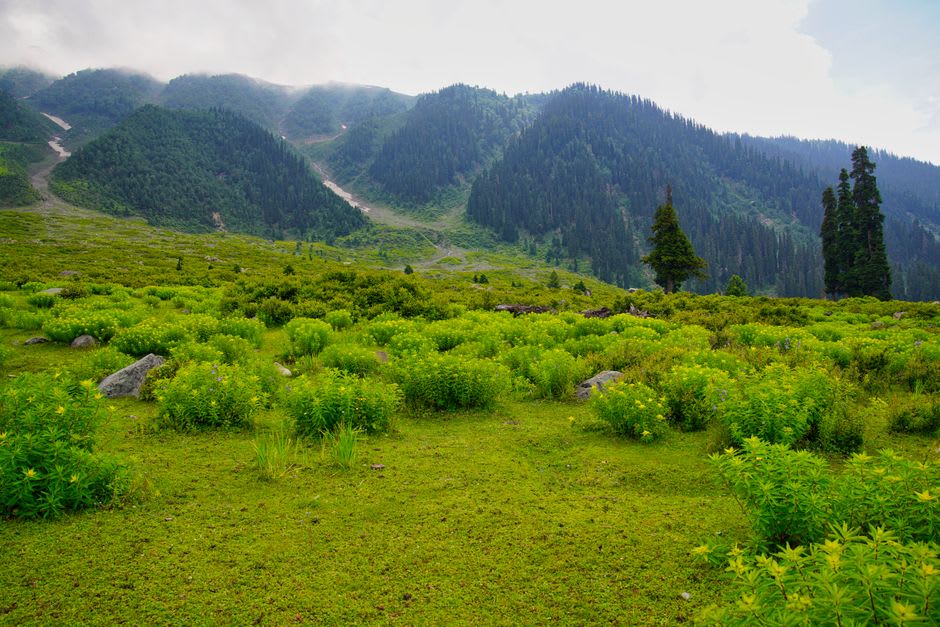
Aru Valley, further along a rougher road, is quieter and less filmed — a scattering of shepherd huts, a river crossing on a rope bridge, and views up toward the high passes that lead eventually to Kashmir’s more remote valleys. I hired a pony for an hour, mostly out of curiosity, and the boy leading it, maybe sixteen, talked the entire time about wanting to study hotel management in Srinagar and get out of the seasonal tourism cycle his father worked. It was a small, specific ambition delivered against one of the most photographed backdrops in the country, and it stuck with me longer than the view did.
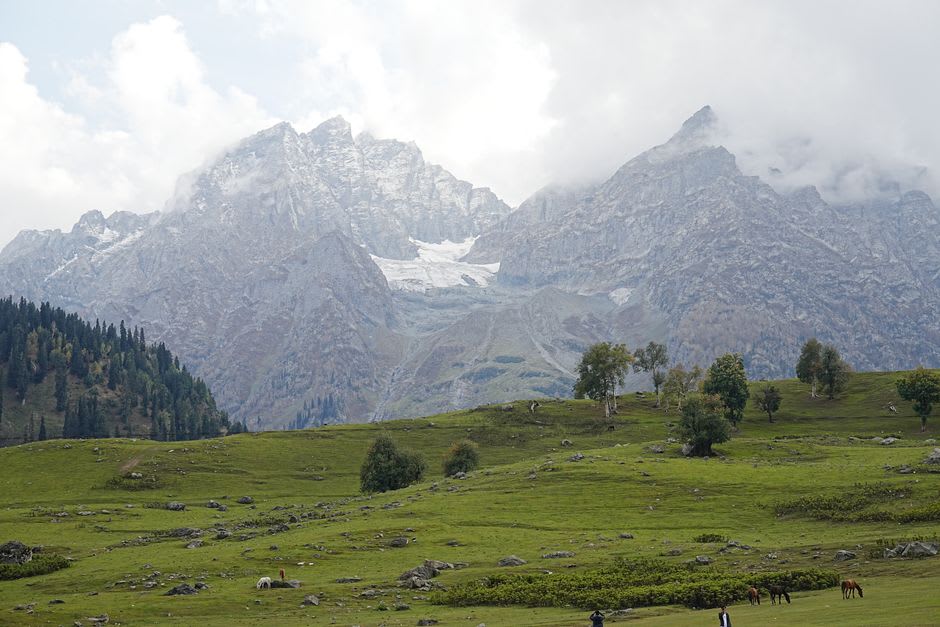
In the evenings the town cooled fast, and I ate rogan josh at a small dhaba by the river, the meat dark red from Kashmiri chili rather than heat, served with rice that had absorbed all that color. Kashmir cooks with a restraint that surprised me after Delhi’s assault of spice — here the flavors are deep rather than loud, built on saffron, fennel, and dried ginger rather than raw chili.
When to go: April to June and September to October are the sweet spots — green meadows, mild days, cold nights. July and August bring the Amarnath Yatra crowds and higher prices. Winter closes most trekking routes but turns Pahalgam into a snow-quiet retreat if you don’t mind the cold.