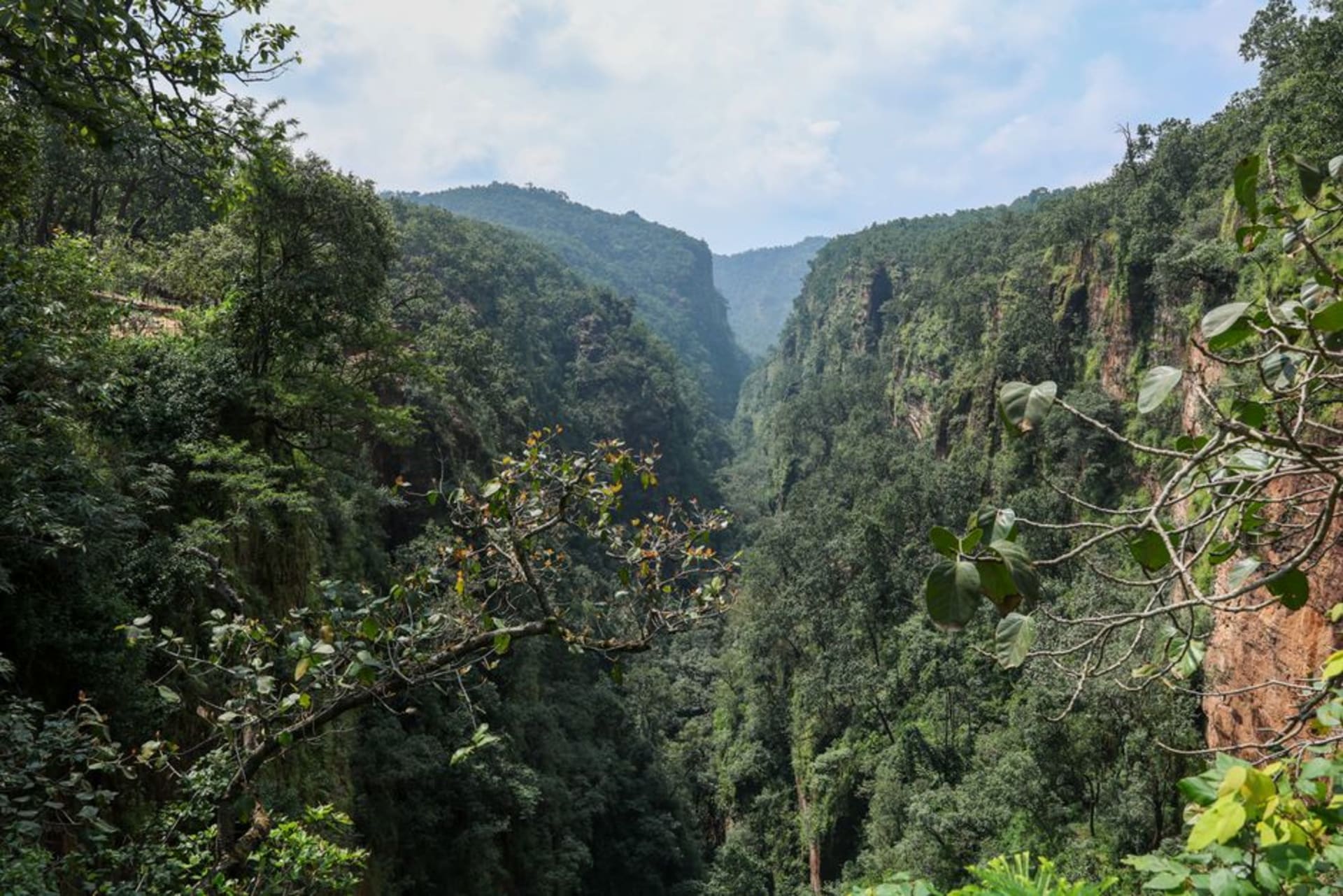
Madhya Pradesh's only hill station, a cantonment town in the Satpura hills with waterfalls, painted caves, and a colonial hush that never quite left.
After two weeks of tiger reserves and dusty highway towns across Madhya Pradesh, arriving in Pachmarhi felt like someone had turned the temperature dial down and the humidity dial off in the same instant. The road up climbs through the Satpura range in a long series of switchbacks, sal forest thickening as you gain altitude, and by the time my taxi pulled into the town itself the air had a coolness I hadn’t felt anywhere else in the state. Locals call it the “Queen of Satpura,” and Madhya Pradesh’s tourism board leans on the title hard, but standing in the cantonment’s old bazaar in the evening, watching the mist roll into the valley below while wearing a jacket for the first time in a month, I understood why nobody’s bothered arguing with it.
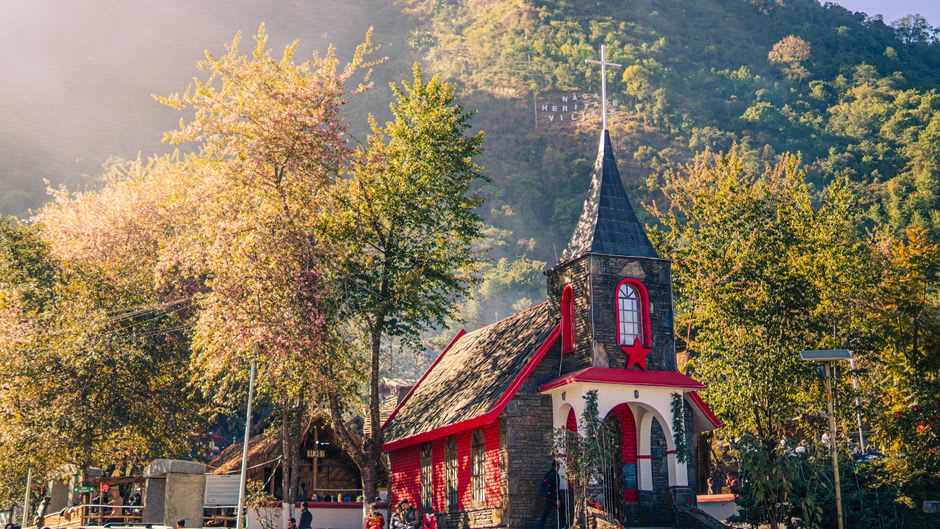
Pachmarhi is Madhya Pradesh’s only hill station, discovered by the British in 1857 — Captain James Forsyth is credited with finding it while surveying the Satpuras — and turned quickly into a summer retreat and cantonment for colonial officials trying to escape the plains’ heat. That history is still legible everywhere: churches with pitched roofs that look airlifted from an English parish, a golf course laid out by bored officers in the 1890s, bungalows with wraparound verandas built for people who wanted the hills without giving up their architecture. It remains an active military cantonment today, which gives parts of the town an odd, orderly quiet — clipped hedges, whitewashed curbstones, a sense of a place still keeping regimental time.
Caves, waterfalls, and a much older history
The colonial layer, though, sits on top of something far older. The Pandava Caves, a cluster of rock-cut shelters near the town center, are traditionally associated with the five Pandava brothers from the Mahabharata, said to have sheltered here during their exile — though archaeologists date the caves themselves to a much later Buddhist and Hindu monastic use, well before the British ever set foot in the hills. Deeper in the surrounding forest are rock shelters with ochre paintings estimated at over ten thousand years old, among the oldest documented human art in central India, depicting hunting scenes and animal figures in faded red pigment that the guide had to point out twice before my eyes adjusted to see them against the rock.
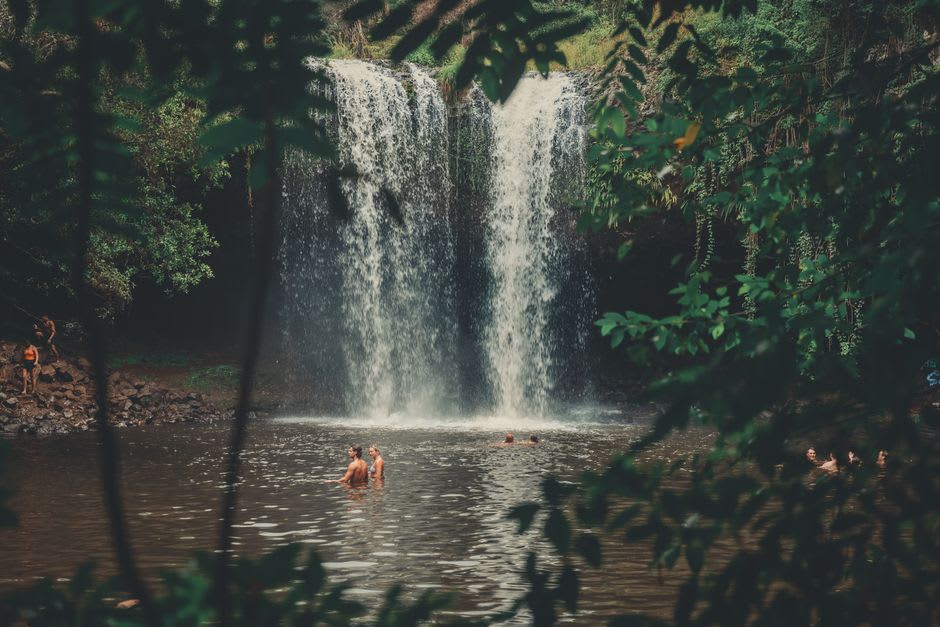
Bee Falls, a short walk from the main bazaar, was where I spent my last afternoon — a broad curtain of water dropping into a pool popular enough with local families that I had to wait my turn to get properly under the spray, cold enough to make me gasp the way only hill-country water manages, even in the heat of central India’s plains just a few hundred meters below.
When to go: March to June for warm days and genuinely cool nights, a relief from the brutal heat of the Madhya Pradesh plains below; the monsoon (July to September) turns the waterfalls spectacular but makes many of the forest trails treacherous.