
Orchha
"Orchha is what happens when a dynasty stops ruling and a river keeps flowing anyway."
A drowsy Bundela riverside town where sandstone cenotaphs line the Betwa and sunset turns the whole skyline into silhouette.
Orchha barely registers on most India itineraries, wedged as it is between the bigger names of Khajuraho and Gwalior, and that omission is exactly what makes it worth the detour. I got off the local train at a station that looked more like a village halt than a gateway to a former capital, and within ten minutes of walking I was standing under the enormous, half-abandoned Jahangir Mahal with almost no one else around — a rare thing anywhere in India, let alone at a site this architecturally serious.
The Bundela Rajputs founded Orchha in the 16th century on a rocky island in the Betwa river, and the town’s layout still reflects a dynasty planning for permanence — palaces, temples, and a fortified perimeter all built from the same warm sandstone that has weathered to a deep honey color. Jahangir Mahal itself was built by Raja Bir Singh Deo to host the Mughal emperor Jahangir for a single planned visit that, according to most accounts, never actually happened — an entire palace constructed for a guest who may never have stayed the night.
Cenotaphs at the water’s edge
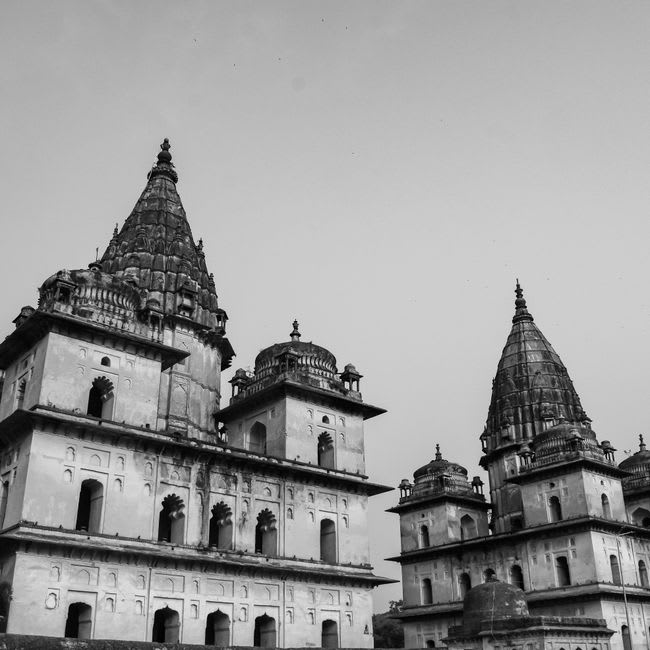
The real spectacle of Orchha is downstream, where a row of chhatris — the cenotaphs of Bundela kings — lines the bank of the Betwa river, each one a domed sandstone memorial marking a ruler’s cremation site. I crossed the old stone bridge at dusk and watched the towers turn from honey-gold to charcoal silhouette as the sun dropped behind them, egrets wheeling overhead and settling into the domes for the night, the river running low and slow beneath the arches. It is one of the most purely photogenic sunsets I’ve found in India, and almost nobody outside serious India travelers has heard of it.
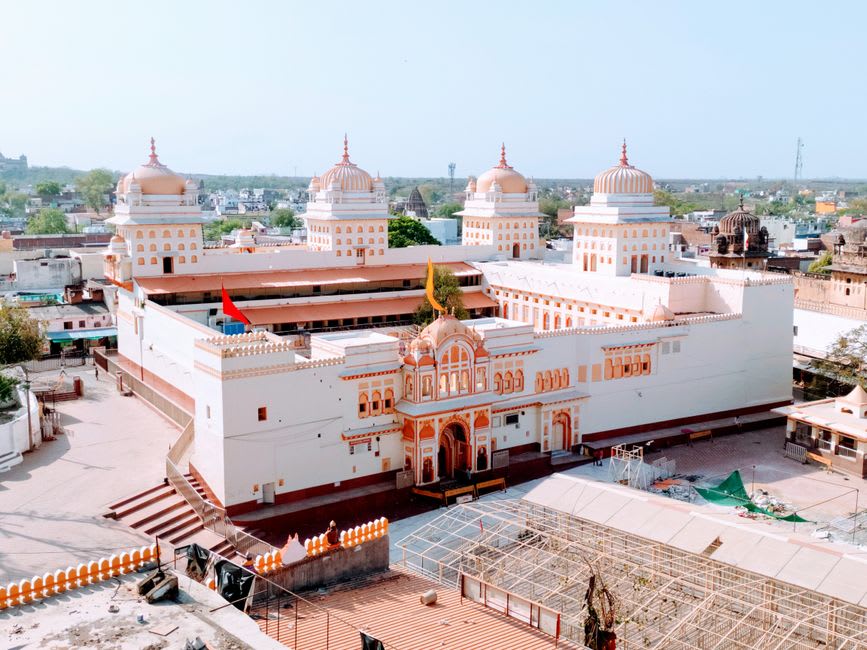
Ram Raja Temple, in the middle of town, has an odd distinction: it is the only place in India where Ram is worshipped as a king rather than a god, complete with a police-style guard of honor and rifle salute during the evening aarti, a tradition tied to a legend about the idol refusing to be moved from what was originally meant to be a temporary residence in a palace. I watched the ceremony from the crowded courtyard, guards in ceremonial dress presenting arms to a deity as if he were visiting royalty, which, according to the story, is precisely how the town still treats him.
When to go: October to March for cool evenings that make the riverside walk at sunset genuinely comfortable. It works well as an overnight stop between Khajuraho and Gwalior or Jhansi.