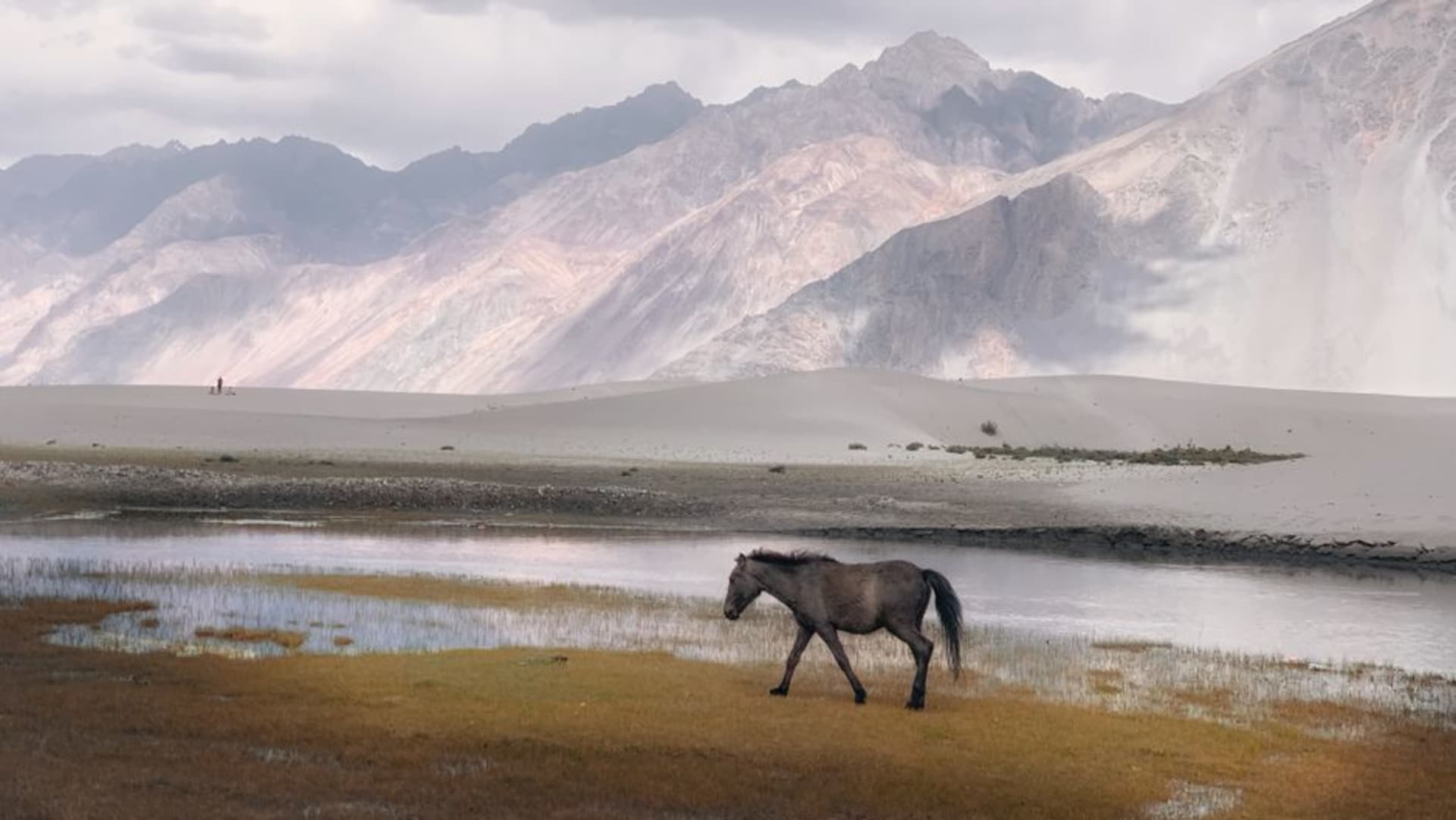
Nubra Valley
"The place where I rode a camel through sand dunes with a glacier staring down at us."
A cold desert beyond one of the world's highest motorable passes, where double-humped Bactrian camels cross sand dunes under snow-capped peaks.
You earn Nubra Valley before you see it. The road out of Leh climbs to Khardung La, signed at over 5,300 metres and long advertised, questionably, as the highest motorable pass in the world — true or not, the altitude is real enough that I got out of the jeep, took four steps toward the prayer flags snapping in the wind, and had to stop and breathe like I’d sprinted a hundred metres. My driver handed me a cup of tea from a roadside stall run out of a shipping container and told me not to linger. Fifteen minutes later we were descending, the road switchbacking down into a valley so different from Leh’s brown scree that I assumed we’d crossed into another country. Nubra is green in patches, fed by the Shyok and Nubra rivers, willow and poplar trees lining the villages, a genuine cold desert oasis wedged between two of the highest mountain ranges on the planet.
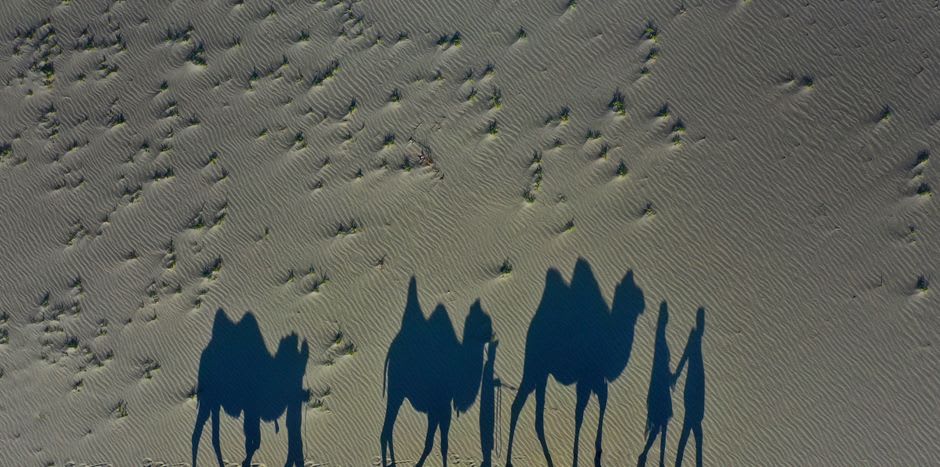
Camels among the dunes
The image everyone comes for is at Hunder, where grey sand dunes roll out against a backdrop of snow peaks, and where a small population of double-humped Bactrian camels — descendants of animals used on the old Silk Road trade routes through this valley — still work as tourist rides. I climbed onto one named, according to the handler, simply “the big one,” and swayed across the dunes at a pace so unhurried it felt like the camel was doing me a favor. It was absurd and wonderful in equal measure: sand dunes, camels, and a wall of glaciated mountains all in the same frame, a landscape that looks photoshopped even when you’re standing in it.
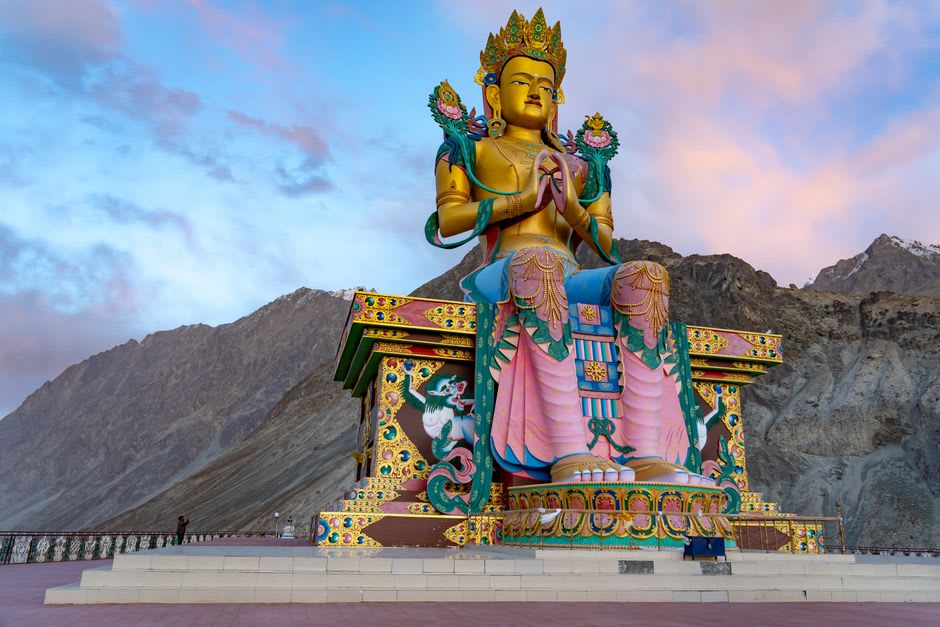
Diskit, the valley’s largest village, holds Diskit Monastery, perched on a ridge above the river with a 32-metre gold-painted statue of Maitreya Buddha facing down the valley toward Pakistan, installed in 2010 partly, monks there told me, as a blessing for the region’s safety given how close the Line of Control runs. I climbed the steps at dusk, the statue catching the last orange light while below the valley floor had already gone blue-grey with shadow. An elderly monk was sweeping the courtyard and stopped to point out the old monastery buildings clinging to the cliff above the new statue, centuries older and far less photographed.
When to go: The valley is accessible June through September, same window as the rest of Ladakh; July offers the greenest fields and warmest days, though nights still drop close to freezing so pack accordingly.