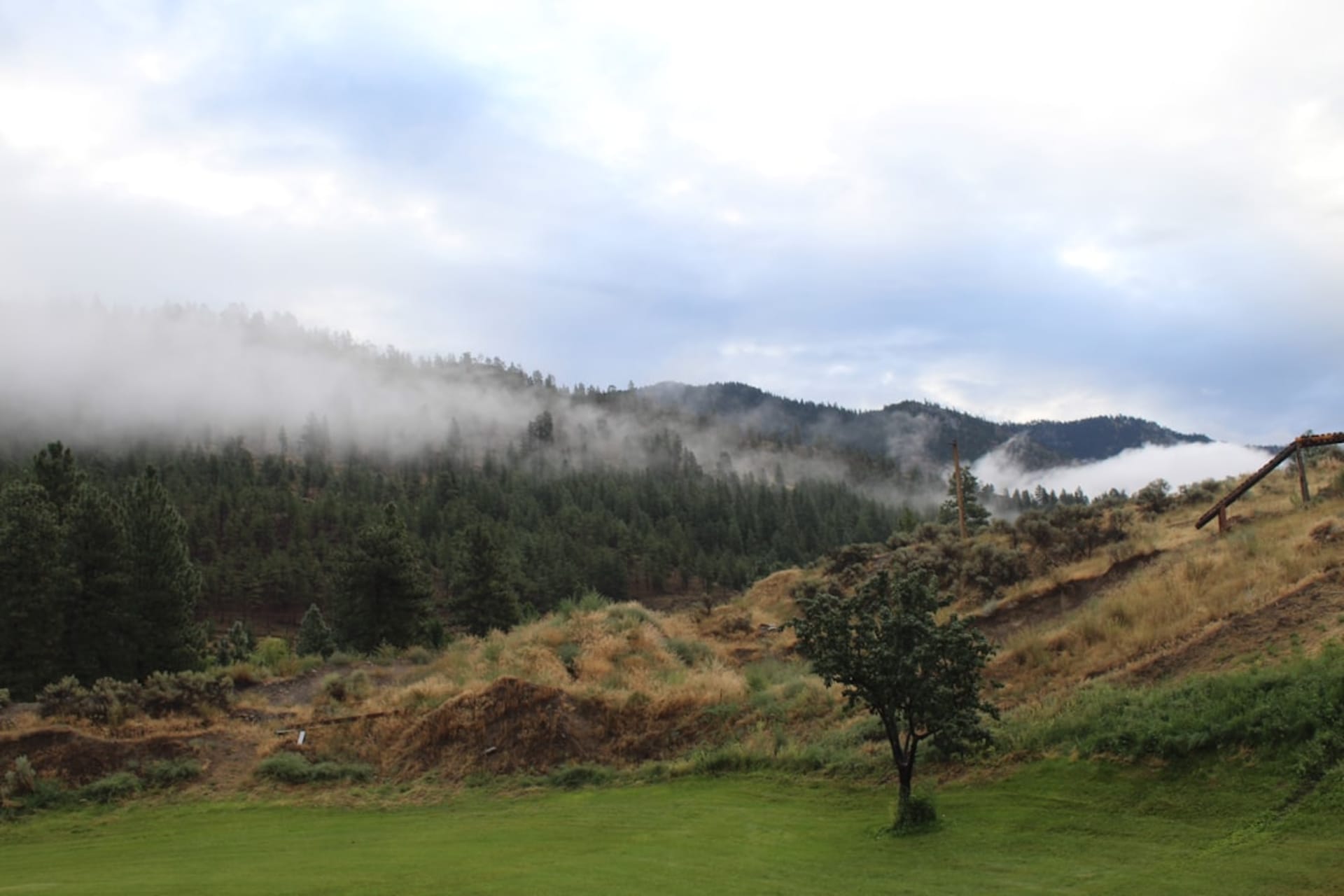
A hill station buried in tea plantations across the Western Ghats, home to the endangered Nilgiri tahr and a flower that blooms once every twelve years.
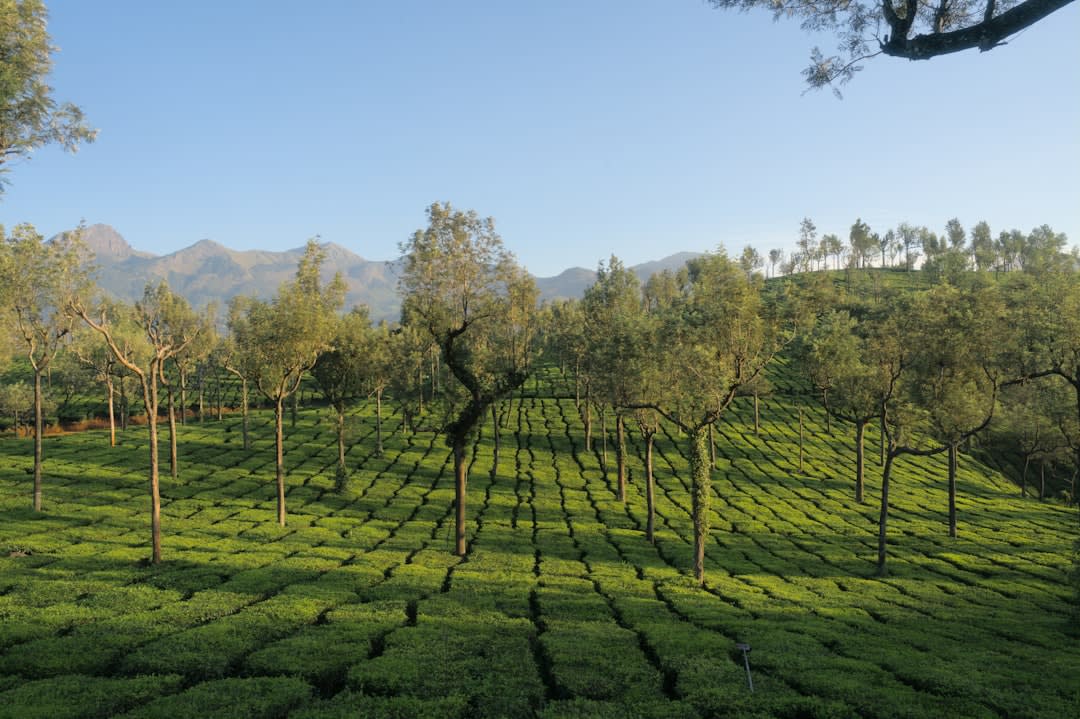
The road into Munnar climbs through hairpin after hairpin until the forest gives way, all at once, to tea. Not a field of it — an entire landscape of it, tea bushes clipped into a continuous rolling green surface that follows every contour of every hill for as far as I could see, broken only by the odd silver oak left standing for shade. It genuinely looks upholstered, like someone measured the hills and cut fabric to fit. I stopped the car at a bend just to stand there for a minute, because photographs of Munnar’s plantations, which I’d seen plenty of before arriving, hadn’t communicated the sheer three-dimensional scale of it.
Tea, Colonial Ambition, and a Flower on a Twelve-Year Clock
British planters cleared these forests for tea starting in the 1870s, and the industry they built still runs the local economy almost entirely — most workers in Munnar today are descendants of Tamil laborers brought in by the colonial estates generations ago, and their small settlements dot the plantation slopes in tidy rows of color. I toured one of the older tea factories, where the machinery — withering troughs, rolling tables, driers — dates back decades and is still in daily use, and a factory manager walked me through the process while the smell of fresh-cut leaf hung thick enough to taste. Above the tea line, in Eravikulam National Park, the terrain shifts to high rolling grassland that’s the last real stronghold of the Nilgiri tahr, a mountain goat found nowhere outside these southern Ghats; I watched a small herd graze along a ridge with a nonchalance that suggested they’d long since stopped noticing the tourists. Every twelve years, these same slopes turn a hazy blue-purple when neelakurinji blooms en masse, a flowering event so rare and so tied to Munnar’s identity that entire trip itineraries get built around catching it — I missed the last bloom by two years and have already marked the next one on a calendar.
A Cold Morning on the Ridge
I got up before sunrise to walk a section of the Eravikulam trail before the day’s crowds arrived, and the cold at that altitude caught me off guard — genuine cold, the kind that fogs your breath, unexpected this far south in India. The grassland was silvered with dew, and the tea slopes below were still buried in cloud, only the very top ridgelines poking through like islands. A tahr crossed the trail thirty feet ahead of me, unhurried, and stopped to look back once before disappearing over the ridge, and for a moment the whole scene felt less like Kerala than some cold, green corner of a different continent entirely.
When to go: September to March for cool, clear weather and the best visibility over the tea slopes; check ahead for Eravikulam’s seasonal closures, as the park shuts for part of the year to protect tahr breeding season.