Mawlynnong
"I didn't see a single piece of litter in this village. Not one. I actually went looking."
A Khasi village crowned 'Asia's cleanest' by decades of community discipline, with a living root bridge and a bamboo skywalk over the plains of Bangladesh.
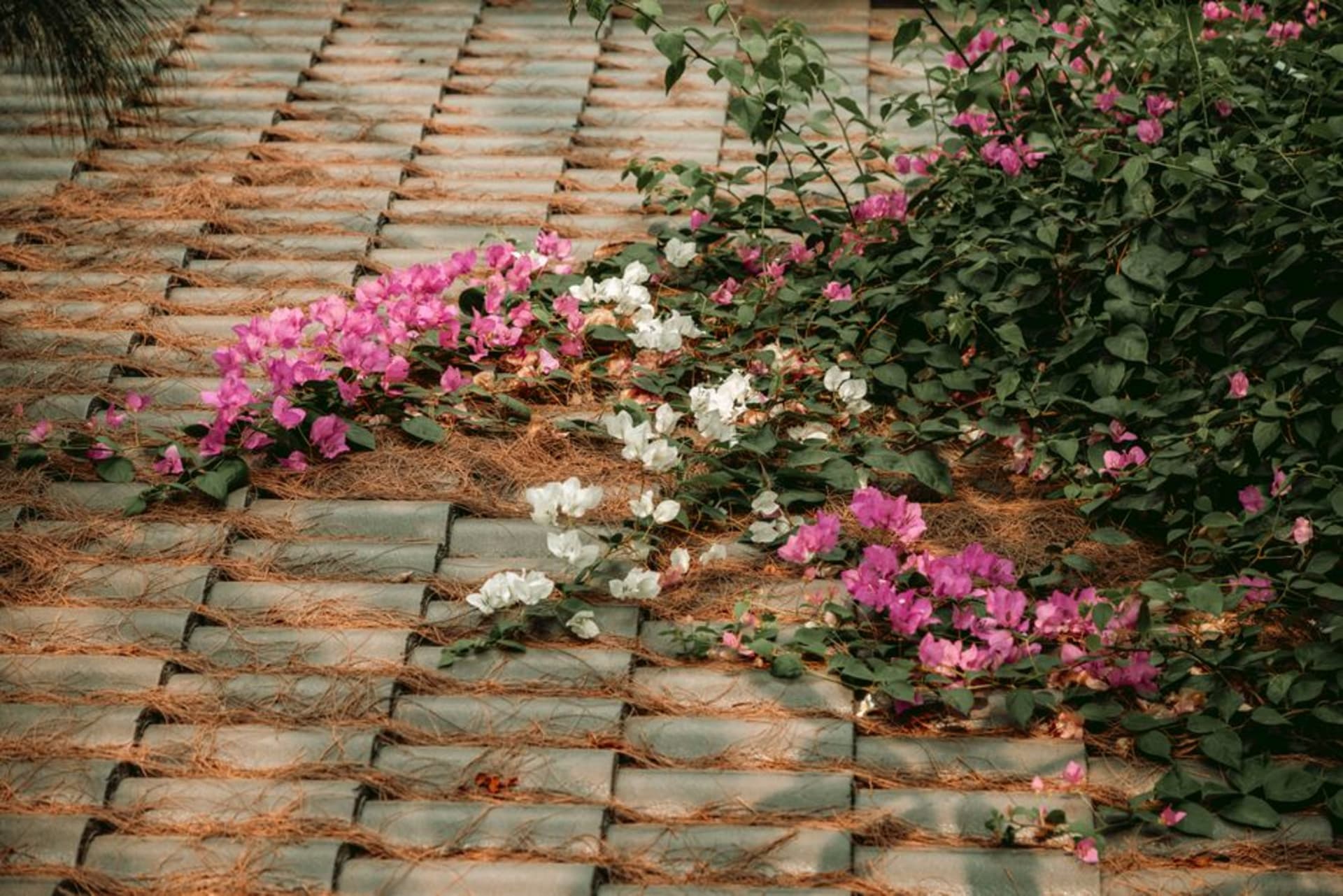
The first thing I noticed in Mawlynnong wasn’t a building or a view — it was the ground. The stone pathways running between houses were swept clean enough to eat off, lined with potted orchids and flowering shrubs, without a scrap of plastic or a cigarette butt anywhere in sight. I’d been in India for three months by that point and had grown used to litter as a kind of background texture, so the absence of it here was genuinely disorienting. I actually walked the length of the village twice, half-consciously looking for the crack in the illusion. There wasn’t one.
Mawlynnong, a Khasi village in Meghalaya’s East Khasi Hills near the Bangladesh border, earned the title “cleanest village in Asia” from Discover India magazine back in 2003, and the community has spent the two decades since defending that reputation as a point of collective pride rather than a marketing gimmick. Every household sweeps its own stretch of path each morning; bamboo dustbins, woven by hand, sit at regular intervals along every lane; plastic bags are effectively banned. It’s enforced less by law than by social expectation — a village council and a system of collective responsibility that treats a dropped wrapper as everyone’s problem, not just the litterer’s.
A root bridge and a view into Bangladesh
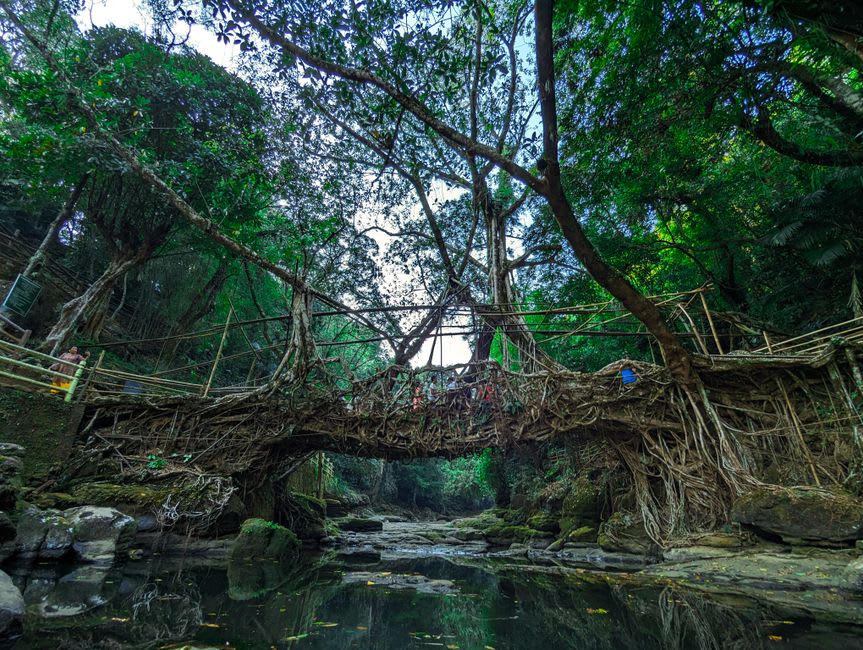
A short walk from the village center leads to Mawlynnong’s own living root bridge, smaller and less visited than the famous double-decker at Nongriat but grown the same way — Khasi hands training the aerial roots of a rubber fig tree across a stream over generations, patient infrastructure built by people who’d never live to see it finished. I crossed it slowly, the roots underfoot thick and slightly springy, water running clear beneath.
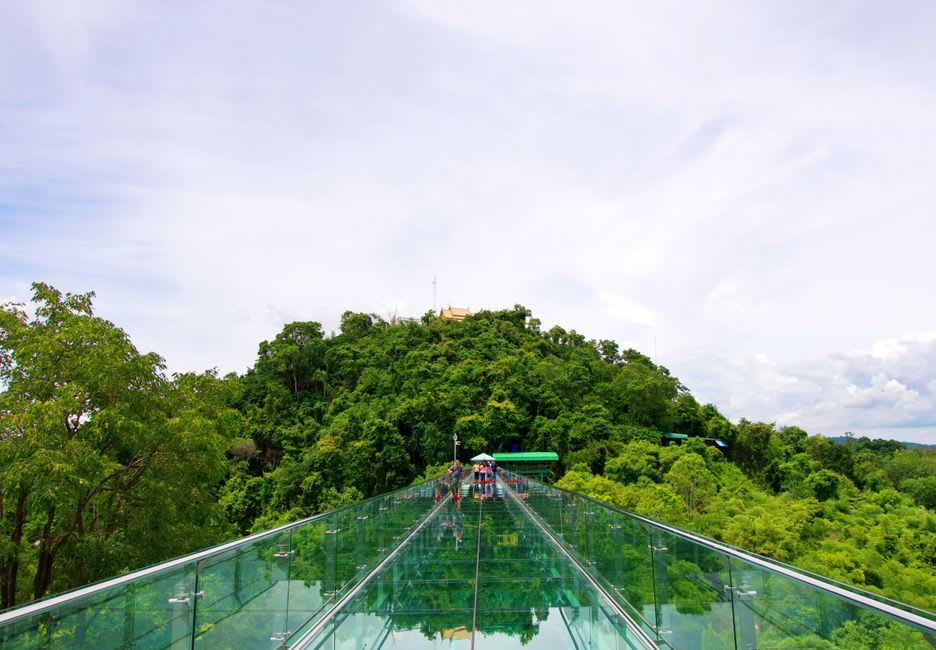
Then there’s the skywalk — a bamboo viewing platform built up into the canopy at the edge of the village, wobbling gently underfoot as you climb, that opens onto a view across the plains stretching south into Bangladesh, flat and hazy to the horizon in complete contrast to the hills behind you. I stood up there at golden hour with a group of Bengali tourists who’d made the trip specifically for this view, everyone quietly pointing out landmarks on the Bangladeshi side that none of us could actually name.
I stayed the night in a village homestay, a simple bamboo-and-thatch house with a family that fed me rice, pork, and a fiery bhoot jolokia chili chutney that took the top of my head off, and fell asleep to the sound of absolutely nothing but insects — no traffic reaching this far off the main road.
When to go: October to April for clear skies and dry trails to the root bridge and skywalk. The monsoon (June to September) turns the region lush but makes the paths slick, and the view toward Bangladesh often disappears into haze and mist.