A Konkan coast port city of red-tiled roofs and fierce seafood, where banking history and fish curry share the same humid air.
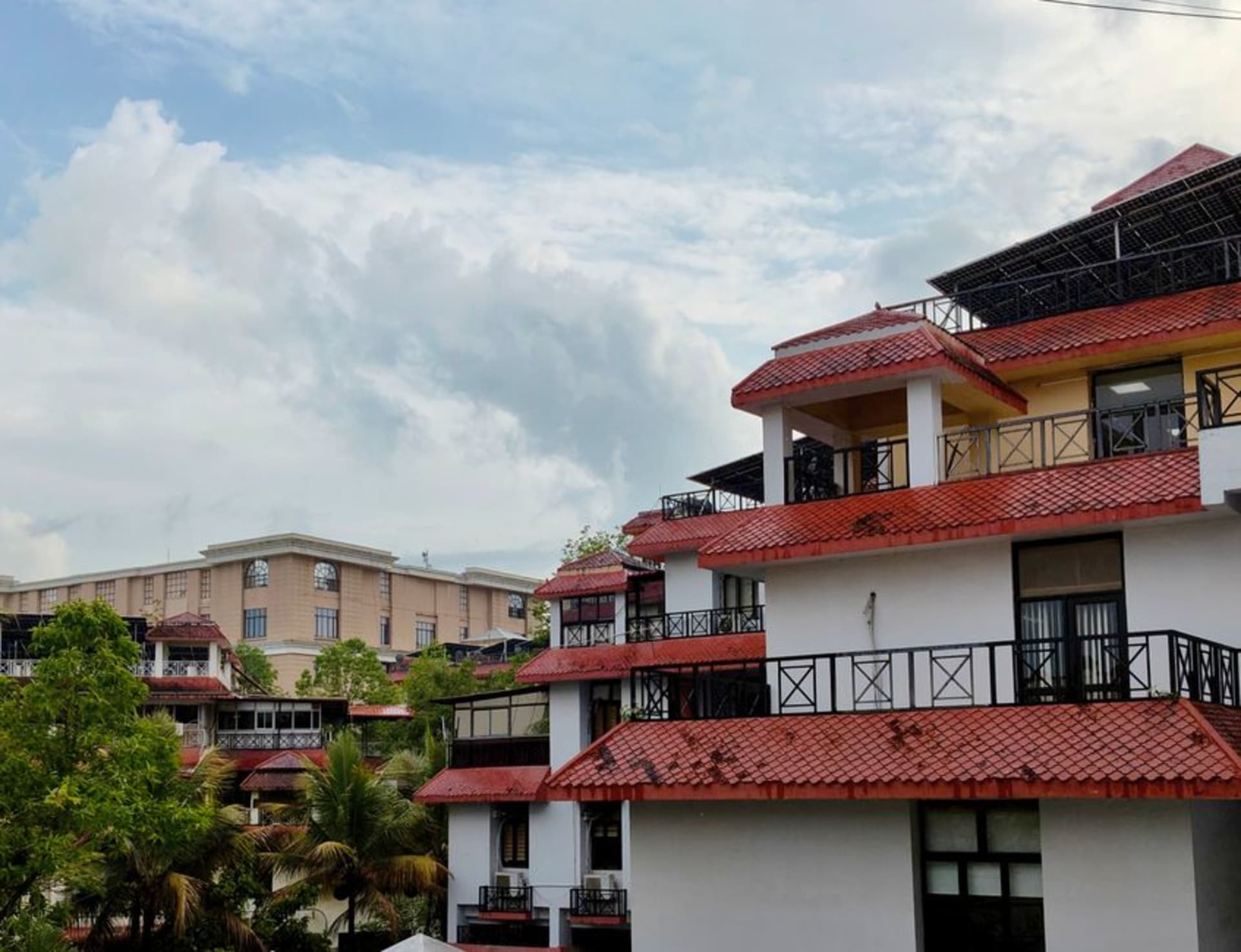
Mangalore hits you first through its roofs. Coming down from the Western Ghats after weeks inland, I noticed it before anything else — the uniform terracotta tiles covering house after house, a look so distinctive that “Mangalore tile” became the generic Indian term for the style regardless of where it was actually manufactured. The city has been making these tiles since the 1860s, when a German missionary named the Basel Mission set up what became one of India’s first mechanized tile factories here, and the industry that followed shaped the look of coastal towns from Kerala to Goa for a century afterward.
The old town around Hampankatta still carries that heritage in its architecture — colonial-era buildings with deep verandas and tiled roofs, churches standing a few streets from temples and mosques in a religious mix that reflects the city’s long history as a trading port. Mangalore’s harbor has been receiving Arab, Portuguese, and later British ships for centuries, trading in spices and cashews, and that cosmopolitan trading-town DNA is still visible in how unbothered the city seems by difference. What surprised me more was learning that Mangalore is also a serious banking town: several of India’s major banks, including Corporation Bank, Canara Bank, and Syndicate Bank, were founded here by local entrepreneurs in the early twentieth century, an oddly buttoned-up legacy for a city that otherwise feels loose and salt-air humid.
Fish, Prepared Without Apology
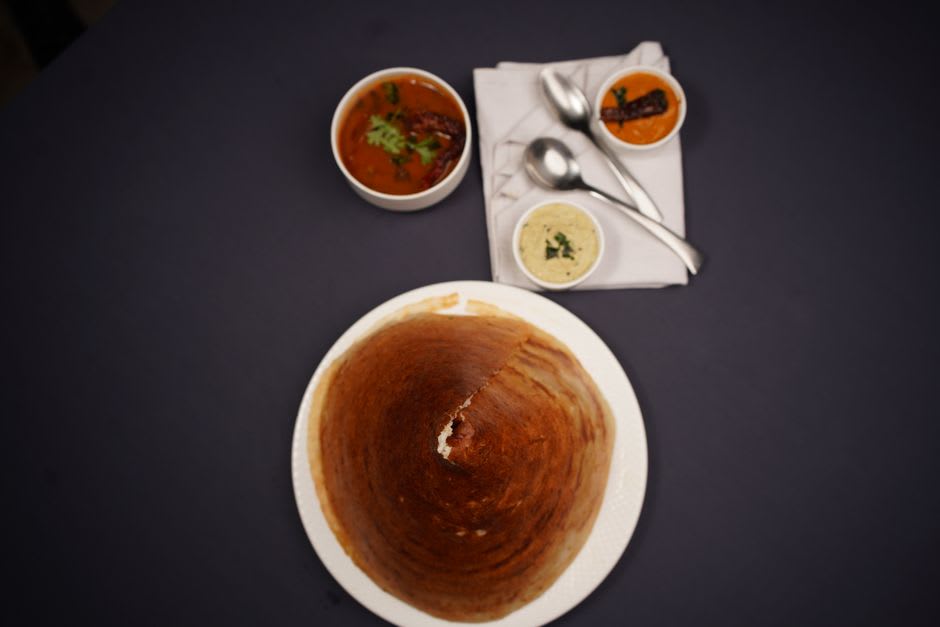
None of that prepared me for the food. Mangalorean cuisine is seafood-forward in a way that feels almost aggressive after weeks of vegetarian Karnataka further inland — ghee-roasted crab, kane (ladyfish) fry crusted in semolina and red chili powder, and a fish curry built on a masala of coconut, kokum, and a fistful of dried red chilies that left my nose running before I was halfway through the bowl. I ate at a no-frills place near the fish market where the day’s catch was still being unloaded a hundred meters away, and the waiter, unprompted, brought me a second helping of neer dosa — a thin, lacy rice crepe unique to the coast — clearly deciding I hadn’t ordered enough to survive the curry.
The Harbor at Evening
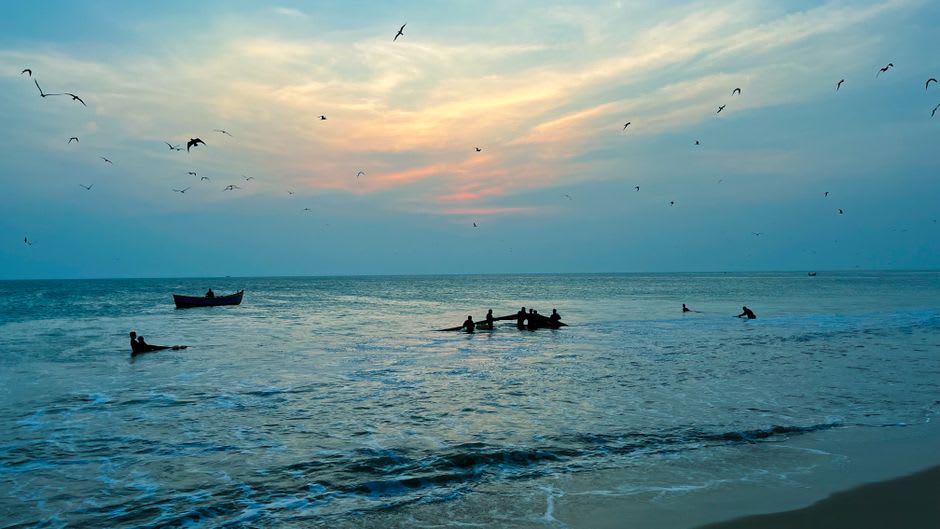
I spent my last evening at Panambur Beach north of the city center, where the working port traffic of Mangalore’s harbor is visible in the distance alongside families out for an evening walk and vendors grilling corn over coconut-husk fires. Cargo ships sat at anchor waiting their turn at New Mangalore Port, one of India’s major cargo harbors, while closer to shore, fishing catamarans came in for the night. It’s an odd, likeable juxtaposition — heavy industry and family beach evening sharing the same strip of sand — and it summed up Mangalore for me better than any single sight could: a working port city that never bothered dressing itself up for visitors, and tastes all the better for it.
When to go: November to February for the driest, most comfortable weather on this humid coast. The monsoon here, June to September, is dramatic but makes both beach visits and fish markets considerably less pleasant.