Mahabalipuram
"They didn't build these temples. They subtracted everything that wasn't a temple from the rock."
A seventh-century port town where Pallava sculptors carved entire temples from single boulders, and where their descendants still chisel granite by hand today.
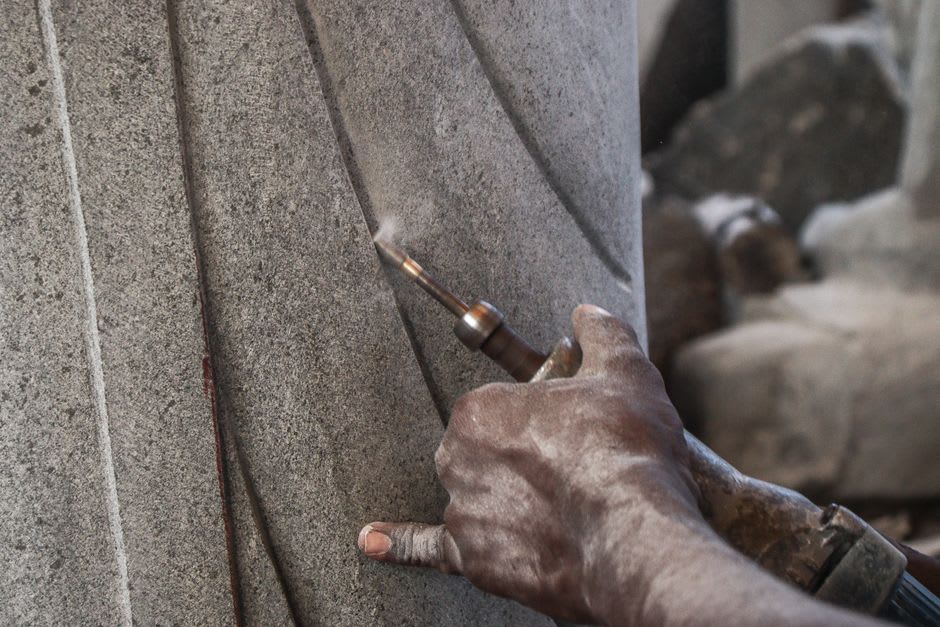
I heard Mahabalipuram before I saw it properly — a rhythmic, metallic tock-tock-tock drifting off the main road, chisel on granite, coming from half the workshops in town. I’d arrived expecting ruins. What I found was a living stone-carving tradition that never stopped, running in an unbroken line from the Pallava dynasty in the seventh century straight through to the workshop owner who sold me tea while his nephew finished a granite Nandi bull for a temple somewhere in Karnataka.
A Temple Carved, Not Built
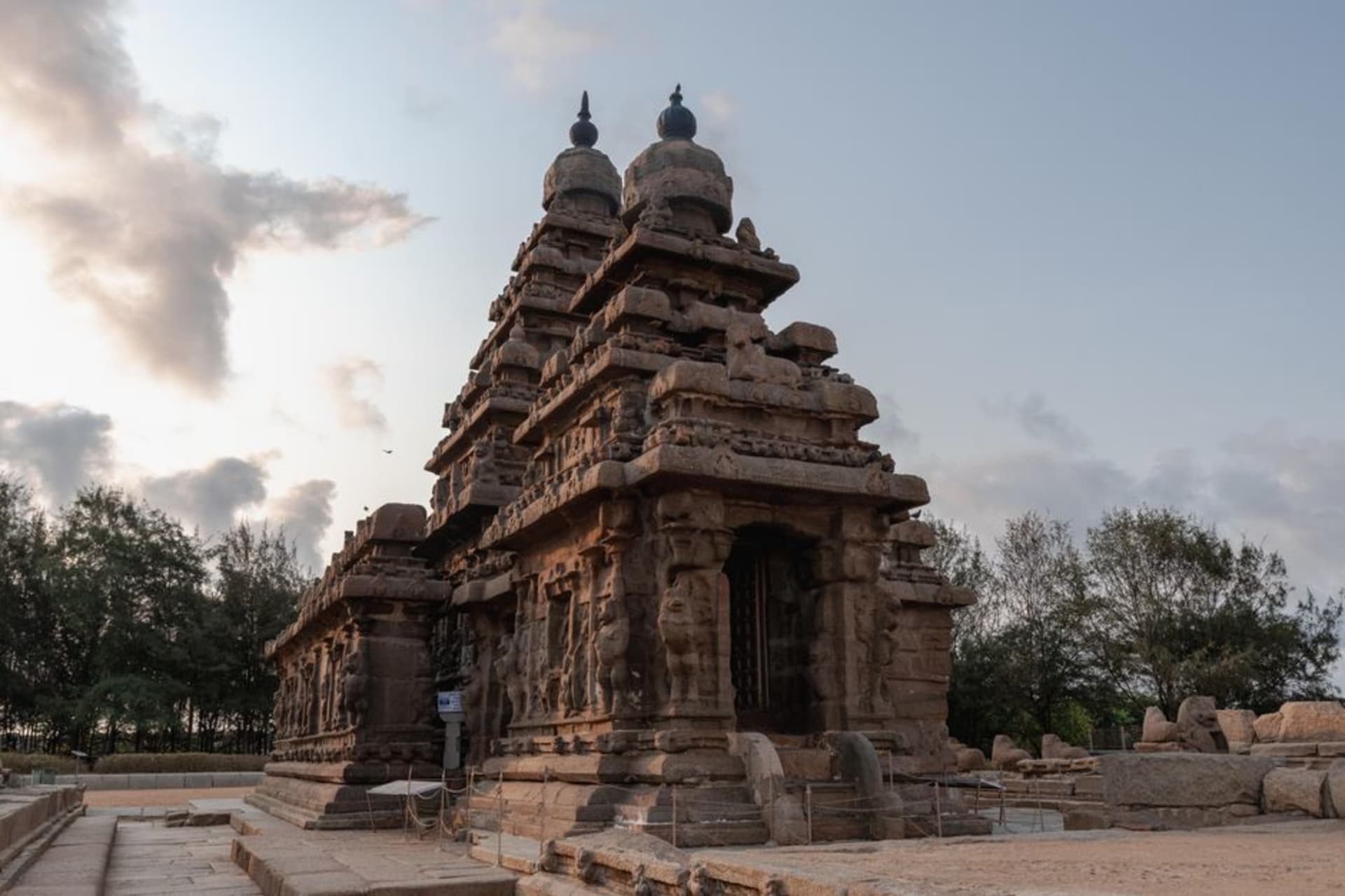
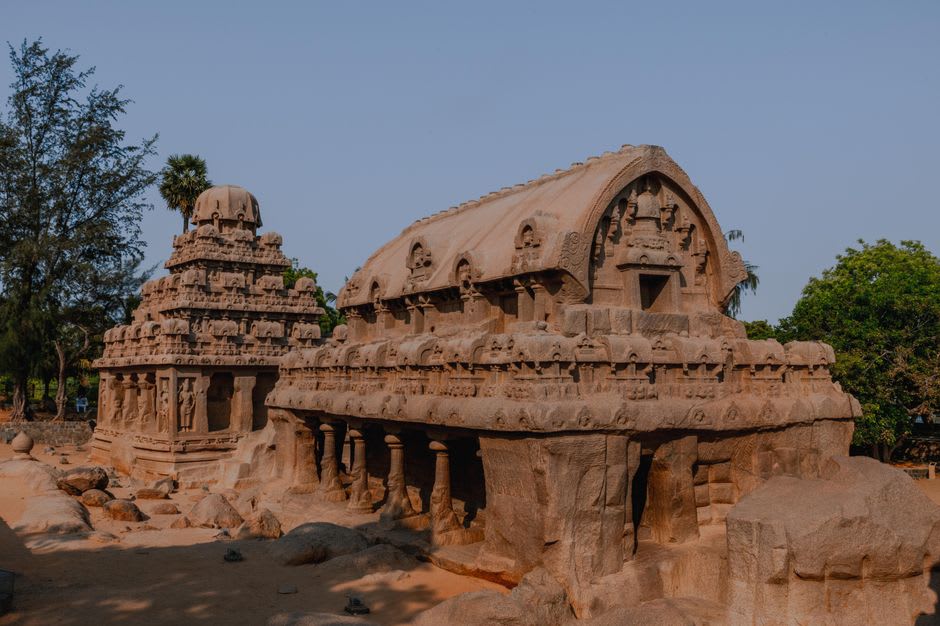
The Shore Temple is the postcard image, and it earns it — two pyramidal towers of granite standing directly on the beach, salt-worn after thirteen centuries of Bay of Bengal wind, dedicated to Shiva and Vishnu in one structure by Pallava kings who clearly weren’t picking sides. But the real astonishment is a few hundred meters inland, at the Five Rathas. These aren’t built temples at all — they’re monolithic, each one carved downward out of a single existing boulder of pink granite, like a sculptor decided a temple already existed inside the stone and his only job was to remove the excess. Walking between them, running a hand along a roofline that was never assembled from separate blocks, I kept forgetting that nothing here is stacked. It’s all one piece, everywhere, and the scale of patience that implies is difficult to hold in your head.
Arjuna’s Penance and the Living Workshops
Arjuna’s Penance, the giant open-air bas-relief near the center of town, covers an entire rock face with elephants, sages, celestial figures, and a crack down the middle that ancient carvers used as a river for Ganga descending to earth — they built the crack into the composition rather than fighting it. I stood there at dusk with the stone still warm from the day’s heat and watched a group of schoolchildren trace the elephant carvings with their fingers, the same gesture visitors have presumably made for a thousand years. Afterward I wandered into one of the stone-carving workshops that line the road toward the lighthouse, where granite dust hung in the afternoon light like fog and a dozen sculptors sat cross-legged, chisels moving in that same tock-tock rhythm, turning out gods for temples not yet built. One of them, an old man with granite dust permanently ground into the creases of his hands, told me his family had been carving in Mahabalipuram for five generations. He said it the way someone else might mention the weather — not boasting, just stating a fact about how things are.
When to go: December through February for cool sea breezes and comfortable midday temple-hopping; the December Mahabalipuram Dance Festival stages classical dance against the Shore Temple’s floodlit backdrop, which is worth planning a trip around.