Madurai
"Madurai was already ancient when most of the world's cities hadn't been founded yet, and it has never once acted its age."
One of the world's oldest continuously inhabited cities, built in concentric rings around a temple so vast it functions as the city's actual center of gravity.
Madurai’s street grid gives away its age before you’ve seen a single temple. The old city is laid out in concentric squares radiating outward from the Meenakshi Amman Temple, a plan that historians trace back over two thousand years and that some scholars connect to old Tamil concepts of a lotus-shaped sacred city. I climbed to a rooftop restaurant on my first evening specifically to see it — the twelve gopurams, the towering, pyramid-shaped gateway towers, rising above the flat rooftops in every direction, covered top to bottom in thousands of painted stucco figures of gods, demons, and animals repainted every twelve years in colors so saturated they read as almost fluorescent against the evening sky.
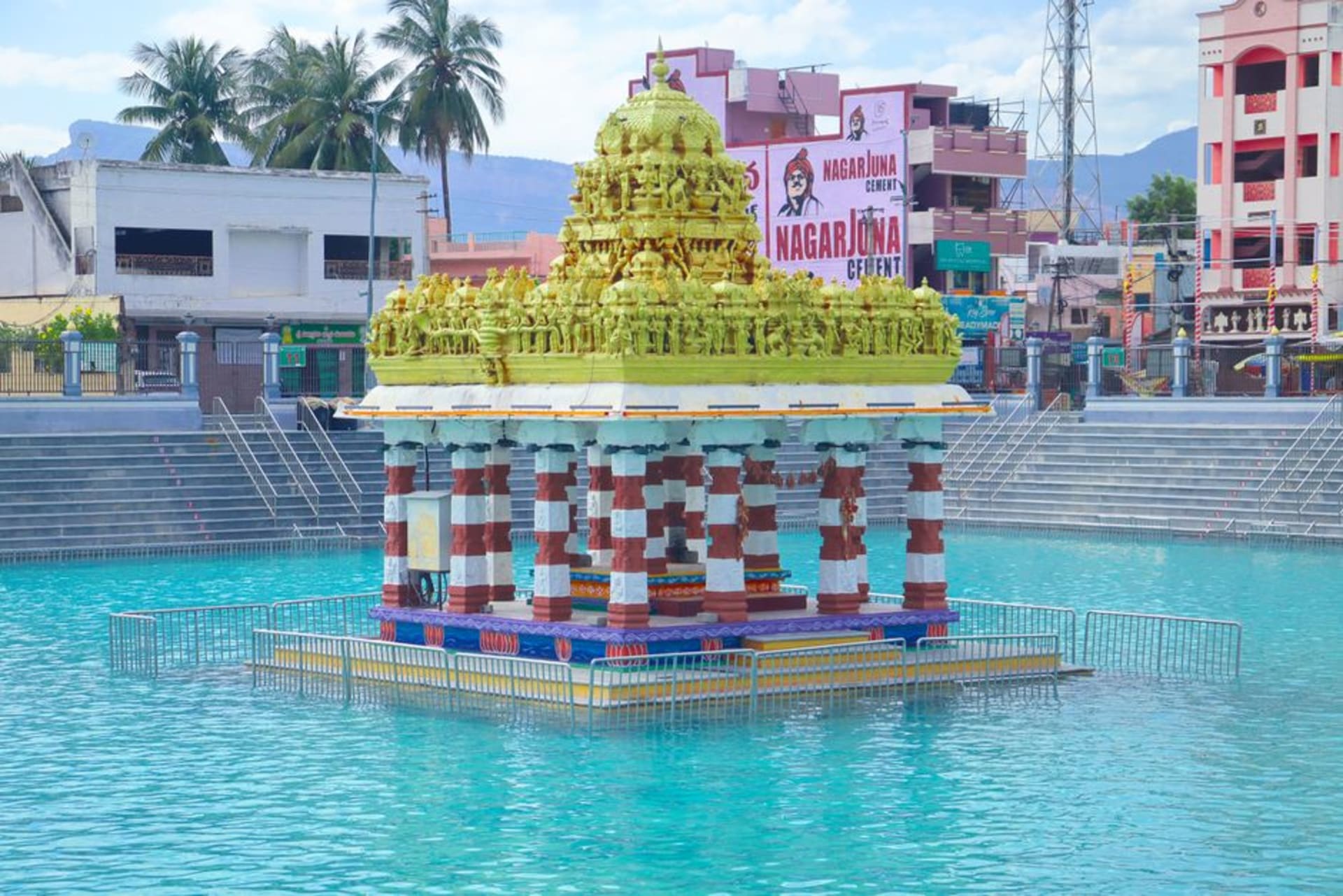
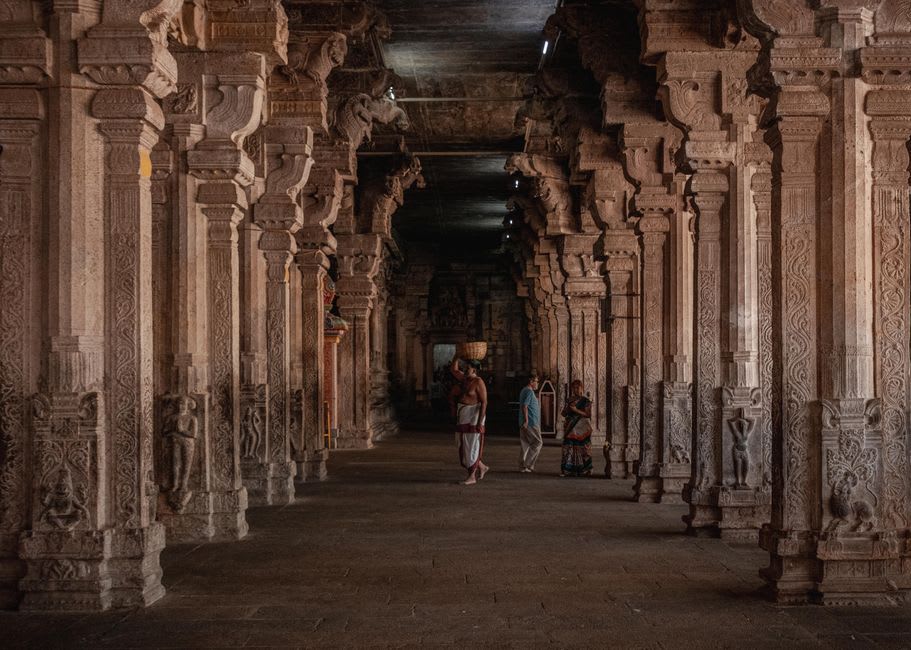
Inside, the temple is less a single building than a self-contained world — the Thousand Pillar Hall, where each carved pillar produces a slightly different musical tone when struck, a fact temple guides still demonstrate on request; the sacred tank where pilgrims have bathed for centuries; corridors thick with incense smoke and the sound of temple bells that seem to never fully stop. The temple as it stands today was largely rebuilt in the 16th and 17th centuries under the Nayak kings, but the site’s sanctity as a Shiva-Parvati shrine — here worshipped as Sundareswarar and Meenakshi, the fish-eyed goddess — goes back far earlier, and Madurai itself is frequently cited among the oldest continuously inhabited cities on earth, with references in Tamil Sangam literature from over two thousand years ago.
The Night Ritual
I made sure to be there for the palliyarai ritual, held every night around ten, when priests carry an image of Sundareswarar in a small ceremonial procession to Meenakshi’s chamber so the divine couple can, symbolically, spend the night together before being ceremonially separated again each morning. The crowd that gathers for this is not a tourist crowd — it’s mostly local devotees, some coming every single night, and the collective hush that falls as the procession passes is unlike anything else I experienced in a temple in India. A woman next to me, noticing I didn’t know when to press my palms together, simply reached over and adjusted my hands without a word.
The Flower Market Before Dawn
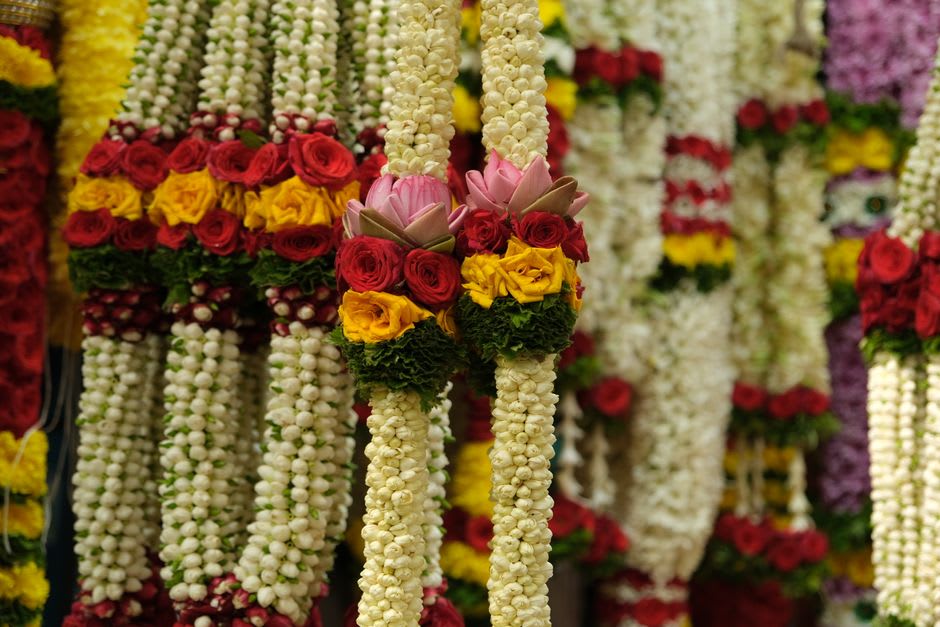
The next morning I went looking for the jasmine flower market near Mattuthavani, arriving before six to find it already at full volume — sacks of jasmine buds, marigold garlands stacked in towers taller than the vendors selling them, and a very specific local variety, Madurai Malli, whose fragrance is protected under India’s Geographical Indication registry the way champagne is protected in France. Wholesalers were haggling over price per kilo while women strung garlands with a speed that made my eyes hurt trying to follow their fingers. I bought a small strand for a few rupees, tucked it into my daypack, and it perfumed everything I owned for two days afterward.
When to go: October to March for bearable heat around the temple’s stone courtyards, which get scorching underfoot by midday even in cooler months. Try to time an evening around the night ritual — ask locally for that day’s exact schedule.