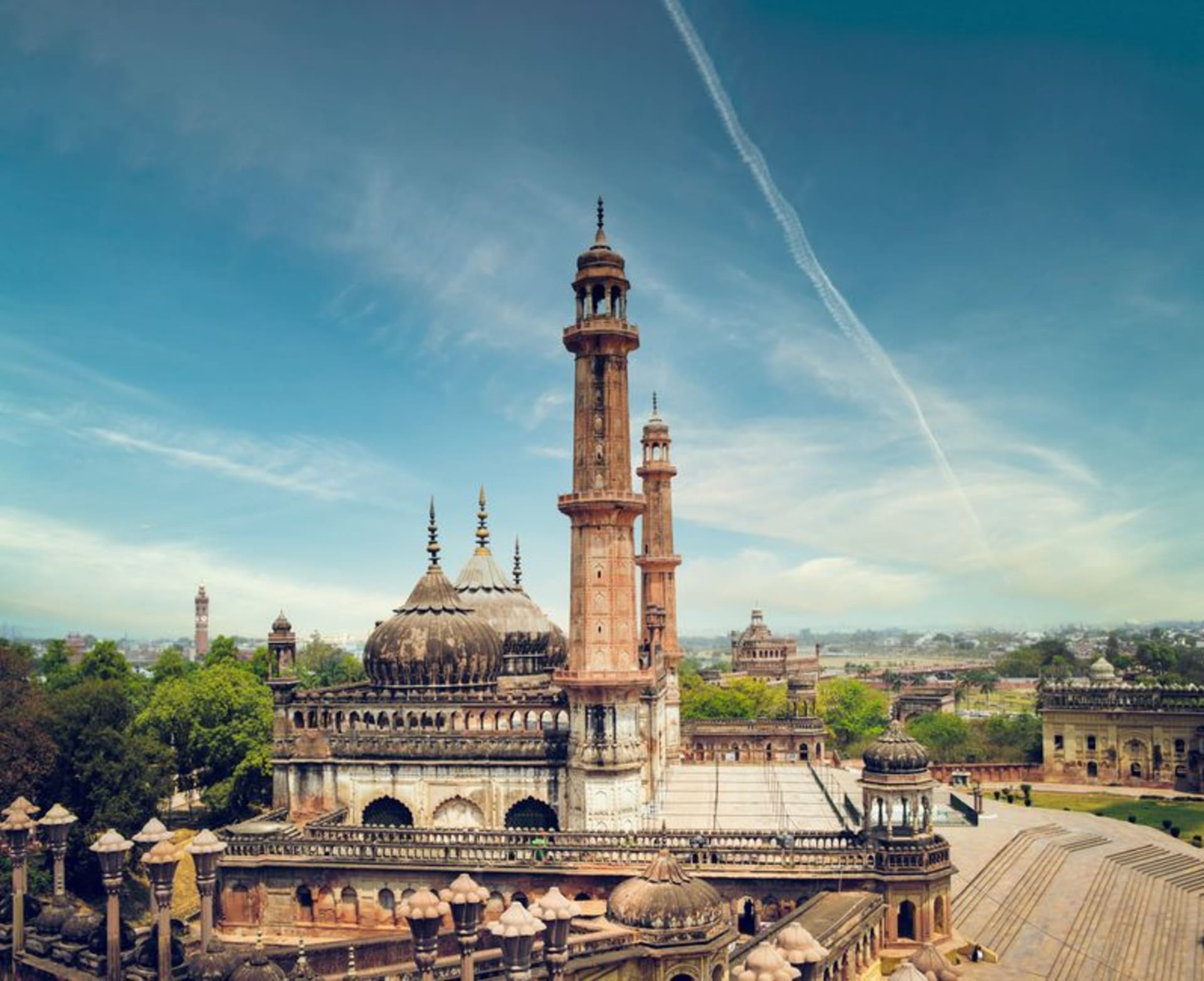
The Nawabi capital where etiquette is an art form, kebabs melt before you chew them, and a labyrinth inside a mosque still confuses everyone who enters.
Within an hour of arriving in Lucknow, a shopkeeper I’d barely spoken to insisted I sit down, drink tea, and wait while he found the exact shade of fabric I’d asked about, even though I’d made clear I probably wasn’t buying. That is tehzeeb, the refined culture of etiquette and unhurried courtesy that Lucknow is famous for across India, and it is not an exaggeration or a tourist-brochure invention — it genuinely reshapes how transactions and conversations unfold here. Coming from Delhi, where everything moves at a shove, the deceleration took me almost a full day to adjust to.
The city was the seat of the Nawabs of Awadh, a Shia Muslim dynasty that ruled through the 18th and 19th centuries and poured its wealth not into conquest but into architecture, poetry, music, and food — a court culture built around refinement for its own sake. That legacy is everywhere: in the Urdu couplets shopkeepers quote mid-sentence, in the formal, almost theatrical politeness of “pehle aap” (after you), and in a built environment that still centers on one extraordinary building.
Getting lost on purpose in the Bhulbhulaiya
Bara Imambara, completed in 1784, is a colossal congregation hall built without a single beam of iron or wood in its central vault — an engineering feat that still puzzles structural historians about how the ceiling holds itself up. But the building’s real party trick is the Bhulbhulaiya, a labyrinth of narrow passages built into the upper floors, originally designed to let guards move unseen and now left deliberately confusing for visitors. I went in with a guide, which I’d recommend, because within four turns I had completely lost any sense of direction, and he told me most visitors who go in alone eventually just start shouting to relocate their friends.
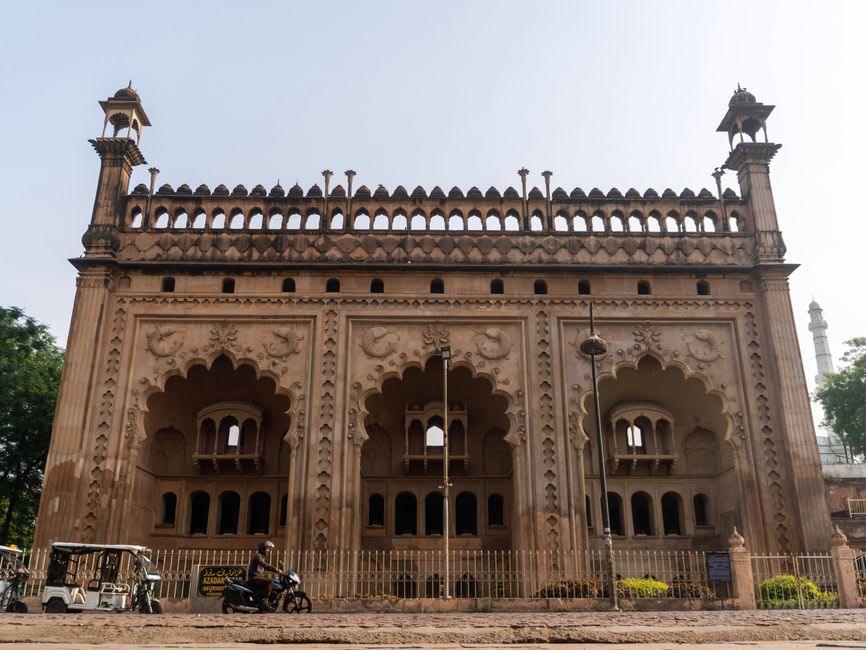
From the roof of the Imambara, the view opens over the Gomti river and the domes of the nearby Chota Imambara and Rumi Darwaza, an enormous Mughal-style gate that was never actually part of a fort — it was built purely as an ornamental entrance, which tells you a lot about Nawabi priorities.
Kebabs that don’t need teeth
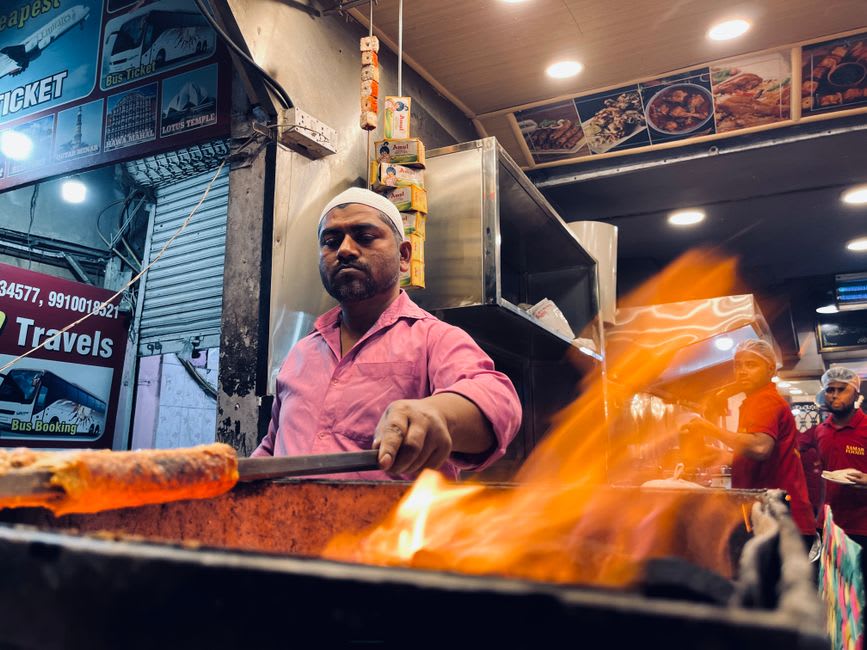
Lucknow’s food culture is its second great export, and the galouti kebab is the centerpiece — minced meat pounded with dozens of spices and, according to kitchen legend, papaya paste, into a texture so soft it was reportedly invented for a toothless nawab who refused to give up meat. I ate mine at a stall near Aminabad market, standing at a counter with grease running down my wrist, and the kebab genuinely dissolved before I’d finished chewing. Paired with warqi paratha, thin flaky bread, and followed by a plate of biryani cooked in the dum style — sealed and slow-cooked over embers — it was, without exaggeration, one of the best meals I’ve had anywhere in India.
When to go: October to March, when the heat breaks and you can walk the old city and eat at street stalls without wilting. Avoid May and June, when Lucknow’s heat is genuinely punishing.