The former capital of British India, where crumbling colonial grandeur, tram bells, and coffee-house arguments about poetry and politics never really stopped.
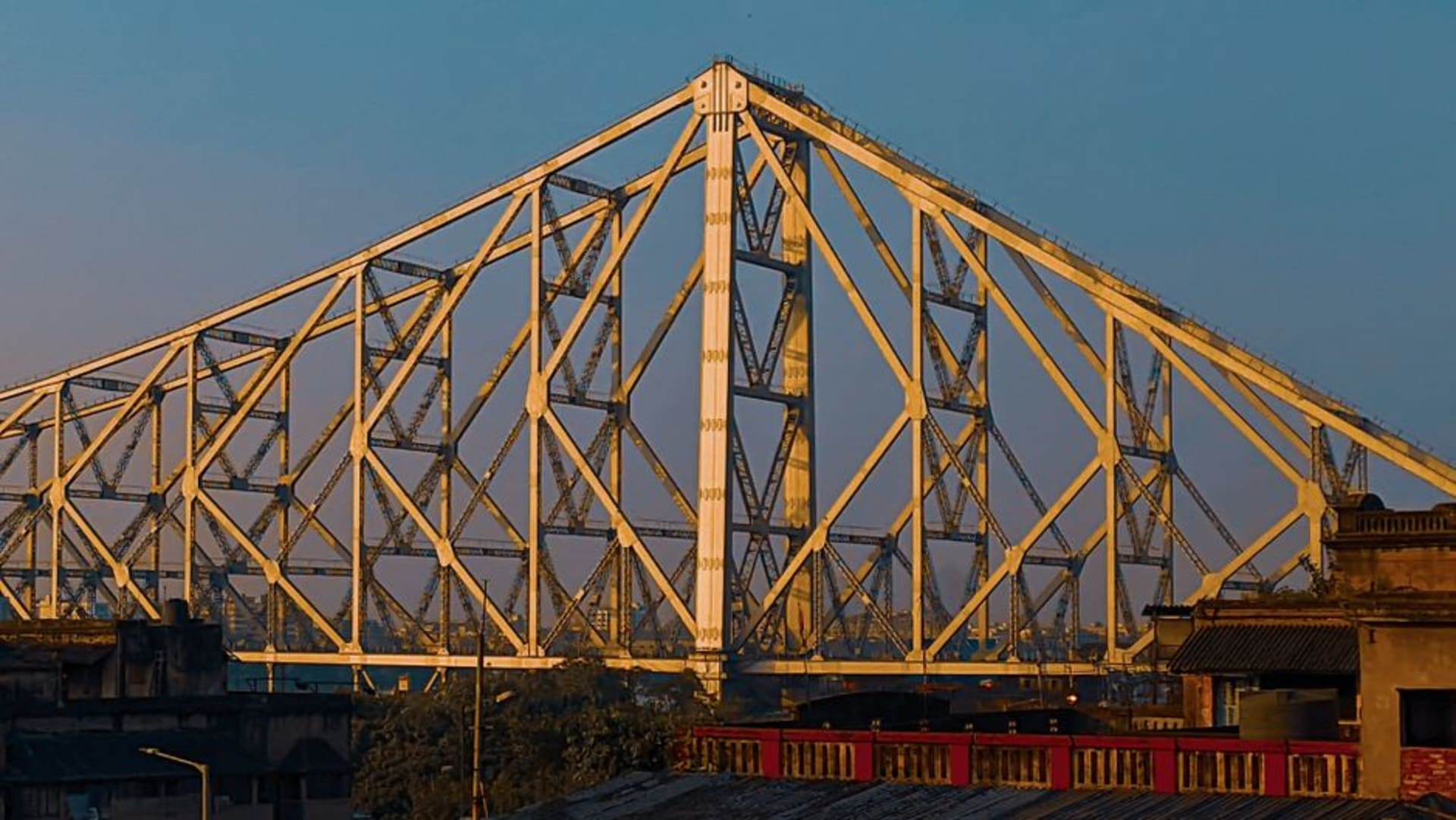
I crossed into Kolkata over the Howrah Bridge in the back of a yellow Ambassador taxi, stuck in traffic long enough to watch the whole cantilevered span in detail — rivets, girders, the Hooghly River sliding brown and slow beneath it, ferries loaded past any reasonable safety margin. No suspension cables, someone told me later, proudly, as if the bridge’s stubbornness was a civic trait. By the time I reached my guesthouse near College Street, I understood that Kolkata does not perform for visitors the way Jaipur or Udaipur do. It simply continues being itself, at full volume, whether you are watching or not.
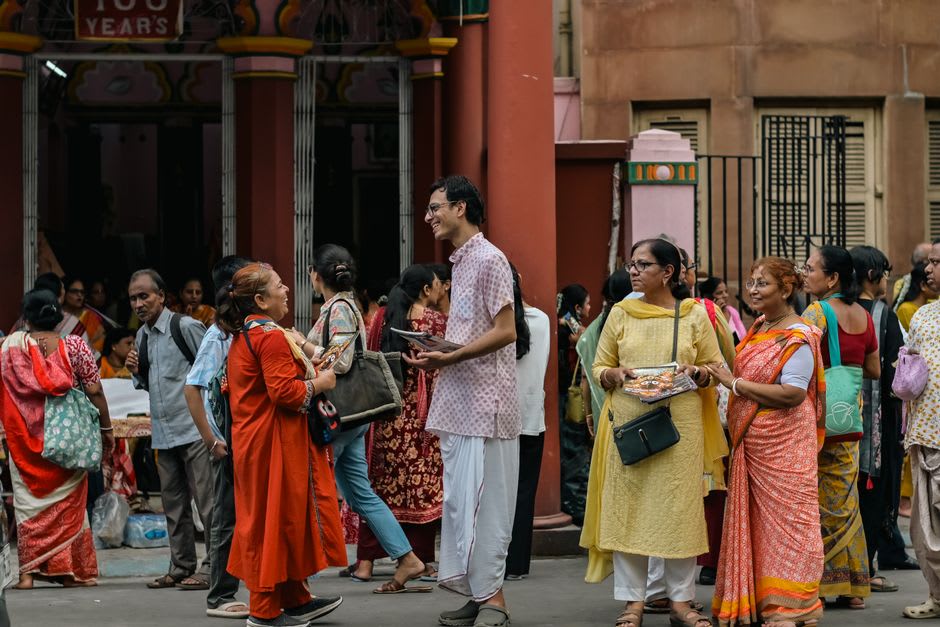
That self is intensely, argumentatively literary. College Street is the largest secondhand book market in the world, a half-mile of stalls stacked floor to ceiling with everything from engineering textbooks to first editions of Tagore, and I spent an entire humid afternoon there without buying anything because every browse turned into a conversation. Nearby, the Indian Coffee House on the second floor of a building that has hosted the same argument for seventy years — students, poets, retired professors — still serves coffee in steel cups to men debating cinema and communism at adjoining tables, a tradition Bengalis call adda: talk for its own sake, with no destination and no hurry.
The Raj’s Ghost and Durga’s Return
Victoria Memorial sits in its own park like a marble hangover from the empire, white domes and a bronze angel on top, built by the British to commemorate a queen most Bengalis were glad to see the back of. I found it strangely moving anyway — less for the queen than for what the building says about a city that has always absorbed its conquerors’ architecture and made it into something else. The trams still run, some of the last in Asia, wooden-seated and unhurried, and riding one down Esplanade at sunset while the city’s chaos closed in around the tracks felt like time travel with terrible suspension.
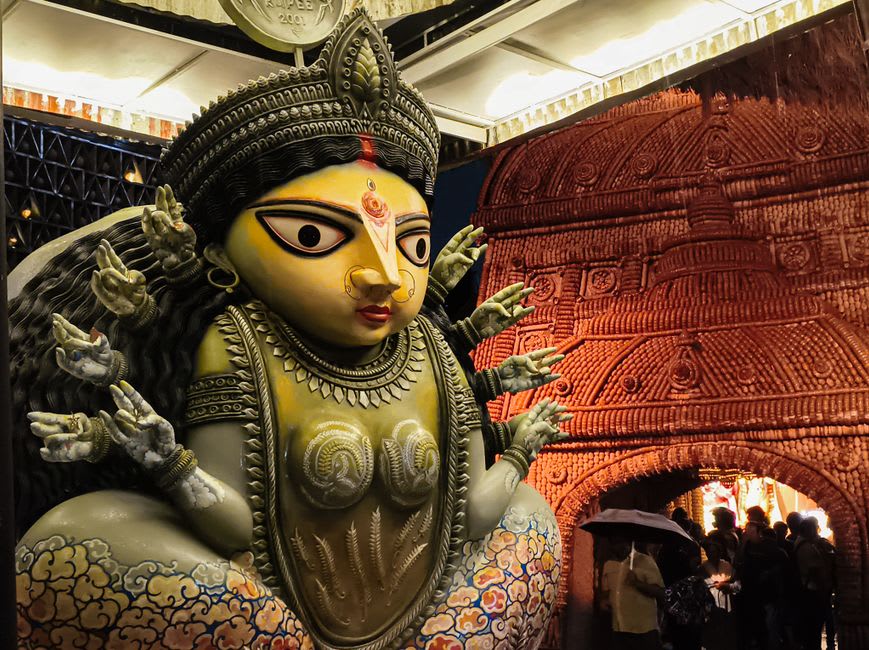
I happened to be in Kolkata in the days building up to Durga Puja, and nothing prepared me for it. Entire neighborhoods construct elaborate pandals — temporary pavilions, some rivaling actual architecture — to house clay idols of the goddess slaying the buffalo demon, and the whole city turns into an open-air gallery competition judged by pure collective joy. I stood in a crowd on Shyambazar watching an idol get lifted onto a truck for immersion in the river, drums pounding, and a stranger handed me a plate of khichuri and told me, unprompted, that Kolkata’s poverty and Kolkata’s culture are the same argument the city has never resolved.
When to go: October, for Durga Puja itself, if you can stand the crowds and heat — it is worth it. Otherwise November to February brings cooler, drier weather that makes walking the old town bearable.