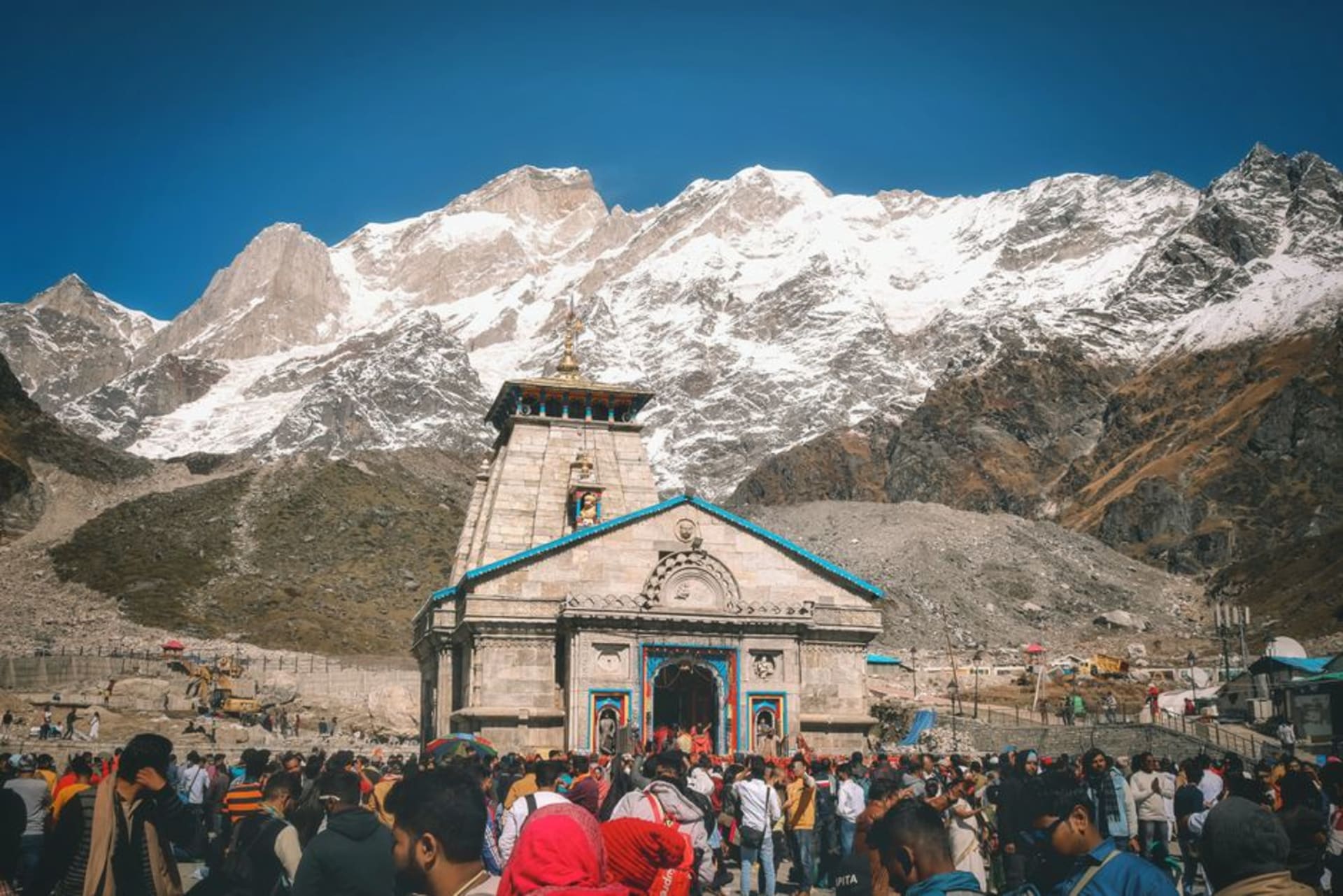
One of the twelve Jyotirlinga shrines to Shiva, reached only on foot, pony, or helicopter — a temple that survived a 2013 flood that reshaped the whole valley.
The walk to Kedarnath is 16 kilometres from Gaurikund, and I did it the way most pilgrims do, on foot, watching the trail fill with people who had traveled far further than I had to get here — elderly women being half-carried by relatives, sadhus in saffron robes moving faster than seemed possible at this incline, families making the trek as a promise fulfilled after a birth or a recovery from illness. Ponies and dandies (porters carrying people in baskets on their backs) passed constantly, and by the time the temple came into view, a squat grey stone structure set against a wall of snow peaks at 3,583 metres, I understood why this is considered one of the twelve Jyotirlingas, the most sacred sites associated with Shiva in all of Hinduism.
What the flood could not take
In June 2013, a cloudburst above the valley triggered flash floods and landslides that killed thousands and devastated the town around the temple — buildings, guesthouses, the entire pilgrim infrastructure swept away in a matter of hours. The temple itself survived almost untouched, its ancient stone walls diverting the water and debris around rather than through it, an event locals and pilgrims alike describe as nothing short of miraculous. A massive boulder, since named the Bhim Shila, lodged itself directly behind the temple during the flood and is credited by many with having split the deluge in two, sparing the structure. Walking the rebuilt town today, you can still see the scale of what happened in the wider, reinforced paths and the newer buildings standing where older ones simply no longer exist.
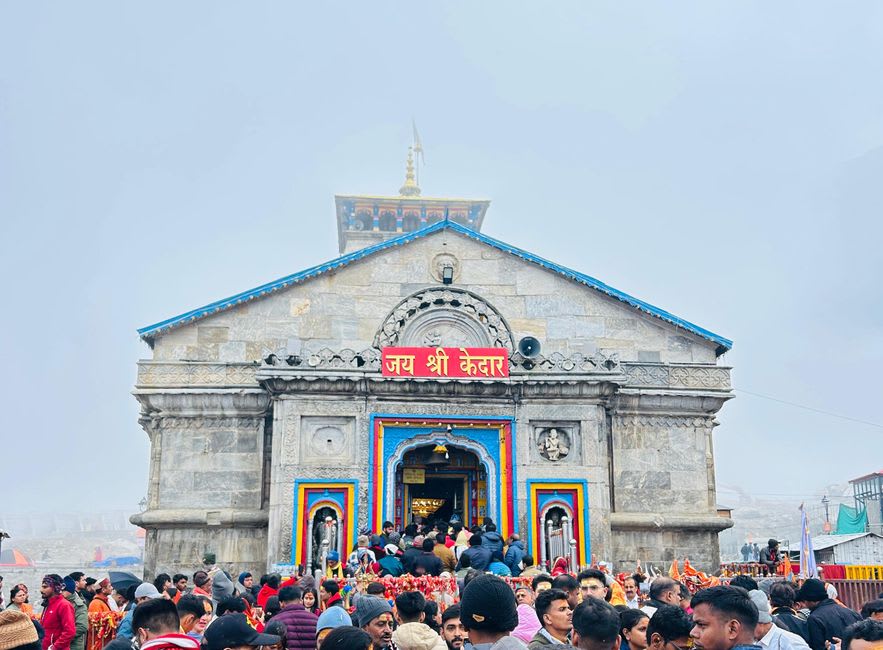
Inside, the shrine holds an irregular, conical rock formation worshipped as Shiva’s linga, and I watched pilgrims wait for hours in a slow-moving line just to touch it for a few seconds before being moved along by temple staff. Outside, at dusk, hundreds sat wrapped in blankets against the cold, chanting, while priests lit oil lamps along the temple’s edge and the peaks behind it went from white to pink to a deep unlit grey. Helicopters now ferry pilgrims who can’t manage the walk, landing on a pad a short distance from the temple, and watching them touch down against that backdrop of ruin and rebuilding and unmoved devotion was its own kind of lesson in what people will do for faith.
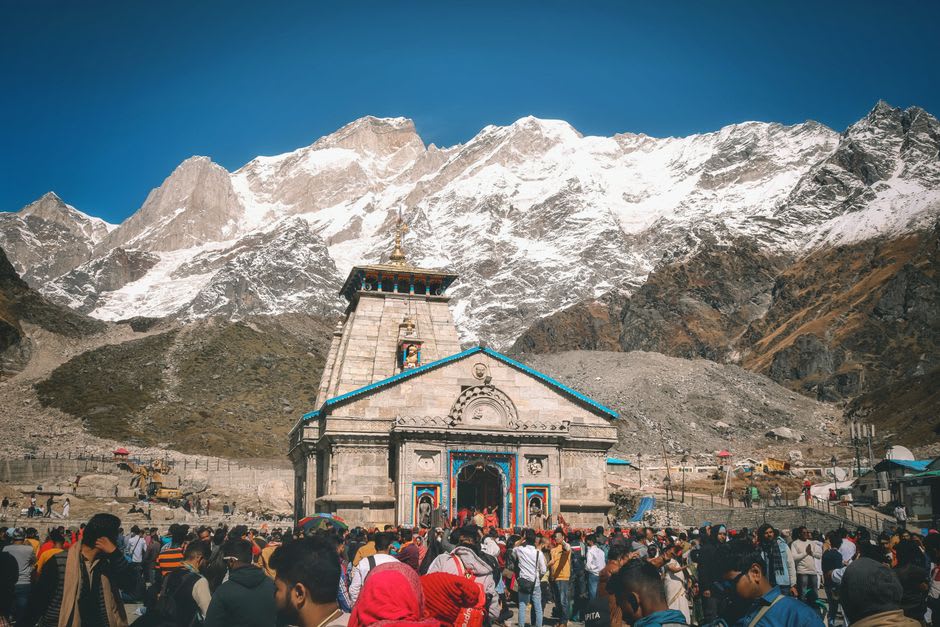
When to go: The temple opens only May through October or November depending on the year and closes for winter when snow makes the route impassable; May and June, right after opening, see the heaviest pilgrim crowds.