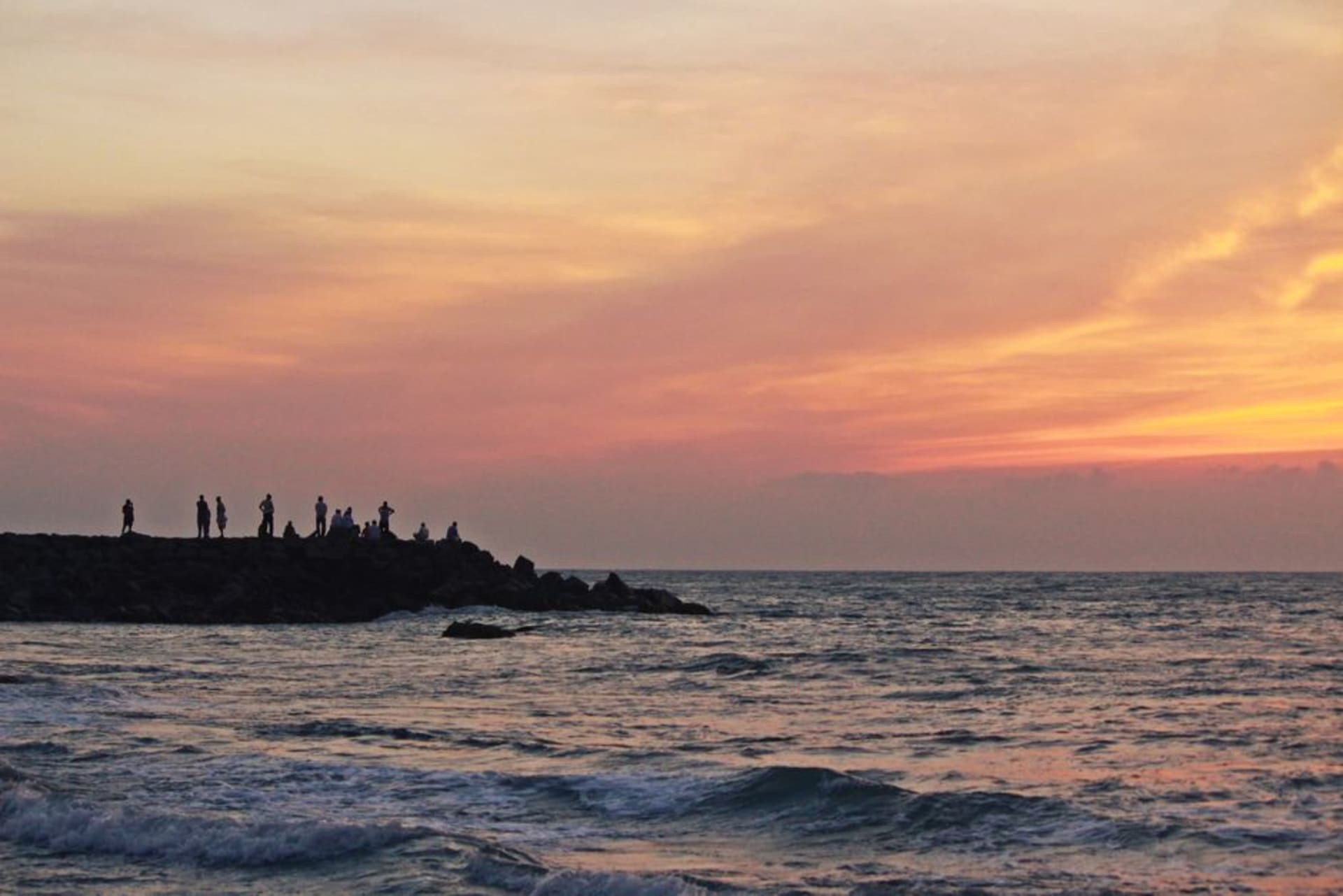
India's southernmost tip, where the Arabian Sea, the Bay of Bengal, and the Indian Ocean meet, and where sunrise and sunset can be watched over water on the same day.
I got up before dawn in Kanyakumari for the reason everyone gets up before dawn in Kanyakumari — to watch the sun rise directly out of the sea from the very tip of the subcontinent, a spot where three bodies of water supposedly meet and mingle in a way you can’t quite verify with your eyes but can absolutely feel underfoot, in currents that seem to pull from three directions at once. The crowd on the shoreline that morning was mixed in a way I hadn’t seen elsewhere in Tamil Nadu — pilgrims, honeymooners, school groups on trips, all facing the same direction in near silence, waiting.
Three Seas, One Point
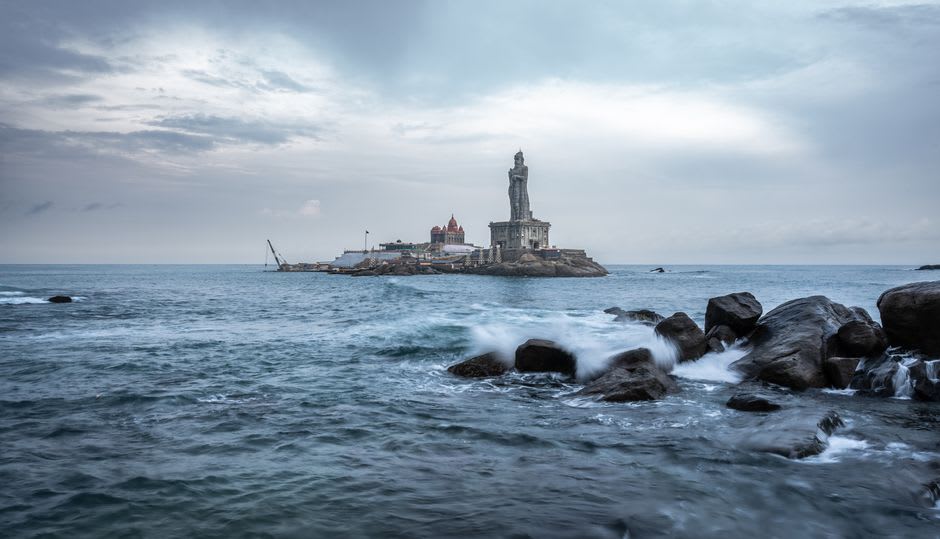
Geographers will tell you the “three seas meeting” idea is more poetic than strictly oceanographic — the Arabian Sea, Bay of Bengal, and Indian Ocean don’t have a hard boundary you could draw a line across — but standing on the black rocks at land’s end, watching distinctly different wave patterns collide and throw spray in conflicting directions, the idea feels entirely earned regardless of the cartography. What’s not disputable is the geography: this is it, the final few meters of the Indian mainland, water on three sides and nothing south of you but ocean until Antarctica. A short boat ride offshore sits the Vivekananda Rock Memorial, built on the spot where the monk is said to have meditated in 1892 before his famous address in Chicago, and reaching it means crossing water that’s visibly agitated by all three seas working against each other beneath the hull.
A Day That Ends the Way It Began
What nobody tells you until you’re there is that Kanyakumari’s real party trick isn’t the sunrise, it’s that you can watch both the sunrise and the sunset over water on the very same day, from more or less the same stretch of rock, something that’s geographically possible in vanishingly few places on the planet. I stayed for both, killing the hours in between at the Thiruvalluvar Statue — a hundred-and-thirty-three-foot stone monument to the Tamil poet-philosopher, one for each chapter of his great ethical text — and eating fresh fried fish from a stall where the owner refused to let me pay for a second helping. By evening the crowd had rotated almost entirely — new faces, same ritual — and the sun went down into the Arabian Sea in a long orange smear while the Bay of Bengal side of the sky stayed a deep, undisturbed blue. Watching a single day get bookended by two different seas is not something I expected to feel moved by, but I was.
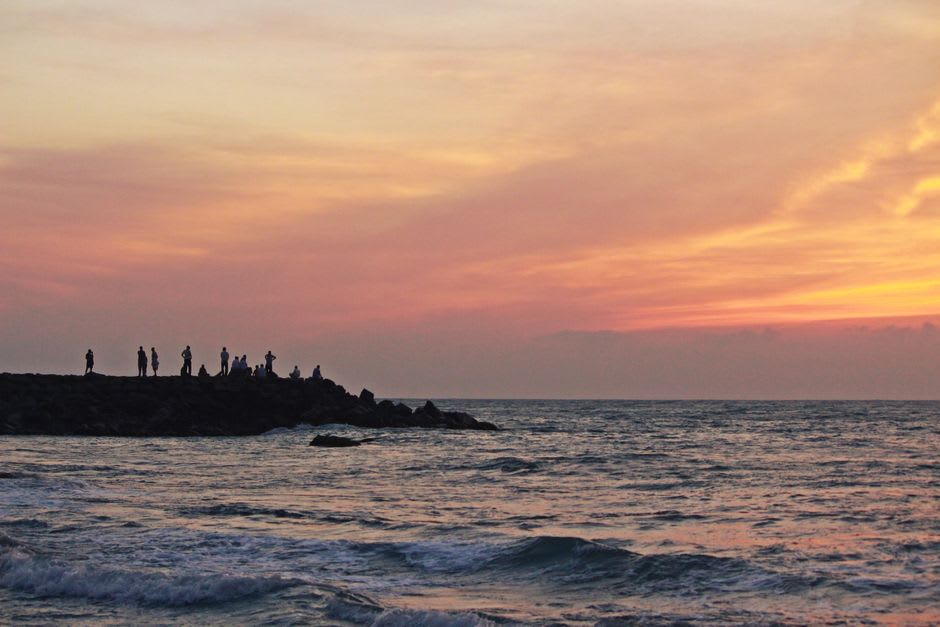
When to go: October to February for the clearest horizons at both sunrise and sunset; the sea haze common in summer months can blur out the exact moment the sun touches the water, which is the whole point of coming.