Jodhpur
"The only city where I got lost on purpose, because every wrong turn was still blue."
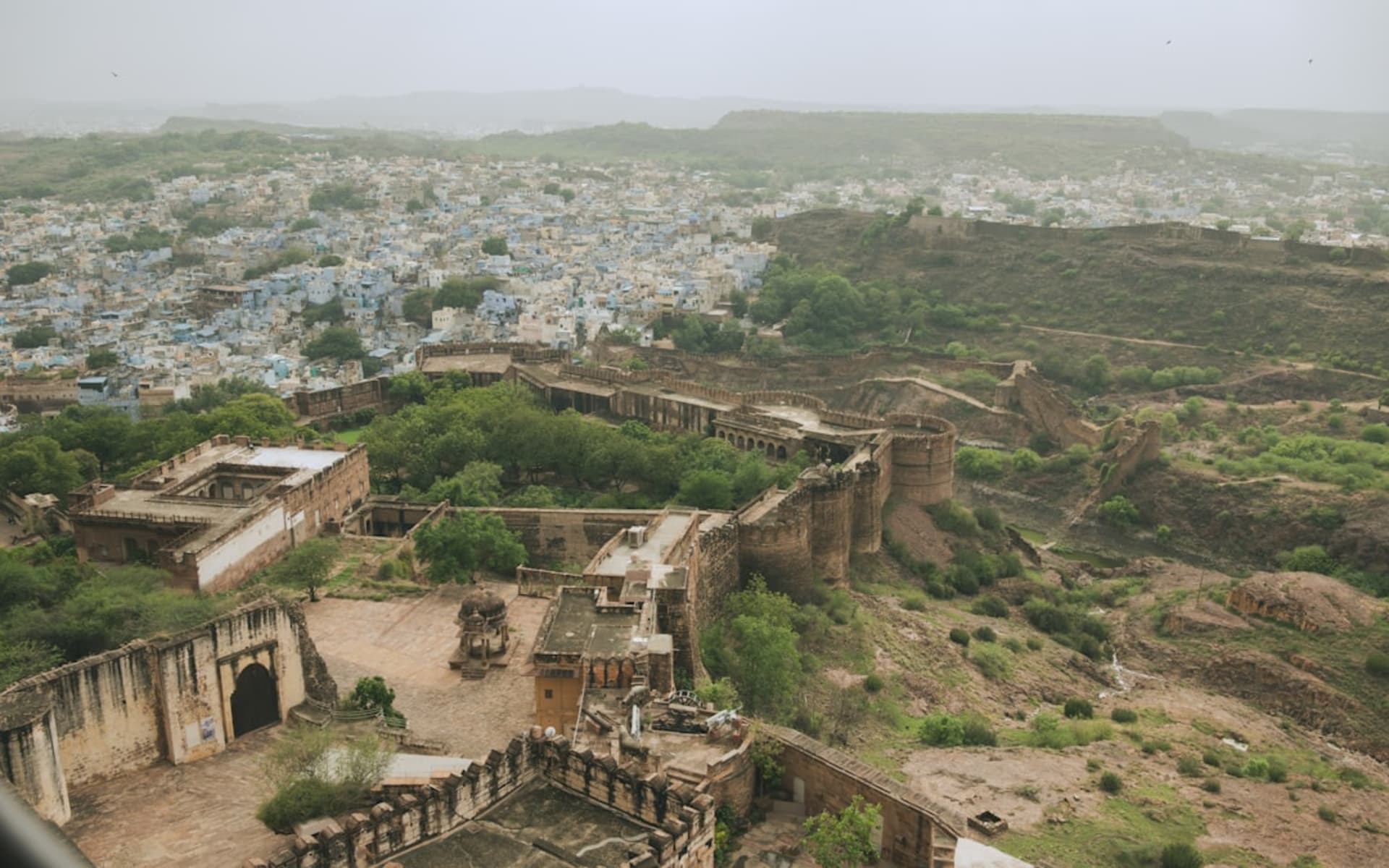
Rajasthan's Blue City, where a sea of indigo houses spreads beneath a sandstone fort so massive it looks carved from the same rock it sits on.
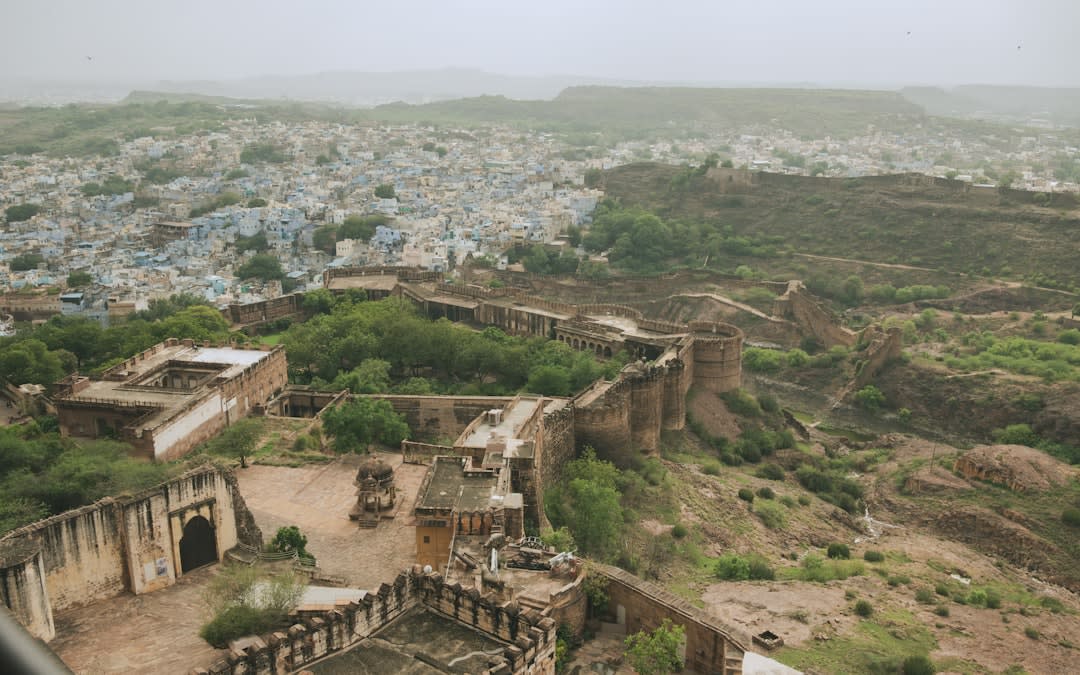
I saw Jodhpur for the first time from the ramparts of Mehrangarh, and it took me a full minute to understand what I was looking at. The old city below wasn’t just a few blue houses scattered among beige ones — it was thousands of them, an entire quarter washed in shades of indigo and cobalt that ran together into something closer to a flooded sky than a town. I’d read that the color once marked Brahmin homes, a caste signal, and that it also does a decent job of repelling termites and keeping interiors cool through the desert summer. Standing up there with the wind coming hard off the Thar, both explanations felt true at once — practical and symbolic, like most things in Rajasthan.
Mehrangarh itself does something to your sense of scale that I haven’t felt at any other fort in India. It rises sheer out of a rock outcrop 400 feet above the city, and the walls at the base are thick enough that cannon shot marks from Jaipur’s army in the 1808 siege are still visible, barely denting the stone. Rao Jodha founded it in 1459, and the fort has never been taken by force — only ever by siege or negotiation, which the locals mention with a specific kind of pride. Inside, the palace apartments are a different register entirely: latticed sandstone screens, mirrored chambers, a Flower Palace with a ceiling of gold leaf and glass that turns candlelight into something closer to weather than illumination.
Getting lost in the blue
I spent an afternoon just walking the lanes below the fort with no destination, which is the only way to actually see the Blue City — it doesn’t reveal itself from a main road. Kids kicked a plastic ball down alleys barely wide enough for two people to pass. A woman touched up the paint on her doorframe with a brush and a bucket of the same deep blue, unbothered by an audience. I stopped at a stall for makhaniya lassi, a saffron-thick version of the yogurt drink that’s practically a dessert, served in a clay cup you’re meant to smash on the ground when you’re done — a small, satisfying ritual I didn’t expect to enjoy as much as I did.
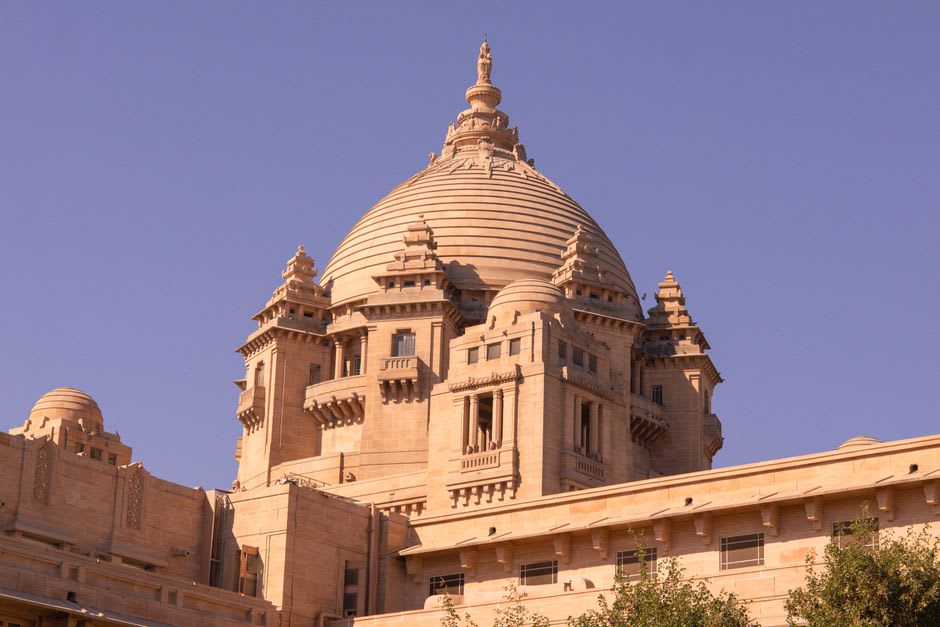
Umaid Bhawan Palace, on the other side of the city, is the counterpoint to the medieval density of the old town — a 1943 Art Deco palace built partly as famine relief work, still home to the royal family in one wing while another operates as a hotel and museum. I didn’t stay there (the rates are not built for a travel writer’s budget), but I walked the grounds at golden hour and watched the sandstone go from honey to rose to something closer to fire. It’s the newest thing in Jodhpur by six centuries and somehow still feels inevitable, like the city needed a building that grand to balance the fort.
When to go: October through March, when desert days are warm rather than punishing and nights are cool enough for a shawl. Early morning is the only time to have Mehrangarh’s ramparts nearly to yourself before the tour buses arrive.