Haridwar
"The evening I stood in a crowd of ten thousand strangers, all facing the same river, all holding a floating flame."
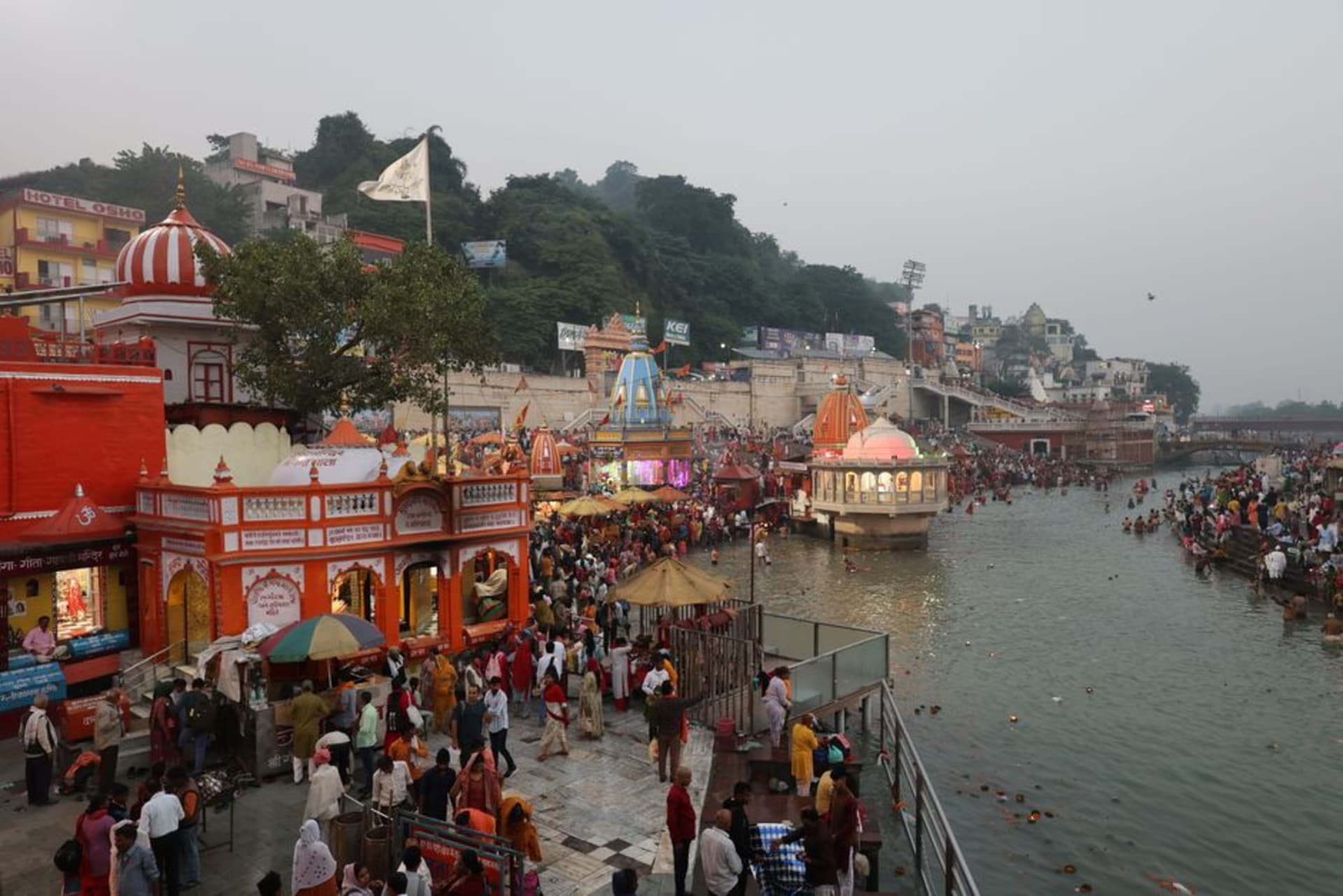
The point where the Ganges leaves the Himalayan foothills for the plains, and where thousands gather each evening at Har Ki Pauri for the Ganga Aarti.
Haridwar means “gateway to God,” and the town earns the name literally: this is where the Ganges, having spent its early life crashing down from the Gangotri glacier through mountain gorges, finally slows down and spreads out onto the Indo-Gangetic plain. I arrived by train from Delhi in the late afternoon, and by the time I’d dropped my bag at a guesthouse near the river, the streets were already filling — not with tourists, particularly, but with pilgrims, families, sadhus, and vendors selling small leaf-boats loaded with marigolds and a lit diya, ready to be set adrift.
Har Ki Pauri at dusk
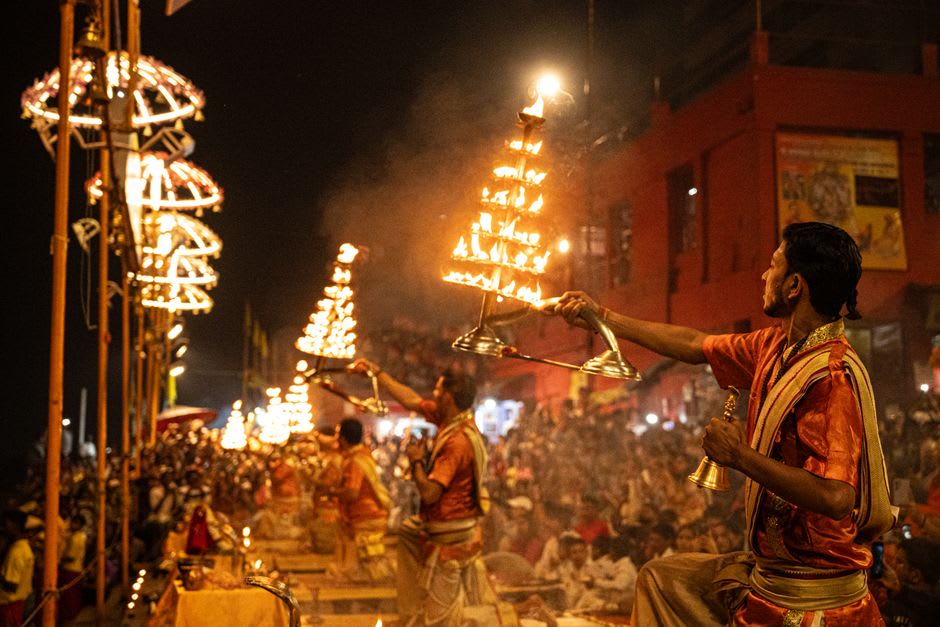
Every evening, without exception, the ghat known as Har Ki Pauri — “footsteps of the Lord,” said to bear an actual footprint of Vishnu on a nearby wall — fills with thousands for the Ganga Aarti, a fire ceremony offered to the river as goddess. I found a spot on the steps around 6:30pm, wedged between a family from Punjab and a group of sadhus with ash-streaked foreheads, and watched as priests on raised platforms swung enormous multi-tiered brass lamps in synchronized arcs while the crowd around me chanted, bells rang from every direction, and a loudspeaker somewhere carried the sound out across the water. When it ended, everyone released their floating diyas at once, and for a few minutes the dark river was scattered with hundreds of small flames drifting downstream, the whole ghat reflected in flickering orange.
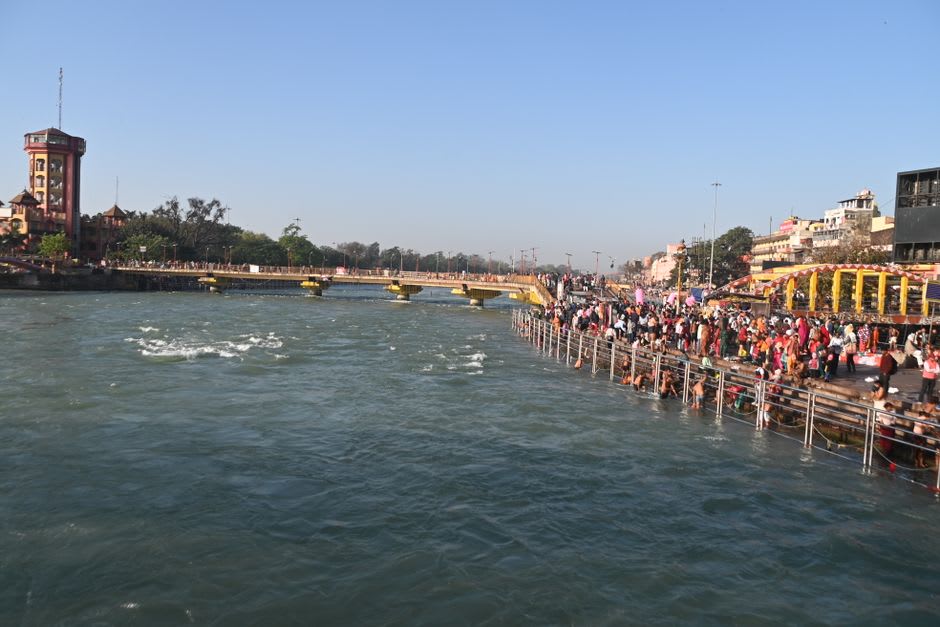
Away from the ghat, Haridwar is a working pilgrim town rather than a polished one — narrow lanes packed with shops selling brass idols, rudraksha beads, and prasad sweets, cows wandering unbothered through traffic, and the smell of frying kachori mixing with incense at every corner. I took the cable car up to Mansa Devi temple on the hill above town one morning, and from the top the whole layout made sense: the river arriving from the mountains behind, spreading wide and calm through the town, then continuing on flat and silver toward the plains that stretch, essentially uninterrupted, all the way to the Bay of Bengal.
When to go: Year-round, though the Kumbh Mela and Ardh Kumbh Mela (held on a rotating cycle) bring millions and are worth witnessing once if the dates align; October to March offers the most comfortable weather for the rest of us.