
Gwalior
"Babur called it the pearl among the fortresses of India, and standing under its walls I couldn't argue with him."
A hilltop fort so formidable a Mughal emperor called it the pearl among fortresses, guarding blue-tiled palaces and the tomb of India's greatest musician.
Gwalior Fort announces itself from kilometers away, a wall of sandstone running along the crest of a hill for nearly three kilometers, and it is not hard to understand why the Mughal emperor Babur, no stranger to conquering fortifications, singled it out as “the pearl among the fortresses of India” in his memoirs. I approached on foot up the steep road that winds beneath the ramparts, and the closer I got, the more the fort stopped looking like a single structure and started looking like a small mountain that had simply been fortified rather than built upon.
The fort has changed hands more times than most Indian monuments — Tomars, Mughals, Marathas, the British — and each dynasty left something behind rather than erasing what came before, which is why the complex reads less like one coherent building and more like a layered record of who controlled central India at any given century.
Blue tiles and a father of music
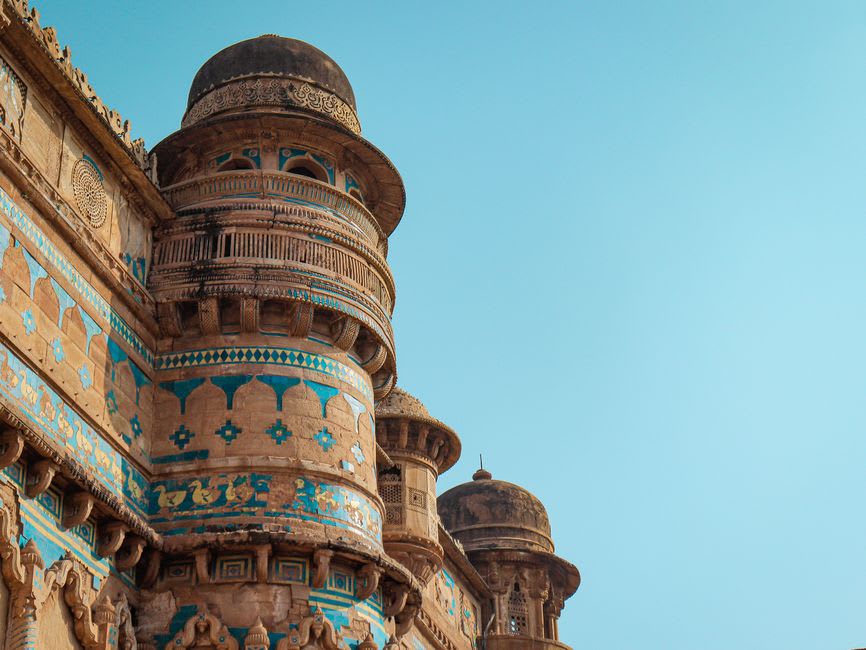
Man Singh Palace, built by the Tomar ruler Man Singh Tomar in the late 15th century, is the fort’s architectural highlight, its exterior still carrying patches of the original turquoise and yellow tilework depicting elephants, peacocks, and banana trees in glazed ceramic — a decorative technique rare enough in Indian palace architecture that conservators treat the surviving patches as genuinely precious. Inside, the palace drops down through underground chambers that served as both cool retreats from the heat and, according to grimmer local history, prison cells during the Mughal period, including one where a Mughal prince was reportedly held.
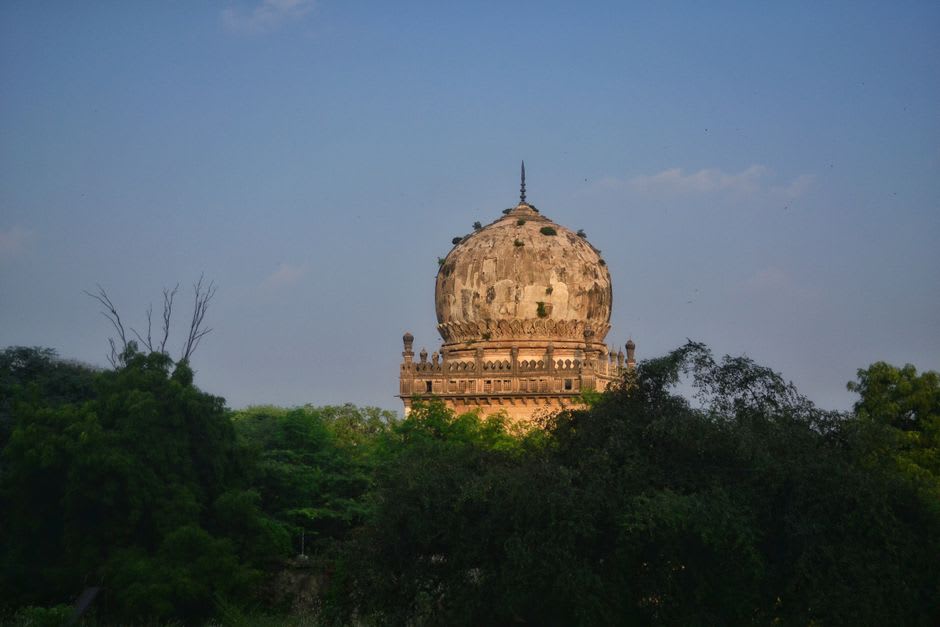
Down in the city below the fort, I visited the tomb of Tansen, one of the nine legendary jewels of Akbar’s court and widely regarded as the father of Hindustani classical music, credited with developing several ragas still performed today. The tomb sits in a quiet garden beside the shrine of the Sufi saint Muhammad Ghaus, and every December the site hosts the Tansen Sangeet Samaroh, a classical music festival that draws performers from across India to sing beneath a tamarind tree said to sweeten the voice of anyone who chews its leaves — a superstition musicians here still take seriously enough to actually try it.
When to go: October to March for cooler weather suited to the long uphill walk through the fort. Try to time a visit around the Tansen Sangeet Samaroh in December if classical music draws you — it’s one of the few festivals in India built entirely around musical heritage rather than religious observance.