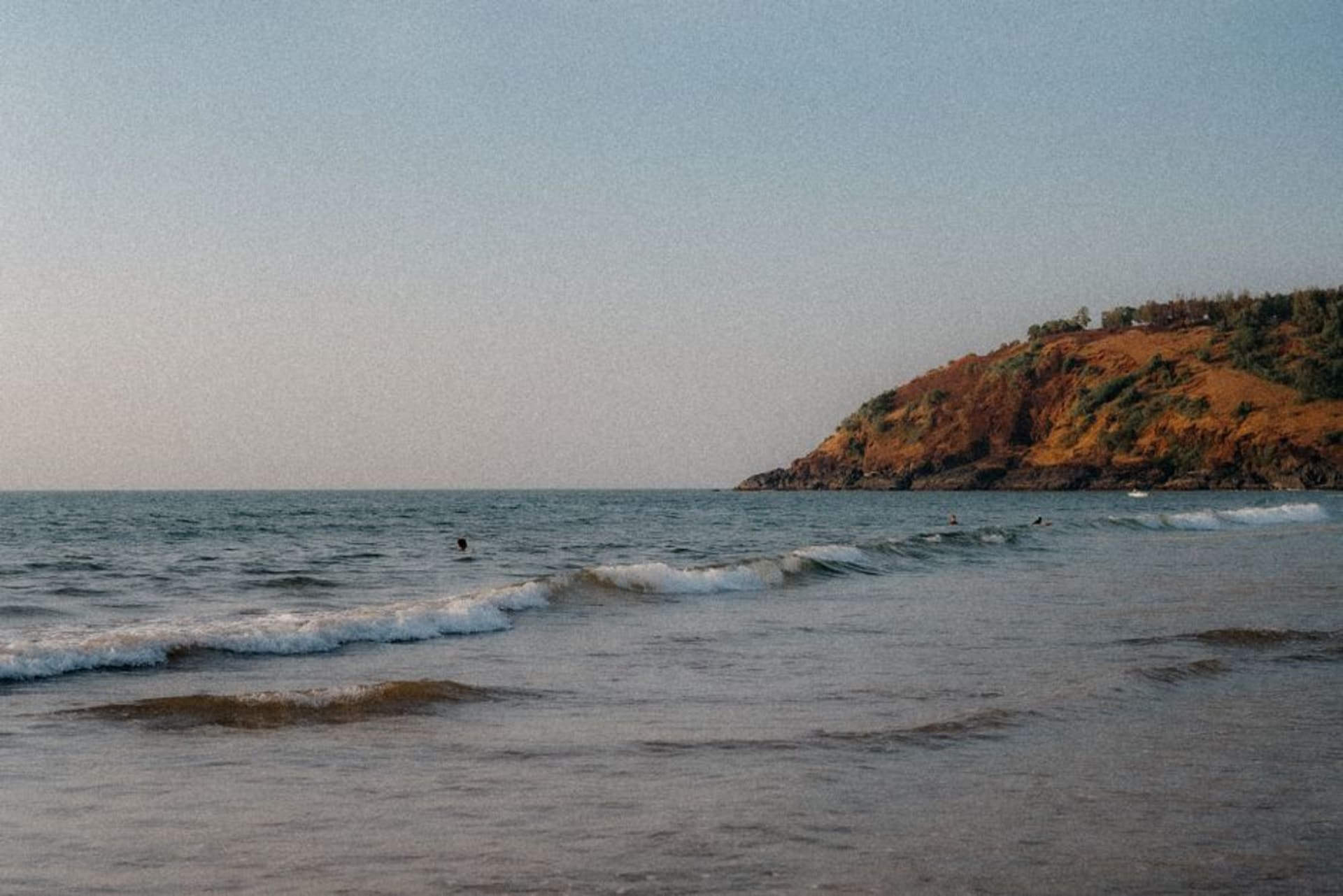
A pilgrimage town and crescent-beach hideaway on the Karnataka coast, where the cliff walk between coves is worth more than the beaches themselves.
I got off the bus at Gokarna expecting a beach town and found a pilgrimage town that happens to have beaches. The two things sit inside each other without much friction. Mahabaleshwar Temple, dedicated to Shiva and one of the holiest sites on India’s west coast, anchors the old town in narrow lanes thick with the smell of jasmine and frying vadas, and pilgrims in wet dhotis walk past backpackers in tie-dye without either group seeming to notice the other. I checked into a guesthouse two minutes from the temple tank and could hear the six a.m. bells from bed, which felt like the correct way to wake up in a temple town.
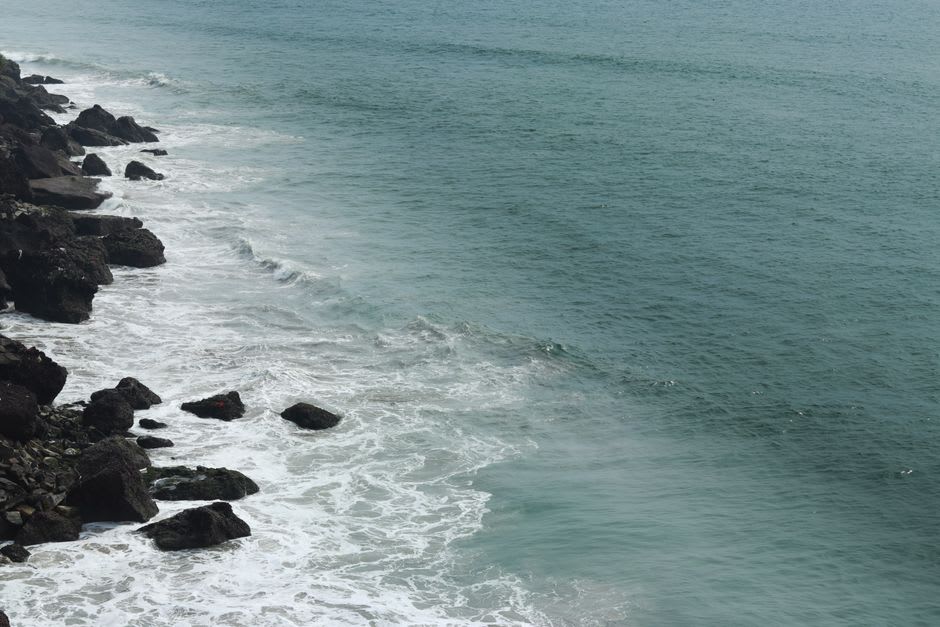
The beaches are a twenty-minute walk south, and this is where Gokarna earns its reputation as the anti-Goa. Om Beach curves into the shape that gives it its name — two crescents meeting at a rocky point — and the water is clean in a way I had stopped expecting on this coast. I walked the cliff trail that strings together Kudle, Om, Half Moon, and Paradise beaches, a path of red laterite rock and scrub forest with the Arabian Sea slamming into the base of the cliffs the whole way. It took most of a morning, cost nothing, and showed me four completely different beaches, each one quieter than the last.
The Trail Beyond Om
Paradise Beach has no road access, which is precisely why it has stayed the way it has. I reached it by the cliff path rather than the boat that ferries most visitors from Om, arriving sweaty and salt-crusted to find maybe a dozen people scattered across a stretch of sand backed by palm groves, a few makeshift shacks selling coconut water and grilled fish, and absolutely nothing resembling a resort. A French guy who had clearly been there for weeks was reading in a hammock strung between two trees. I swam out past the break and floated on my back looking at cliffs that had nothing built on them, and understood why people come to Gokarna and lose track of how many days they meant to stay.
Temple Town Mornings
Back in the old town, the rhythm is entirely different. I went down to the temple tank one morning before the heat arrived and watched pilgrims bathe in water believed to carry the blessing of the Atmalinga housed inside Mahabaleshwar Temple — according to legend, a fragment of Shiva’s own linga, stolen and hidden here by the demon Ravana, which is why Gokarna ranks among the most sacred Shaiva sites in India despite its small size. A priest let me stand at the threshold, though non-Hindus aren’t permitted inside the inner sanctum, and the smell of camphor and marigolds drifting out into the lane was enough. I bought a bag of jalebi from a stall that had clearly been feeding this same crowd of devotees for generations, still warm, dripping syrup onto the newspaper it was wrapped in.
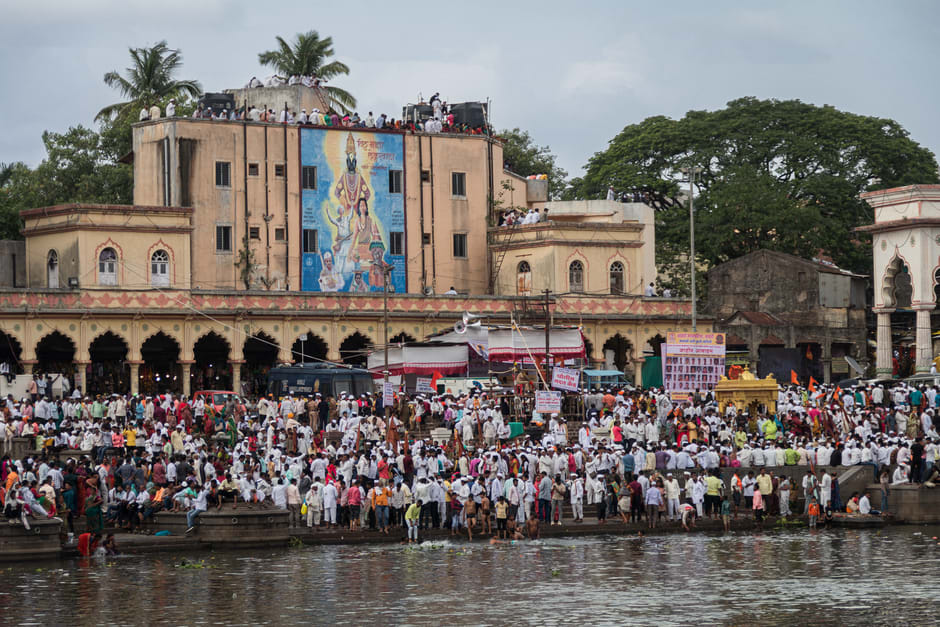
That contrast — sacred town, feral beaches, a twenty-minute walk between them — is what makes Gokarna stick in memory longer than beach towns usually do. Nobody is performing anything here for anyone. The pilgrims aren’t there for us, and the beach isn’t dressed up either.
When to go: November to February for cool mornings and calm seas, before the pre-monsoon heat sets in around March. The cliff trail is best walked early, before nine, while the rock is still cool underfoot.