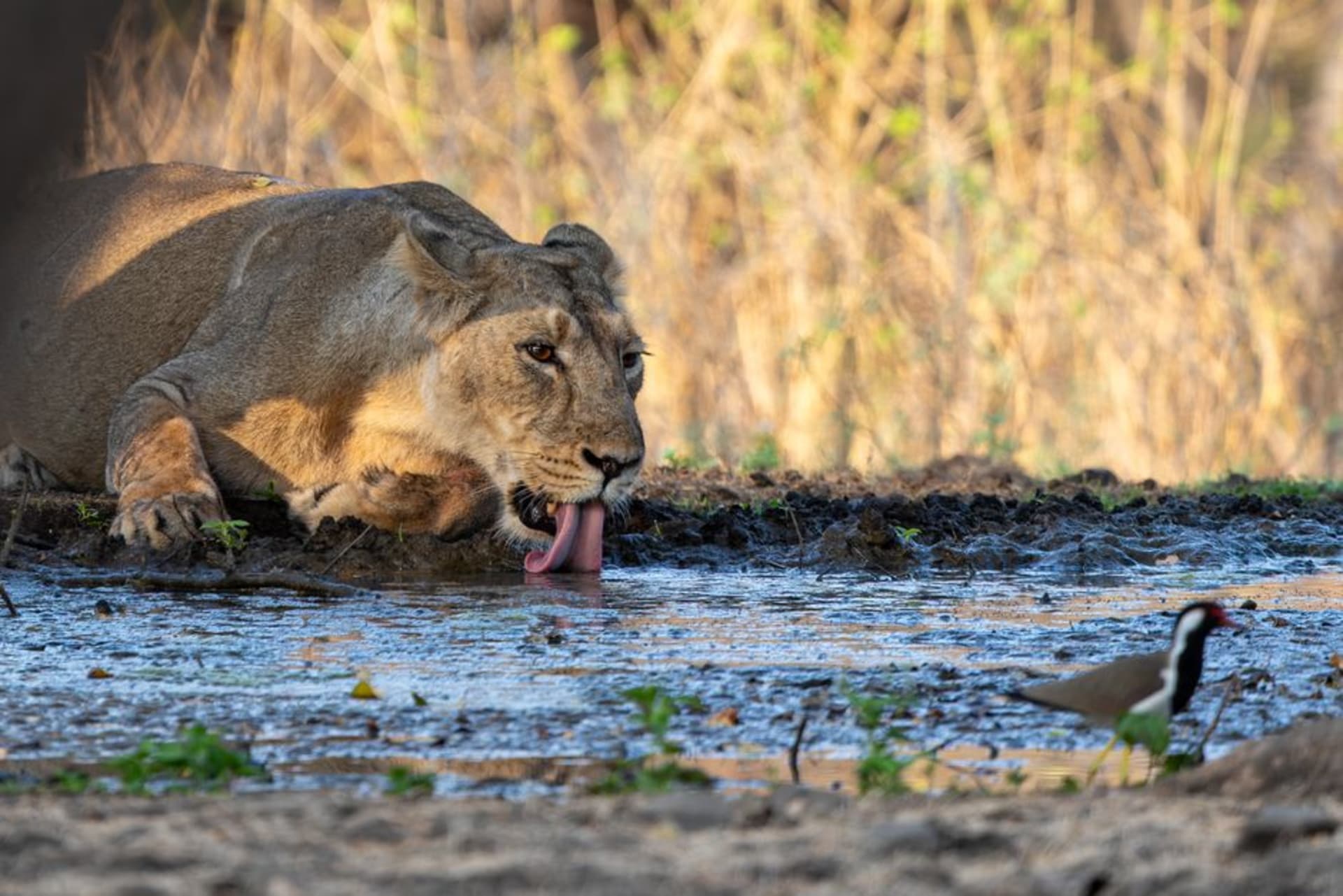
Gir National Park
"Every wild lion left on this planet outside Africa lives inside this one forest, and it's smaller than you'd think."
The last wild home of the Asiatic lion, a dry teak forest in Gujarat where pastoralist herders and apex predators have shared the same ground for generations.
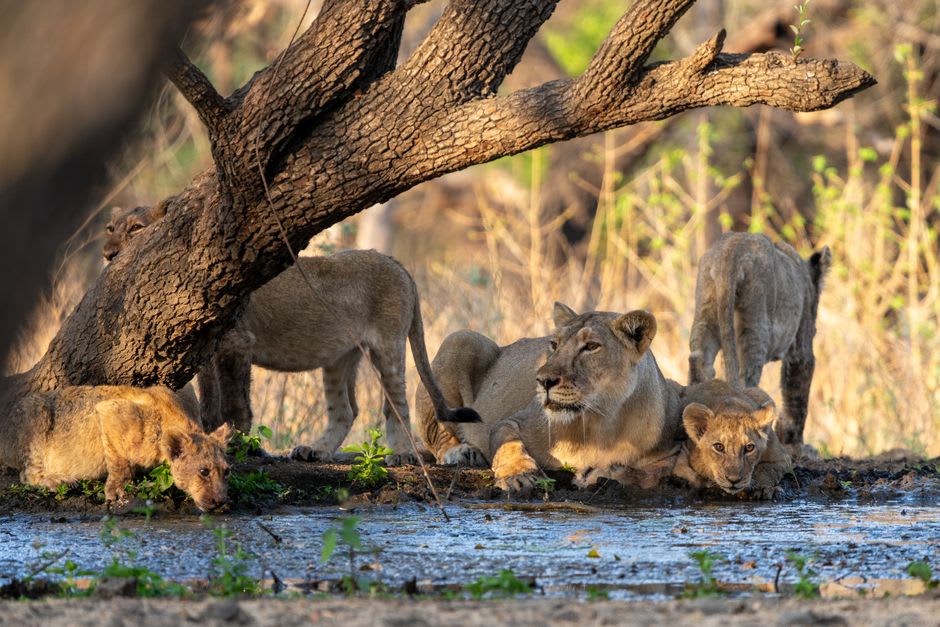
I did not expect to feel nervous getting into an open-top jeep at five in the morning, but there is something about the guide’s total calm — checking radio updates from other jeeps, scanning tire tracks in the dust — that makes the possibility of an actual lion sighting feel suddenly real rather than theoretical. Gir is the only place on earth where wild Asiatic lions still survive, a subspecies that once ranged from the Middle East to eastern India and was hunted down to a population of barely twenty animals by the early 1900s before Nawab of Junagadh-era protections, and later Indian government conservation efforts, brought the number back up into the hundreds. We found our pride forty minutes in: two lionesses and three cubs resting in dry teak-forest scrub barely fifteen meters from the track, entirely unbothered by the jeep’s engine idling nearby. One cub kept swatting at its mother’s tail. Nobody in the jeep said a word for what felt like ten minutes.
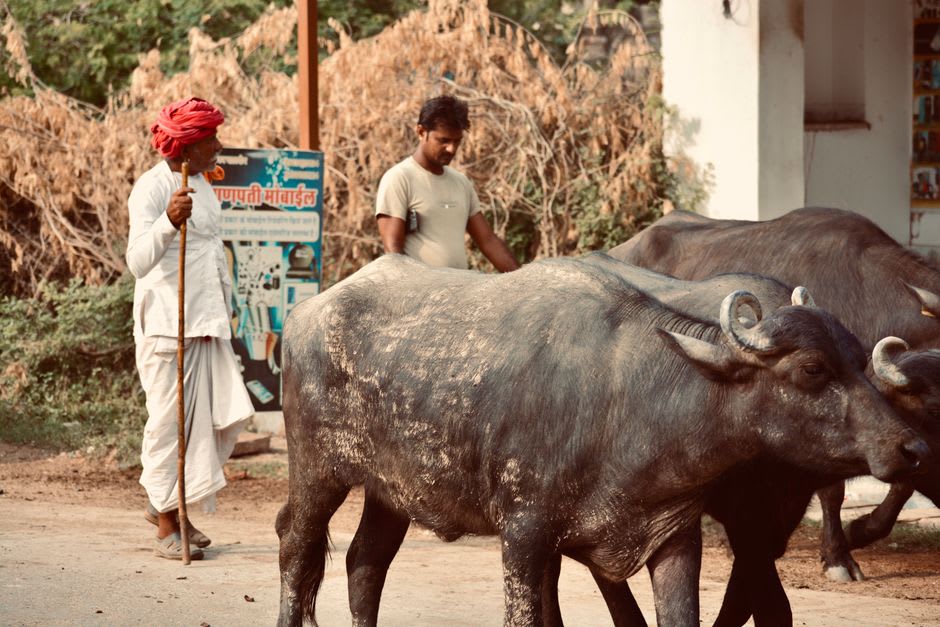
Living alongside the lions
What makes Gir different from an African safari isn’t just the species — it’s the fact that people have lived inside this ecosystem the entire time. The Maldhari, a pastoralist community, keep small settlements called “ness” scattered through the forest and graze buffalo and cattle in the same landscape the lions patrol. Our guide, whose own uncle was Maldhari, explained that livestock predation happens and is simply priced into the community’s relationship with the forest — compensation schemes exist, but so does an older, more fatalistic acceptance that sharing land with lions means occasionally losing an animal to one. I visited a small ness on the park’s edge and drank buttermilk with a family whose grandfather had been photographed decades earlier standing near a lion that had wandered into the settlement’s cattle pen — a story told now with more pride than fear.
Beyond the lions, Gir holds leopards, striped hyenas, marsh crocodiles in the Kamleshwar Dam reservoir, and over three hundred bird species, but the lions are unavoidably the story here, both because of how close the extinction call was and because of how strange it is that this single forest — roughly 1,400 square kilometers, smaller than many African reserves — carries the entire weight of a species’ wild future.
When to go: December through March for the coolest game drives and the best chance of sightings, since Gir closes entirely from mid-June through mid-October for the monsoon and the lions’ breeding season.