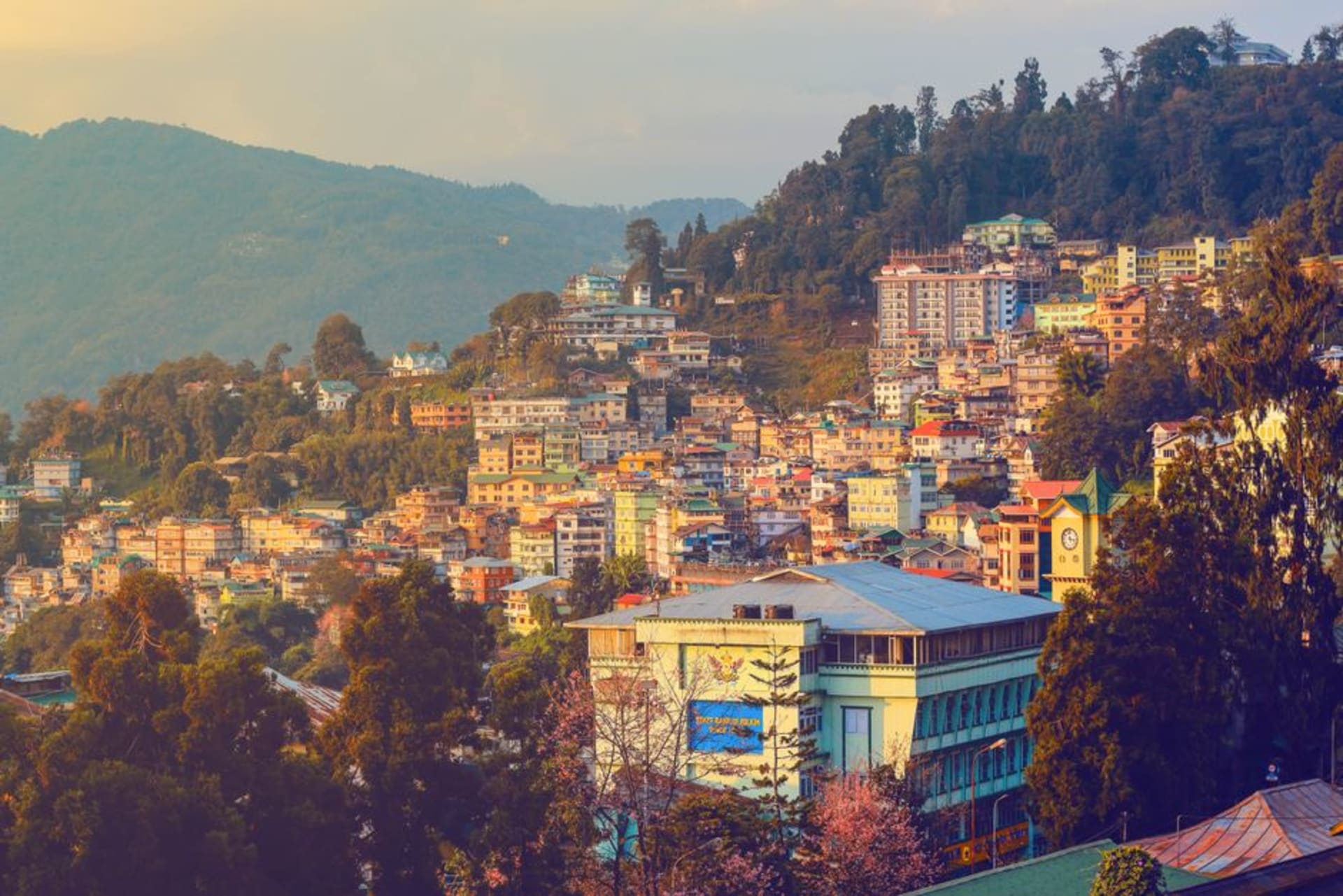
Gangtok
"Gangtok is the only Indian state capital where I ordered a coffee, sat outside, and just watched the mountains do the entertaining."
Sikkim's hill capital, where a pedestrian-only main street, a cable car over the valley, and Kanchenjunga on a clear morning make for the best city view in the Himalayas.
I’d been through enough Indian cities by the time I reached Gangtok to have a reflexive brace for traffic — the horn-first driving style, the constant negotiation for space on the road. So MG Marg, Gangtok’s central promenade, felt almost like a trick. It’s fully pedestrianized, no vehicles allowed, cobbled and lined with cafes, bakeries, and shops selling Sikkimese handicrafts, with actual benches where actual people just sit. I arrived at dusk, when the string lights came on and off-duty monks in maroon robes mixed with local teenagers filming reels for social media, and spent my first evening doing nothing more ambitious than drinking a cappuccino at a rooftop cafe and watching the street below.
Gangtok became Sikkim’s capital under the Namgyal dynasty in the nineteenth century and grew rapidly after Sikkim’s 1975 merger with India, and the city still carries that layered identity — Buddhist monastery town, former kingdom’s seat, and modern hill-station capital all stacked into a single steep hillside. Unlike Yuksom or Pelling further west, which still feel like villages the modern world arrived at gradually, Gangtok feels unmistakably like a capital: government buildings, a proper bazaar economy, traffic once you step off MG Marg.
The ropeway and Rumtek’s golden reliquary
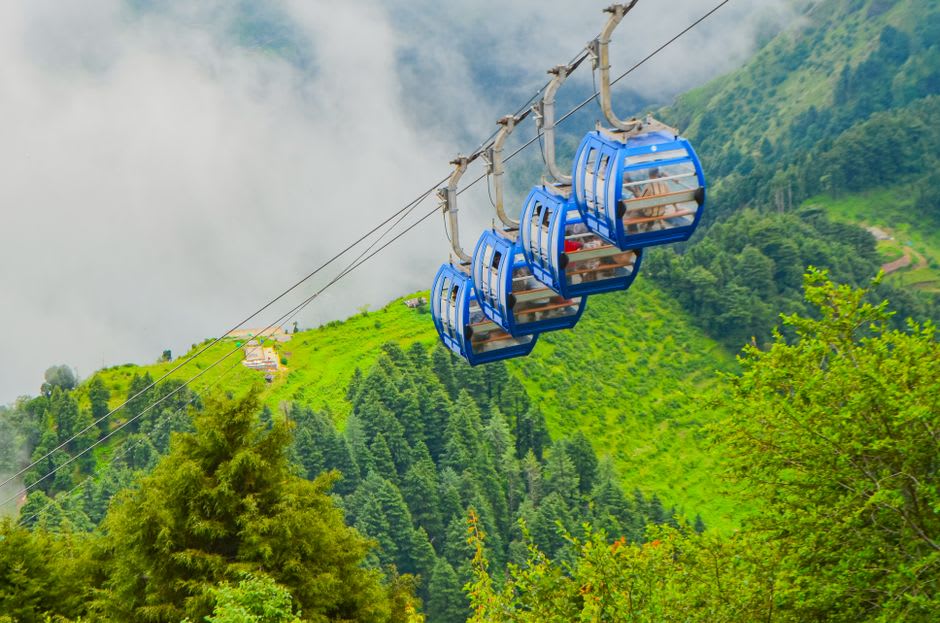
The Gangtok ropeway, a cable car strung across the valley between Deorali and Tashiling, gave me the single best orientation view of the city — the whole hillside laid out below in tiered rooftops, the Ranipool river valley beneath, and on the one clear morning I had, the white triple summit of Kanchenjunga, the world’s third-highest peak, visible on the horizon like it had been added digitally. Most mornings the peak stays wrapped in cloud until well past nine, so the cable car operators told me to come as early as I could stand.
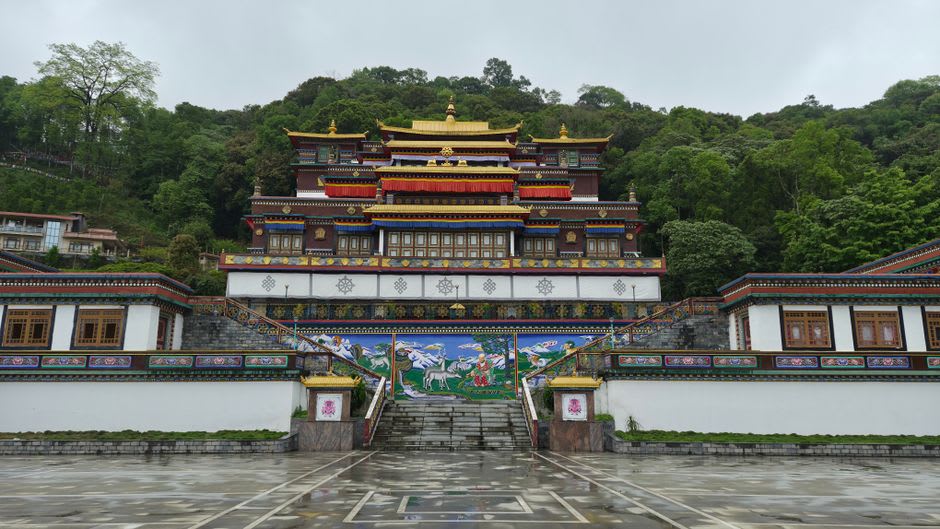
Twenty-four kilometers outside the city, Rumtek Monastery is the largest monastery in Sikkim and the seat-in-exile of the Karmapa, head of the Karma Kagyu school of Tibetan Buddhism, built in the 1960s to replicate the original Rumtek monastery in Tibet after the Karmapa fled following the Chinese takeover. Inside the Golden Stupa temple on the grounds sits a reliquary said to contain relics of the sixteenth Karmapa, encased in gold and gems thick enough that the object practically glows under the temple’s low light. I watched young monks in training file into the main hall for afternoon prayers, maybe eight or nine years old, chanting alongside monks decades their senior, and a caretaker explained that the monastery still trains novices from Sikkimese and Tibetan refugee families exactly as it has since it was built.
I ate my way through Gangtok’s momos more than I’d like to admit — steamed pork ones from a stall near the taxi stand became a daily ritual — and washed them down with chhaang, the local millet beer served warm in a bamboo mug with a straw, which a shopkeeper insisted I try “the proper way,” meaning standing up, at eleven in the morning.
When to go: March to May and October to mid-December for the clearest mountain views and best chance of catching Kanchenjunga uncovered by cloud. Avoid the monsoon (June to September), when landslides regularly disrupt roads in and out of the city.