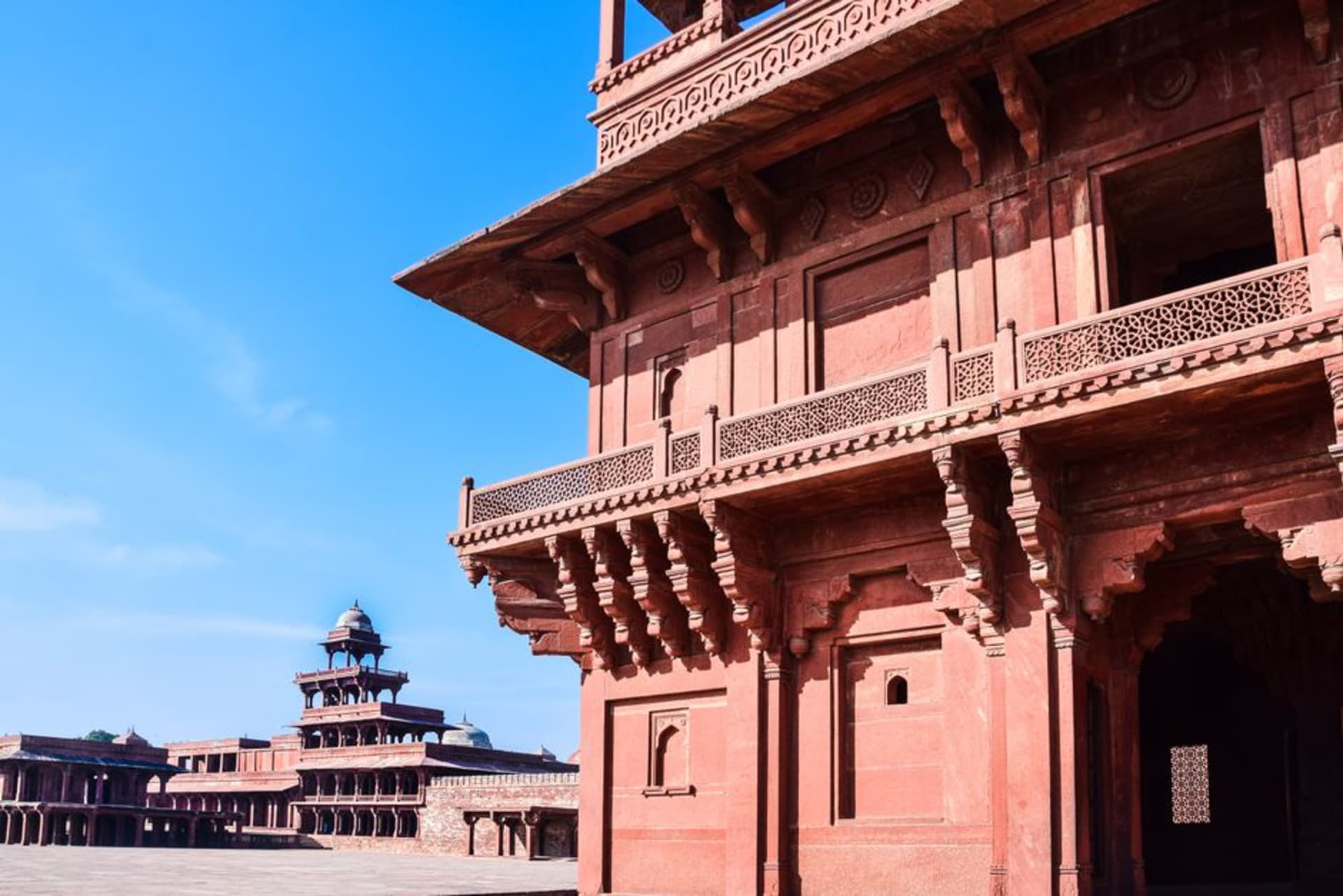
Fatehpur Sikri
"An entire Mughal capital, built to last forever, lasted about fourteen years."
Akbar's abandoned red sandstone capital, built in a single burst of imperial ambition and deserted within decades when the water simply ran out.
There is something genuinely unsettling about walking through a capital city that still has all its buildings standing and none of its people. Fatehpur Sikri was built by the Mughal emperor Akbar starting in 1571, in gratitude to the Sufi saint Salim Chishti who had predicted the birth of his son, and Akbar poured extraordinary resources into it — palaces, mosques, courts, a whole functioning seat of empire in red sandstone — only to abandon the entire city by around 1585, reportedly because the local water supply couldn’t sustain the population. Fourteen years, by most estimates, is roughly how long the greatest city in the Mughal empire actually functioned as one.
Walking in through the Diwan-i-Am, the public audience hall, I kept expecting the scale to feel like a ruin, weathered and crumbling the way abandoned places usually are. It doesn’t. The sandstone is sharp-edged, the carving crisp, the geometry of the courtyards precise enough that it feels less like an archaeological site and more like a city that simply had its residents raptured out of it one afternoon, leaving the architecture mid-thought.
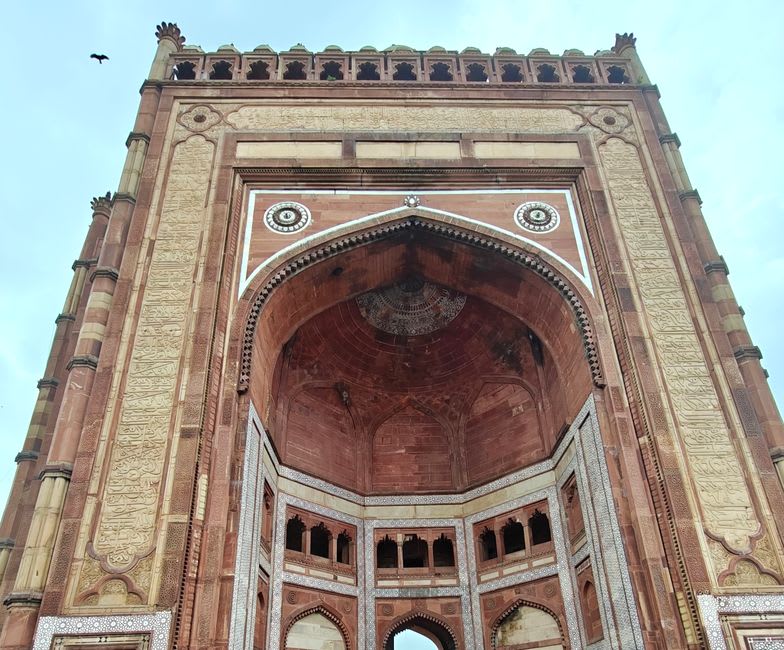
The gate that outsizes everything around it
Buland Darwaza, the Gate of Victory, is the single most overwhelming structure in the complex — a triumphal gateway over 50 meters tall, built to commemorate Akbar’s conquest of Gujarat, and it dwarfs every visitor who climbs the long flight of stairs beneath it. Standing at its base looking straight up, I felt genuinely small in a way that few monuments in India, even ones far larger in footprint, have managed. An inscription on the gate carries a quote attributed to Jesus about the transience of the world — a reminder, deliberately placed by a Muslim emperor building an empire, that empires do not last, which reads as almost prophetic given what happened to the city itself a few years later.
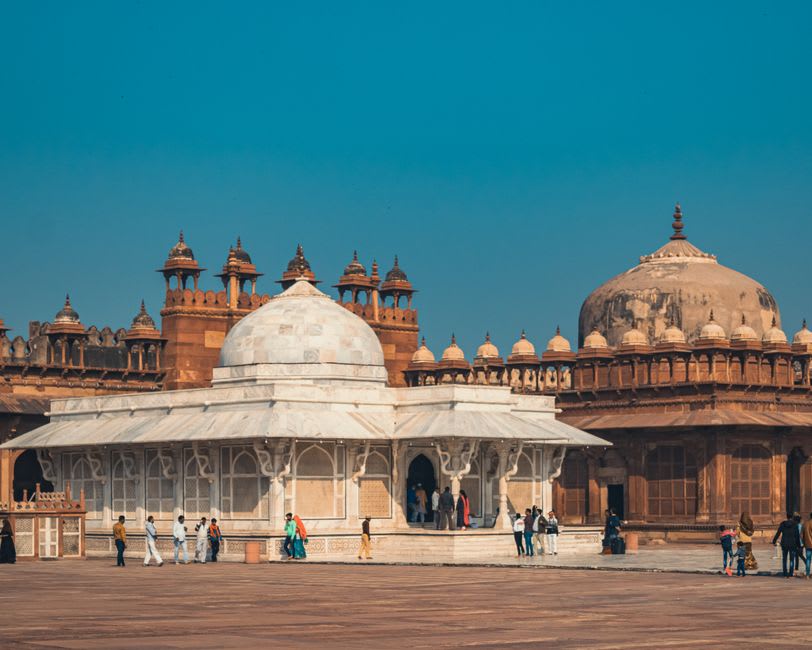
Inside the mosque courtyard, the marble tomb of Salim Chishti sits like a jewel box amid the red sandstone — white, delicately latticed, its screens carved so finely they filter light into lace patterns on the floor. Pilgrims still tie red and yellow threads to the lattice screens asking for blessings, mostly related to children, in direct continuity with the saint’s own reputation for granting Akbar’s wish for an heir. The Panch Mahal, a five-story pavilion of diminishing open platforms with no walls at all, was reportedly used by the women of the court to catch the breeze, and climbing it gives the best vantage over the whole abandoned complex — courtyards receding in every direction, empty of everything except tour groups and the occasional monkey troop.
When to go: November to February, early morning, before the heat makes the exposed red sandstone courtyards genuinely punishing to walk across. It pairs easily as a half-day stop between Agra and Jaipur.