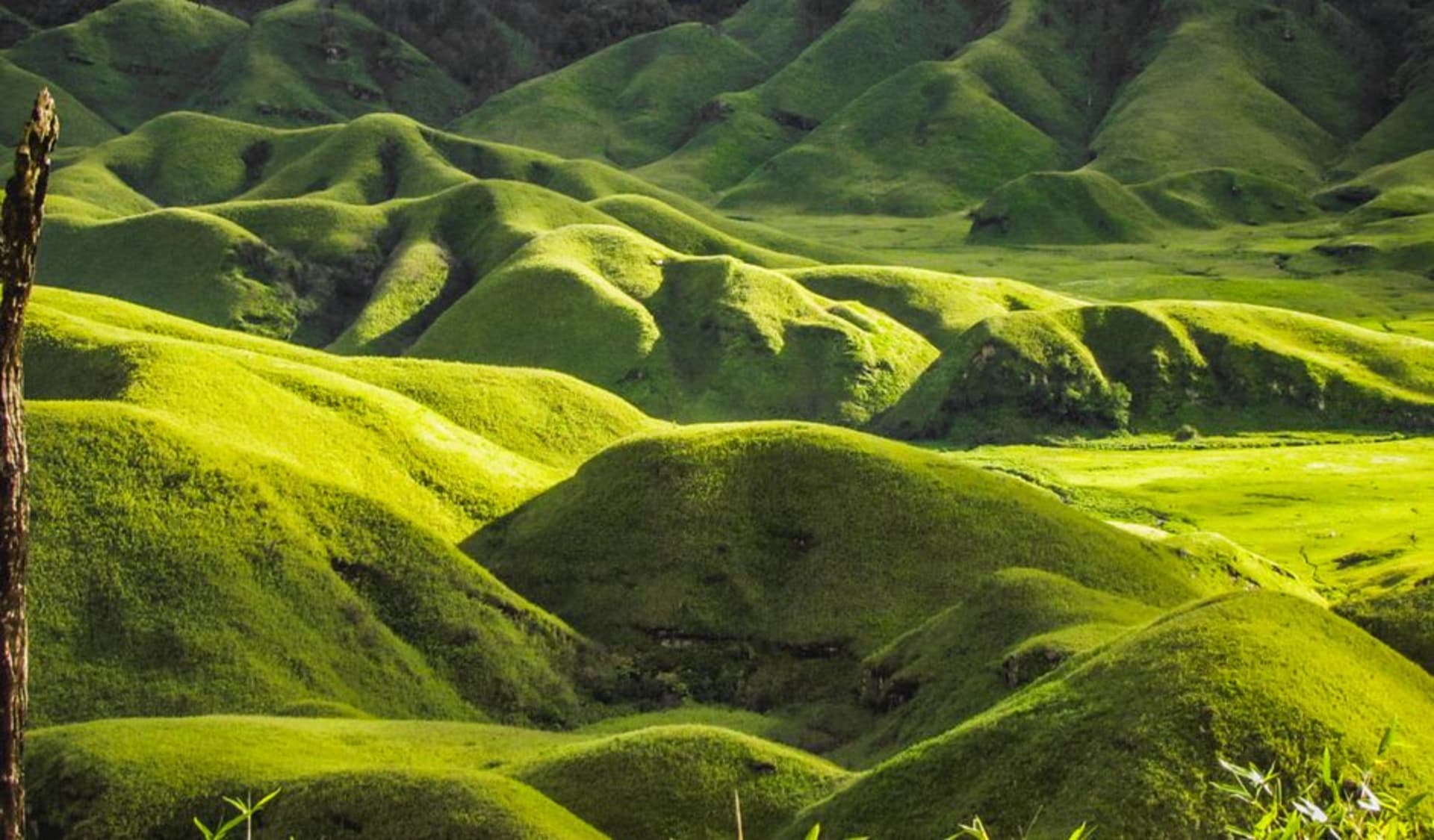
Dzukou Valley
"I've trekked in a dozen countries and never arrived somewhere that made me stop and just say the word 'what' out loud."
A hidden trekking valley on the Nagaland-Manipur border where rolling green hills and a rare seasonal lily bloom look like nowhere else in India.
The climb up to Dzukou Valley starts at Viswema village outside Kohima and takes three to four hours of steep, unglamorous ascent through forest and bamboo thicket — the kind of trek where you spend most of the time looking at your boots and wondering if it’s worth it. Then you crest the final ridge, and the trail simply stops climbing and the whole world opens sideways: a wide valley of soft rolling hills, no trees, just grass and low shrub in a green so saturated it looked color-corrected, folding away toward the Manipur border in every direction. I actually stopped walking and said “what” out loud, to nobody, because nothing about the previous three hours of forest had suggested this was coming.
Dzukou sits on the border between Nagaland and Manipur, claimed with some good-natured rivalry by both states, and it’s unlike any other landscape I found in India — more reminiscent of the Scottish Highlands or a New Zealand high valley than anything on the subcontinent. There are no permanent villages inside the valley itself; the only shelter is a basic trekkers’ hut near the entrance where I spent the night on a thin mattress under enough blankets to survive the cold, which drops hard after dark even in the warmer months.
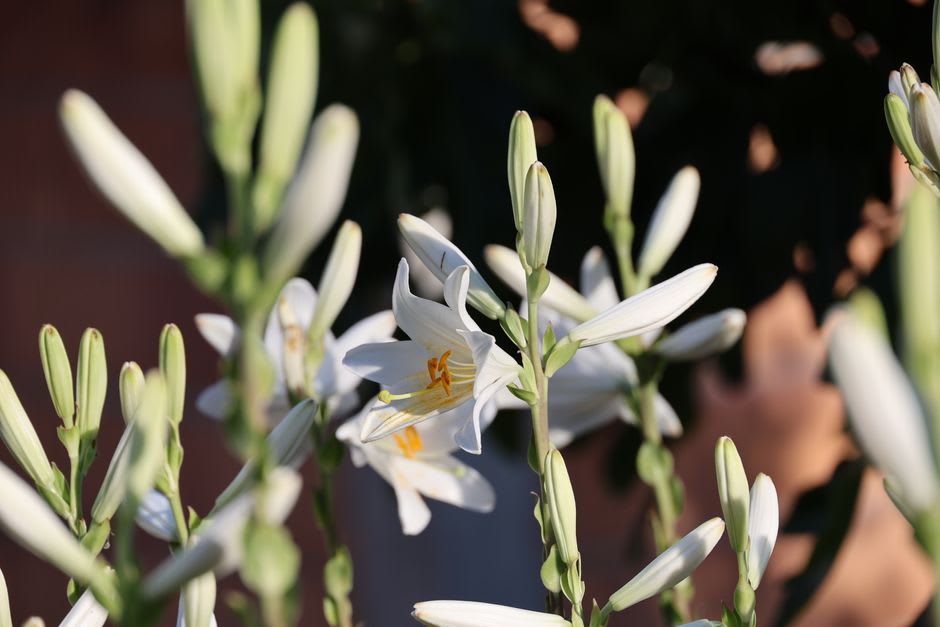
The lily that only blooms once a year
I’d timed my trek for late June specifically to catch the Dzukou lily, Lilium chitrangadae, a rare species found nowhere else on Earth outside this valley. For a few weeks each year, usually late June into July, the valley floor and lower slopes fill with these white, faintly nodding flowers, and the effect against the green hillsides is the kind of thing that draws trekkers from across India who otherwise would never have heard of Nagaland. I walked for an hour through slopes scattered with them, a Naga guide named Kevi naming other wildflowers I couldn’t have identified myself — primulas, rhododendrons in miniature form, ground orchids tucked into rock crevices.
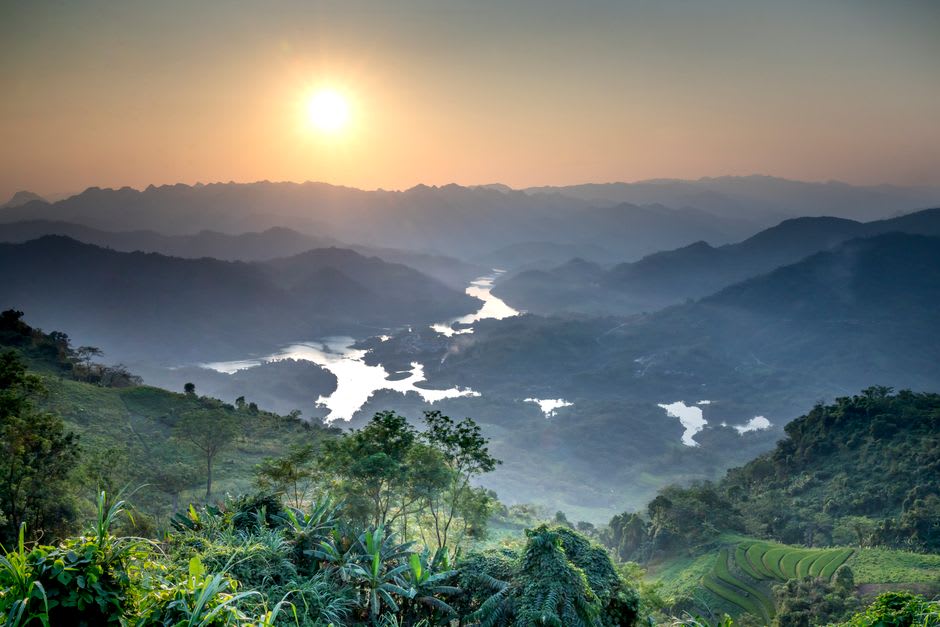
The valley’s centerpiece is a slow, clear river that meanders through its floor, and I sat by it for a long time on the second morning, mist still sitting low over the hills, listening to nothing — no vehicles, no phones getting signal, no other trekking groups within earshot. Kevi told me a 2020 fire, accidentally started by campers, had scorched a large section of the valley a few years before my visit, and that the recovery of the grass and lily population was still ongoing, a fragile detail that made the whole place feel more precious rather than less.
When to go: Late June through August for the lily bloom and the greenest hills, though the trail can turn muddy in monsoon rain. September and October give drier trekking conditions with slightly less flower coverage but equally striking light.