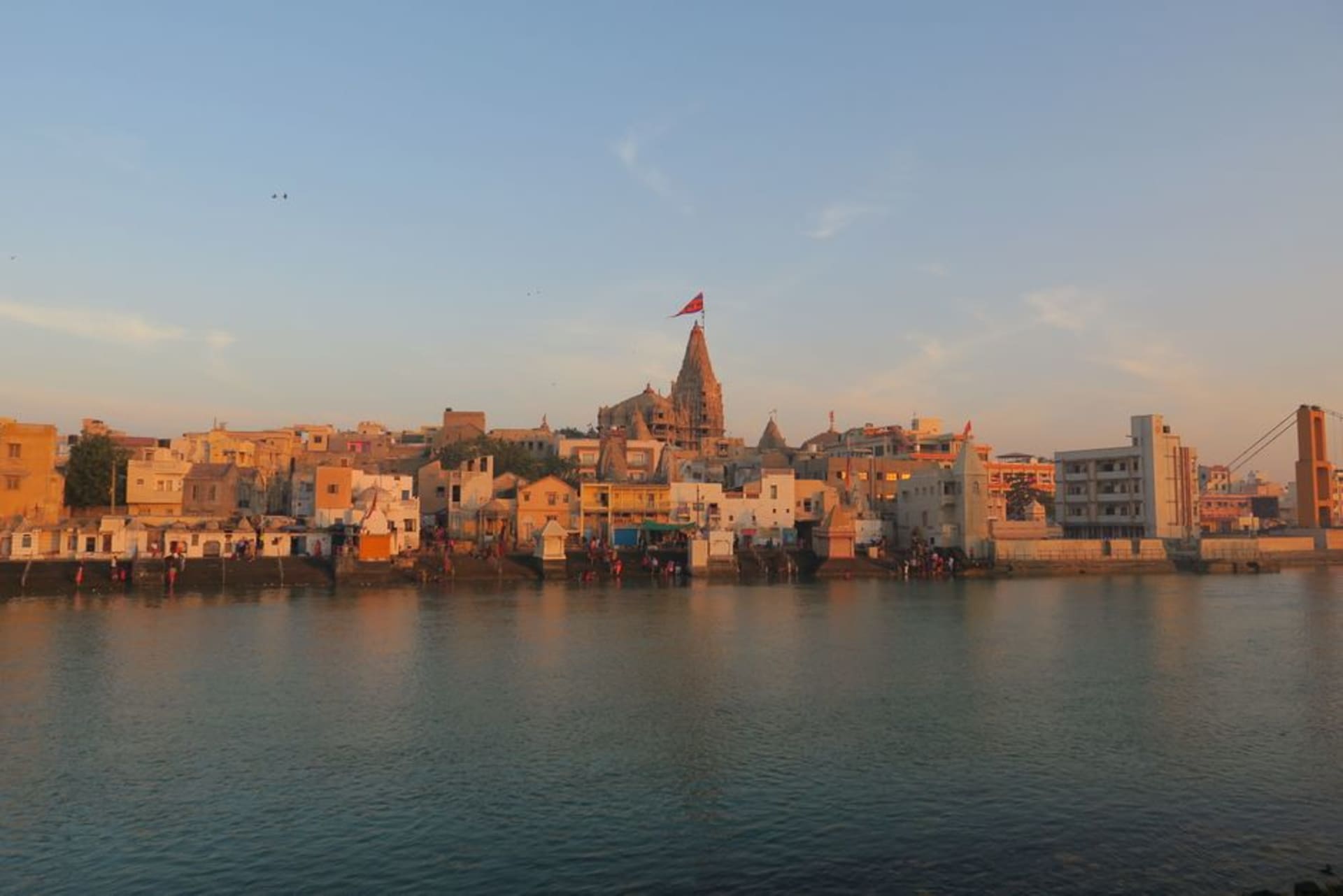
Dwarka
"Dwarka doesn't perform its faith for visitors -- you just happen to be standing inside it."
A pilgrimage town on Gujarat's westernmost tip, built around a temple to Krishna's legendary submerged city, where devotion runs at a pitch few other places in India can match.
I arrived in Dwarka on an overnight train from Ahmedabad and stepped out into a town that felt, immediately, unlike anywhere else on the Gujarat coast — smaller, saltier, and organized entirely around a single five-story tower visible from almost every street. Dwarka is one of Hinduism’s Char Dham, the four sacred pilgrimage sites believed to have been designated by the philosopher Adi Shankaracharya, and it exists because this is where Krishna, according to the Mahabharata and Puranic tradition, established his kingdom after leaving Mathura — a city so magnificent that legend holds it sank into the sea after his death, and that marine archaeologists have spent decades searching the coastal waters here for ruins to match the story.
The Dwarkadhish Temple sits at the center of it all, its 78-meter shikhara tower carved from limestone and sandstone in a style that scholars date, in its current form, to around the 16th century, though the site’s worship is claimed to go back over two thousand years. I joined the queue at five in the morning for the first darshan of the day, packed shoulder to shoulder with pilgrims who had traveled from every corner of India, and when the doors opened the crowd surged forward with a force that had nothing polite about it — I was carried more than I walked. Inside, priests rang bells in a rhythm that seemed to sync the entire room’s breathing, and the deity, dressed in fresh silk and flowers changed that morning, appeared for barely a minute before the crowd behind us pushed forward for their own turn.
The island temple at the edge of everything
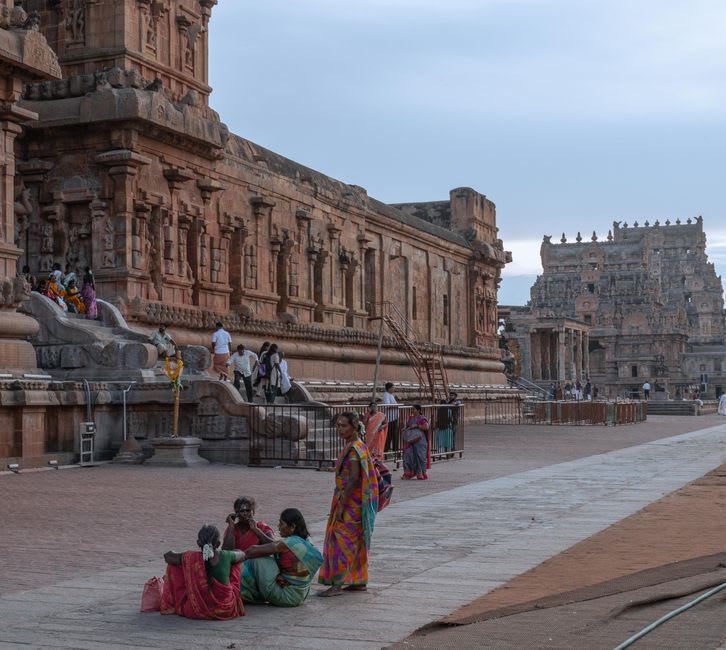
A short boat ride from Dwarka’s harbor took me to Bet Dwarka, an island believed to be Krishna’s actual residence, where fishermen’s boats and pilgrim ferries share the same narrow jetty and the temple there is quieter, more local, less choreographed than the mainland’s main shrine. I sat on the sand afterward eating a plate of Gujarati farsan from a stall clearly built for pilgrims rather than tourists, watching gulls circle boats coming back from the day’s catch, and it struck me that Dwarka doesn’t perform its religious intensity for outsiders the way some pilgrimage towns do — it simply continues at the pitch it’s always run at, and visitors are welcome to step into that current if they can keep up.
When to go: October to March for manageable coastal heat — and if you can, plan around Janmashtami in August or September, Krishna’s birthday, when the town’s devotion multiplies tenfold, though the crowds multiply with it.