Chittorgarh
"The heaviest history I've felt in any fort, and Rajasthan does not lack for forts."
India's largest fort complex, a hilltop city of ruined palaces carrying the weight of sieges, legendary queens, and mass self-immolation.
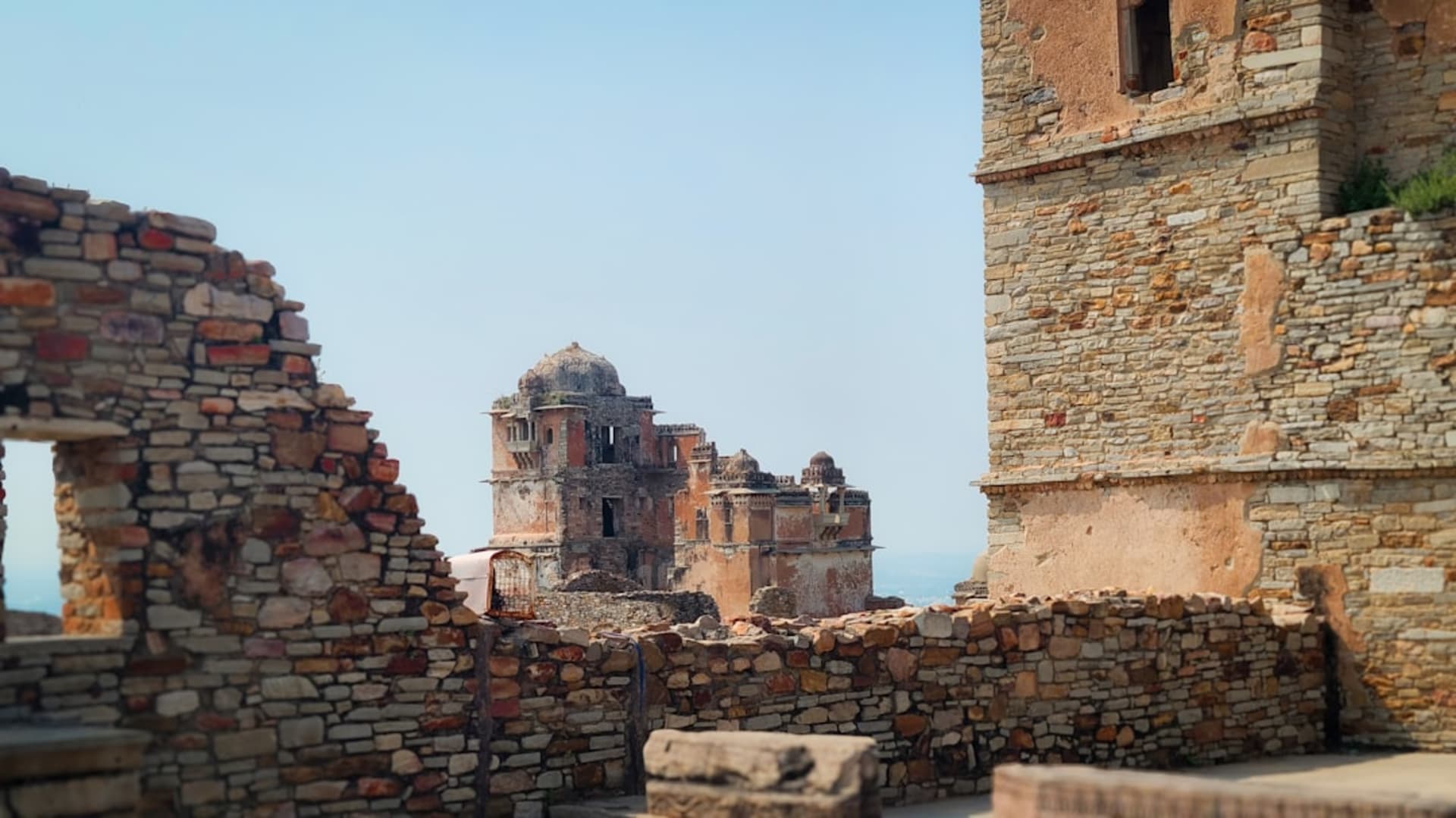
Chittorgarh sits differently than the other forts of Rajasthan, and you feel it before anyone tells you the history. It’s the largest fort complex in India, a plateau nearly 700 acres wide rising 180 meters above the plains, enclosing not just a palace but an entire ruined city — temples, water tanks, ceremonial gates, and the shells of palaces spread across the hilltop like a town that stopped one day and never restarted. I hired a car to drive the winding road up through seven fortified gates, each named for a moment of resistance or sacrifice, and by the time I reached the top the scale of the place had already done something to my mood.
Chittorgarh was sacked three times — by Alauddin Khilji in 1303, by Bahadur Shah of Gujarat in 1535, and by the Mughal emperor Akbar in 1568 — and each siege ended the same way: when defeat became certain, the women and children of the fort committed jauhar, mass self-immolation, rather than face capture, while the men rode out in saffron robes for a final, fatal charge. The 1303 siege is tied to the legend of Rani Padmini, a queen of extraordinary beauty whom Khilji allegedly besieged the fort specifically to claim, supposedly glimpsing her reflection in a mirror before the queen chose jauhar over surrender. Historians debate how much of the Padmini story is embellished court poetry versus fact, but standing at Gaumukh Reservoir, where locals say the jauhar took place, the legend didn’t feel like decoration. It felt like the point of the place.
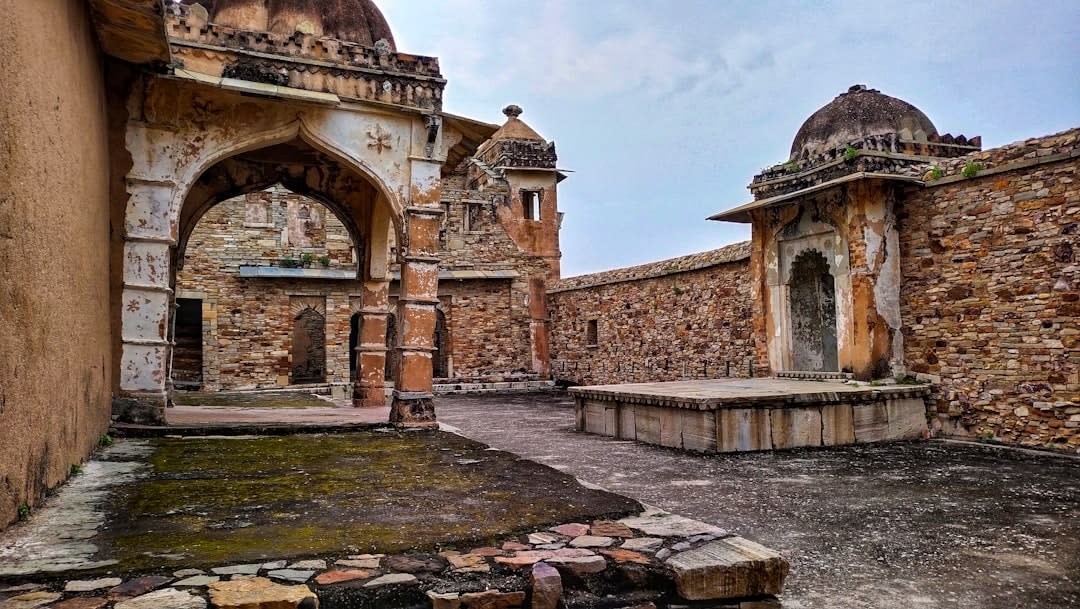
A tower built to celebrate a war, not mourn one
The Vijay Stambh, the Tower of Victory, is the fort’s other defining monument, and it’s a rare moment of triumph in a place otherwise steeped in loss. Rana Kumbha built it between 1458 and 1468 to commemorate his victory over the combined armies of Malwa and Gujarat — nine stories of carved sandstone rising 37 meters, covered floor to ceiling in sculpted deities, and climbable via a narrow interior staircase to a viewing gallery at the top. I climbed it in the late afternoon, the stone still warm from the day’s sun, and the view from the top took in the entire fort plateau at once — the palace ruins, the temples, the reservoir, the plains beyond, all of it laid out like a diagram of six centuries of conflict.
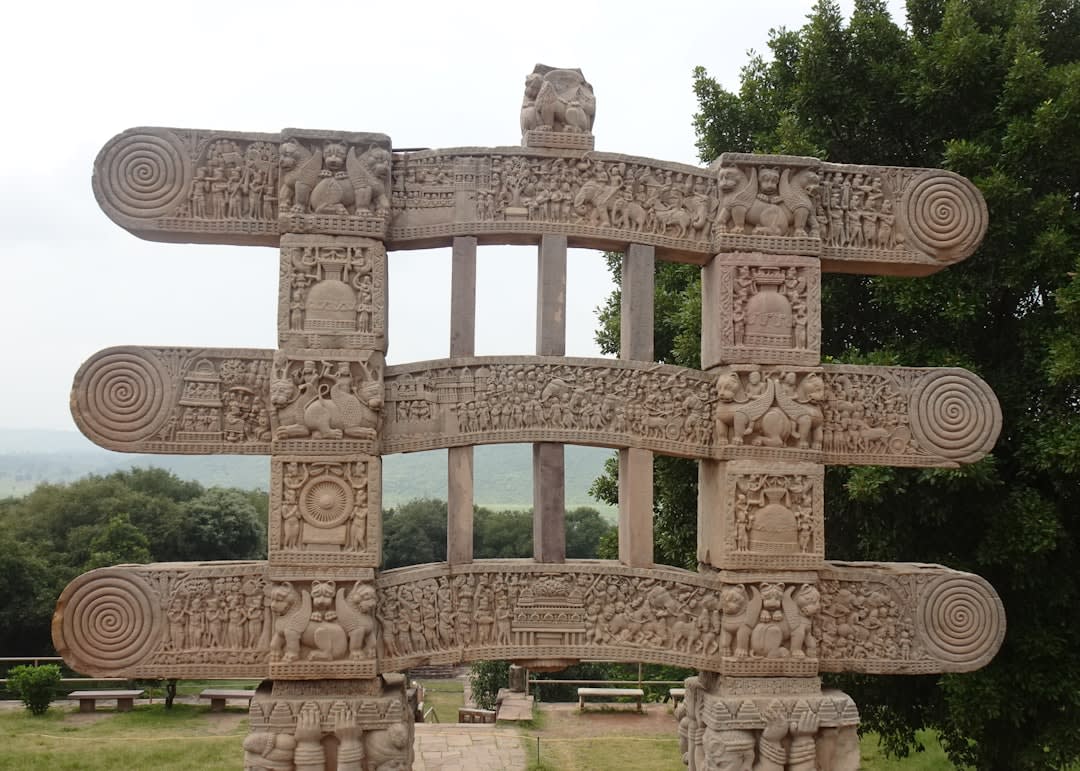
Rana Kumbha’s palace, the oldest structure on the site, is where Maharana Udai Singh II — founder of Udaipur — was born, and where he was smuggled out as an infant, hidden in a basket of fruit, to save him from a palace conspiracy. It’s a small footnote compared to the sieges, but it’s the thread that connects Chittorgarh to Udaipur’s lakeside splendor: the city of romance exists because a child escaped this hilltop of tragedy.
When to go: October to March. The fort has almost no shade across its vast open plateau, and the walk between monuments is long enough that summer heat makes it genuinely dangerous.