Cherrapunji
"The rain here doesn't fall, it arrives -- like the sky just gave up holding it."
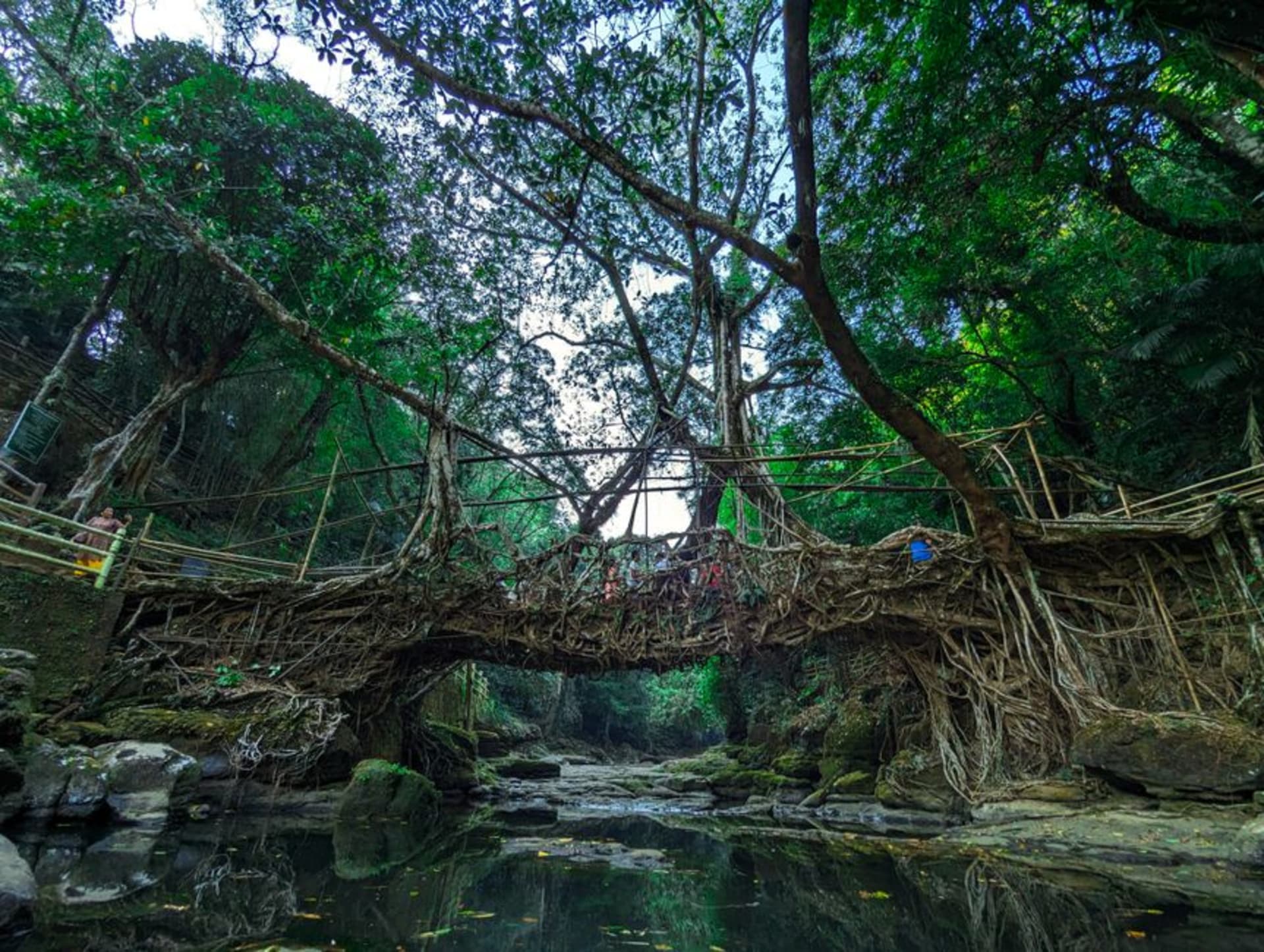
One of the wettest places on Earth, where the Khasi people have spent centuries training living bridges out of rubber fig roots across raging rivers.
The Khasi call this place Sohra, and I’d recommend using that name too, because Cherrapunji as a word carries a colonial mispronunciation baggage that the region itself has mostly moved past. What hasn’t changed is the rain. This is one of the two wettest inhabited places on the planet — it and neighboring Mawsynram trade the record year to year — and the number that actually made me feel it was this: some Julys here get more rainfall than London gets in a decade. I arrived in September, past the worst of the monsoon, and it still rained on me every single afternoon, a sudden, total downpour that arrived without warning and stopped just as fast.
That rain is also the reason the region’s most famous attraction exists at all. The Khasi people have been growing living root bridges for at least two centuries, guiding the aerial roots of the Ficus elastica — the rubber fig tree — across rivers using hollowed betel-nut trunks as scaffolding, training the roots to knit together into a bridge strong enough to cross. It takes ten to fifteen years for a single bridge to become usable, and some of the oldest ones near Sohra are estimated at 500 years old, still growing, still strengthening, engineered by grandparents for grandchildren they’d never meet.
Walking the double-decker bridge
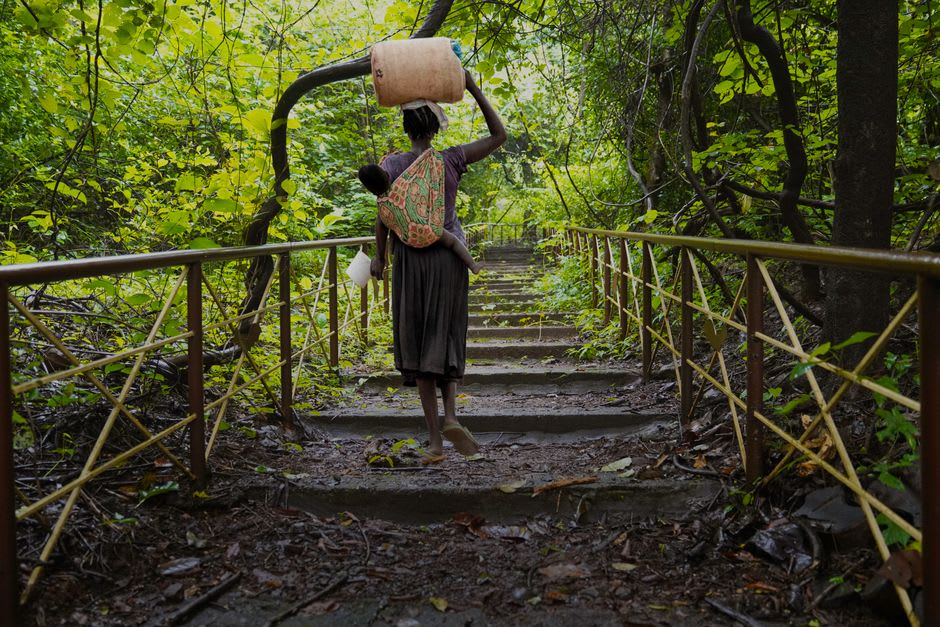
The most famous of these, the Umshiang double-decker root bridge in Nongriat village, requires a descent of roughly three thousand steps down a jungle valley to reach — a knee-punishing hour and a half down, doubled coming back up. I did it with a local guide named Banshan who’d grown up in the village and crossed the bridge as a shortcut to school as a kid, which reframed the whole thing for me: what felt like an extreme trek to me was just his old commute.
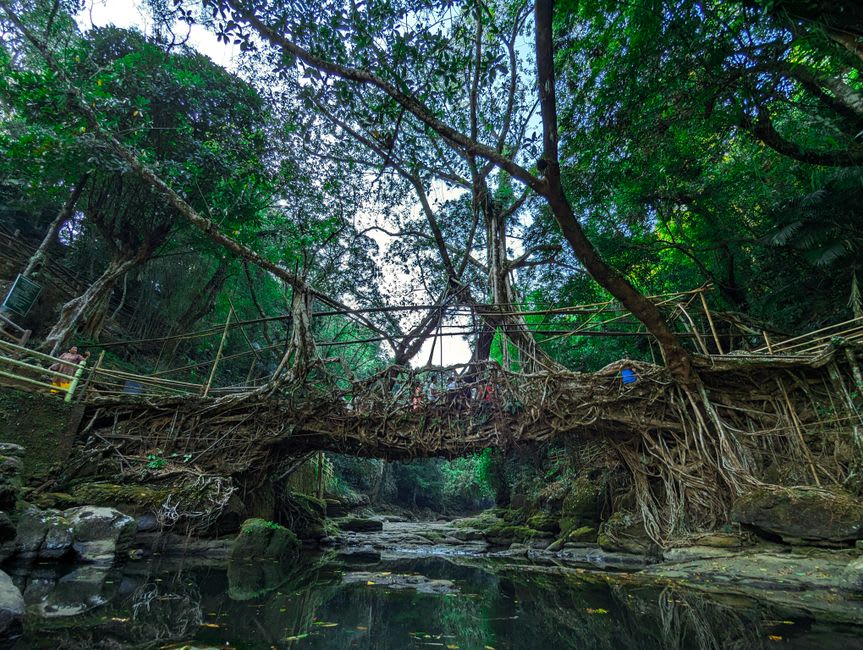
The bridge itself, when we reached it, was almost anticlimactic in its ordinariness — thick, gnarled roots woven into a walkway and railing, two full tiers stacked one above the other, both still very much alive and thickening. I put my hand on the railing and it felt exactly like touching a tree trunk, because it was one, still growing, still being trained by the next generation of the village even as I stood on it.
Above the valley, Nohkalikai Falls drops over 300 meters off a sheer limestone cliff, the tallest plunge waterfall in India, named after a local legend about a mother named Ka Likai and a tragedy too dark to fully retell here — ask a guide, they’ll tell it properly. In the monsoon it’s a churning white column visible from a viewpoint across the gorge; by the dry season it can thin to almost nothing, proof of how completely this landscape is ruled by rain.
When to go: October to April, after the monsoon has passed but before the falls and rivers run dry — October and November hit the sweet spot, with the landscape still lush and the trails to the root bridges passable without wading through daily downpours.