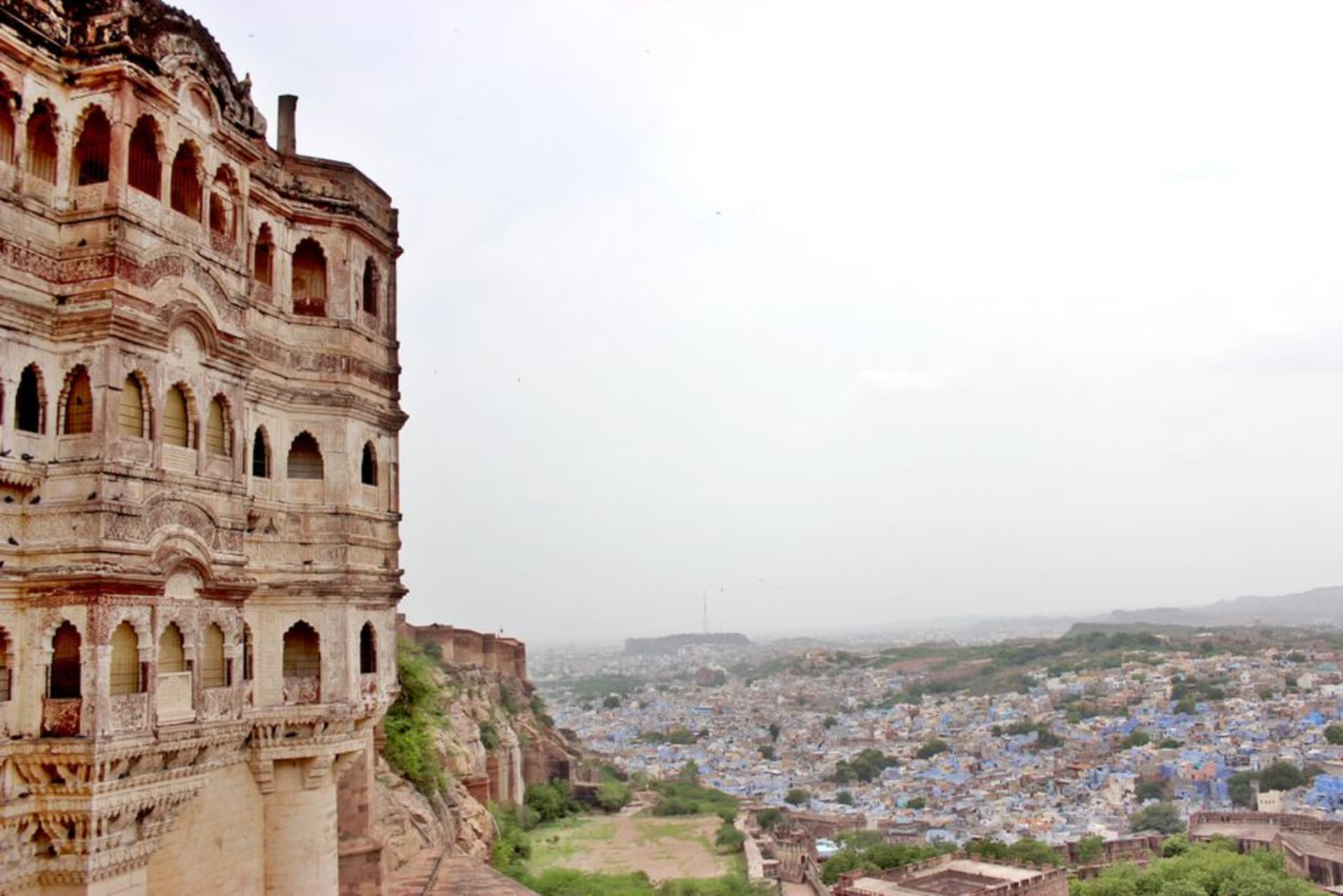
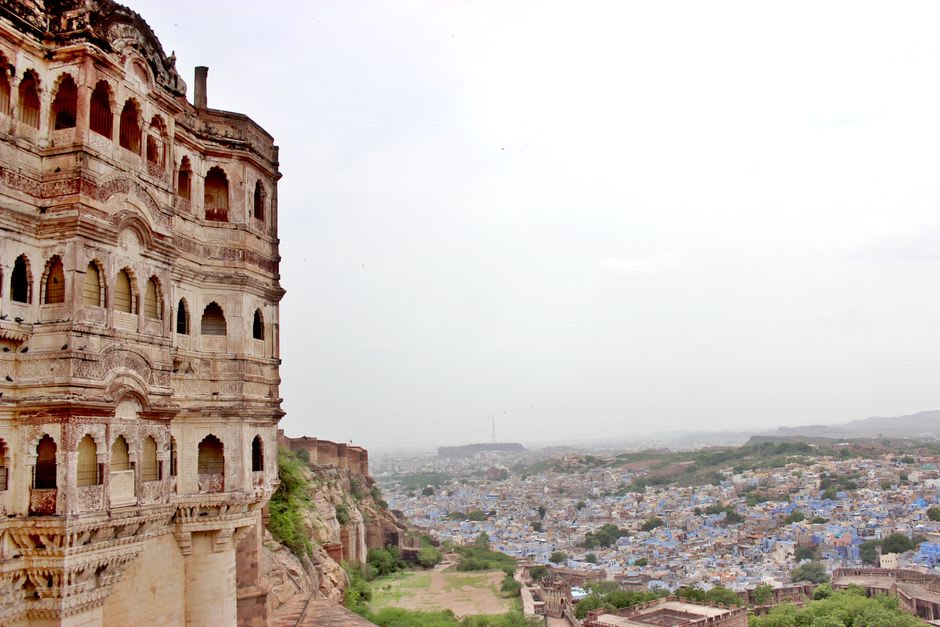
A blue-tinged town of step-wells and painted havelis in a narrow valley, small enough to walk in a day and strange enough that Kipling wrote it into fiction.
Bundi is easy to miss on a map of Rajasthan, wedged into a narrow gorge between two hills rather than announcing itself on a plain, and that geography is exactly why it stayed so intact. I arrived after Udaipur and Jaipur had already worn me down with their crowds, and Bundi felt like exhaling. The town spills down from Taragarh Fort in a tumble of blue-washed houses — fewer than Jodhpur’s, but arranged with the same logic, cooling and caste-marking at once — packed so tightly along the hillside that from the fort ramparts the whole town looks like it’s been poured into the valley rather than built there.
Rudyard Kipling stayed here while writing parts of Kim, and he called Bundi’s fort “the work of goblins rather than of men” — a line the guesthouses here still quote with visible pride. Standing below Taragarh’s crumbling walls at dusk, watching bats stream out of the ramparts in their thousands, I understood exactly what he meant. The fort is only partially restored, ivy and wild fig trees growing through the stonework, and that state of arrested decay gives it an atmosphere the polished palaces of Udaipur have long since lost.
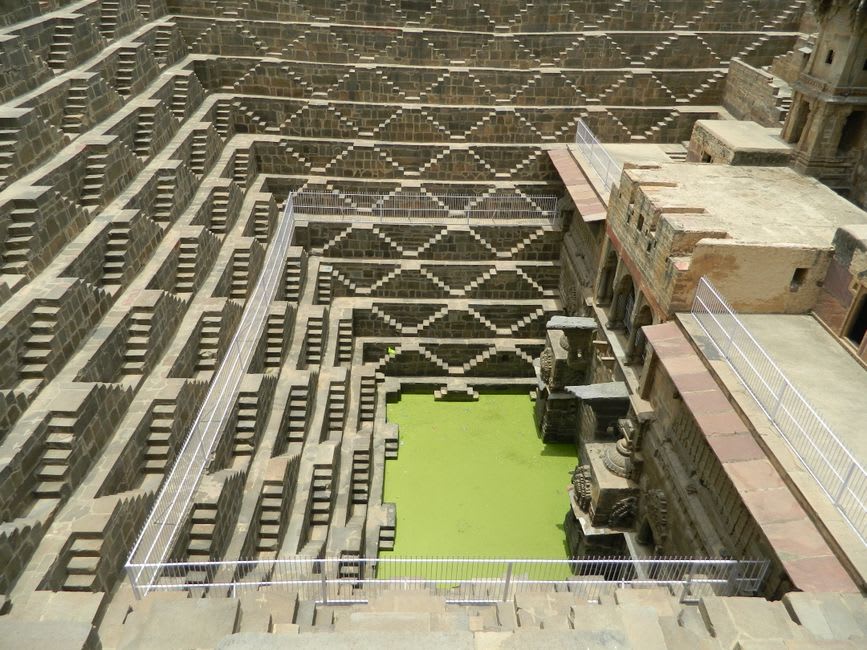
A stepwell deep enough to lose the sun
Bundi’s real distinction, though, is water architecture. The town and surrounding region hold some of the finest stepwells — baoris — in India, built by Rajput nobility and merchant families as both practical water sources and acts of public devotion. Raniji ki Baori, the Queen’s Stepwell, was built in 1699 by Rani Nathavati Ji and descends more than 46 meters through tiers of carved arches and pillars, each level cooler and darker than the one above, down to a still pool of green water at the bottom that the afternoon sun never quite reaches. I climbed down slowly, tracing carvings of Vishnu’s avatars along the walls, and the temperature drop alone was worth the visit on a hot Rajasthan afternoon — these wells were engineered as much for climate control and community gathering as for water storage.
The painted havelis scattered through the old town are Bundi’s other quiet treasure — murals in a distinctive local style, the Bundi school of miniature painting, showing hunting scenes, royal processions, and Krishna legends in blues and ochres that have survived, faded but legible, on courtyard walls for two and three centuries. I found most of them by accident, ducking into open doorways when a caretaker waved me in, no ticket booth or queue anywhere in sight. That, more than any single monument, is what makes Bundi worth the detour: nothing here has been fully organized for tourism yet, and it shows in the best possible way.
When to go: October through March for comfortable walking weather. The stepwells are worth visiting any time of year for their cool interiors, but the fort ramparts in summer heat are punishing by midday.