Bikaner
"The Rajasthan city nobody puts on the itinerary, and the one I'd send you to first."
A desert fort city famous for crisp bhujia snacks, a camel breeding farm, and a nearby temple where twenty thousand rats are treated as sacred.
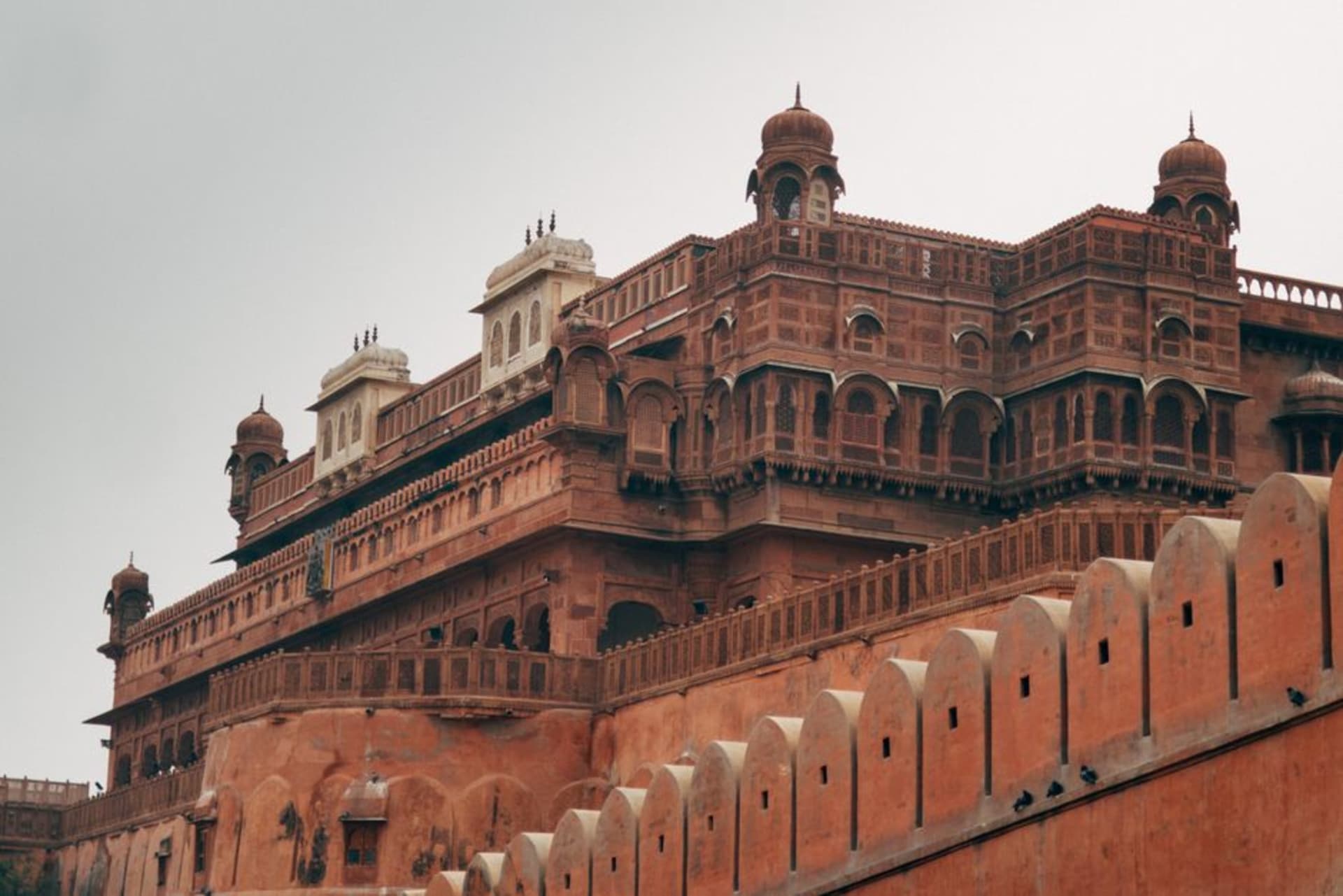
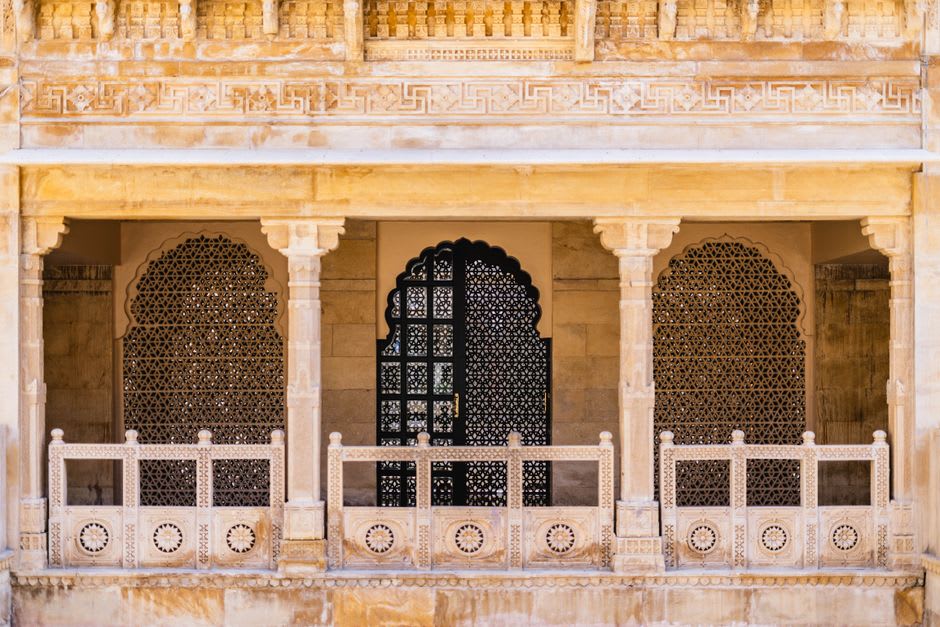
Bikaner doesn’t get the tourist numbers of Jaipur or Udaipur, and I think that’s exactly why it stayed with me. I arrived by overnight train from Delhi, groggy and unprepared for how flat and gold the country gets out here on the edge of the Thar, and spent my first hour just walking the base of Junagarh Fort trying to find an angle that fit it into one photo. Unlike Jodhpur’s Mehrangarh or Chittorgarh’s hilltop bastion, Junagarh was built on level ground in 1593 by Raja Rai Singh, relying on a moat and sheer wall thickness rather than elevation for defense — and inside, the contrast is startling. Havelis of red sandstone and marble open into courtyards decorated with gold leaf, glasswork, and mirrored ceilings, all built up gradually by successive Rajput rulers over three centuries, so that walking through it is like reading tree rings of taste.
Twenty thousand rats and a plate of bhujia
Nothing prepared me for Karni Mata Temple in Deshnoke, half an hour south of the city. It’s dedicated to a 15th-century mystic worshipped as an incarnation of the goddess Durga, and the temple floor is home to roughly twenty thousand black rats, considered sacred, fed milk and grain by devotees, and treated with the kind of casual reverence that made my skin do things I wasn’t proud of. Locals believe the rats are reincarnated members of Karni Mata’s clan, and finding one of the rare white rats among them is considered especially auspicious. I went barefoot, as required, and stood very still while dozens of rats streamed across my feet, and left oddly moved rather than disgusted — there’s something in the total absence of fear in that room, on both sides, that reframes the whole experience.
Bikaner’s other export is entirely edible: bhujia, a crunchy spiced noodle-snack made from gram flour and moth beans, was invented here and is still produced in small family-run factories across the old city. I bought a bag hot from a shop near Kote Gate and ate the whole thing walking back to my guesthouse, which is not a responsible way to treat a spicy snack in 40-degree heat but was completely worth it.
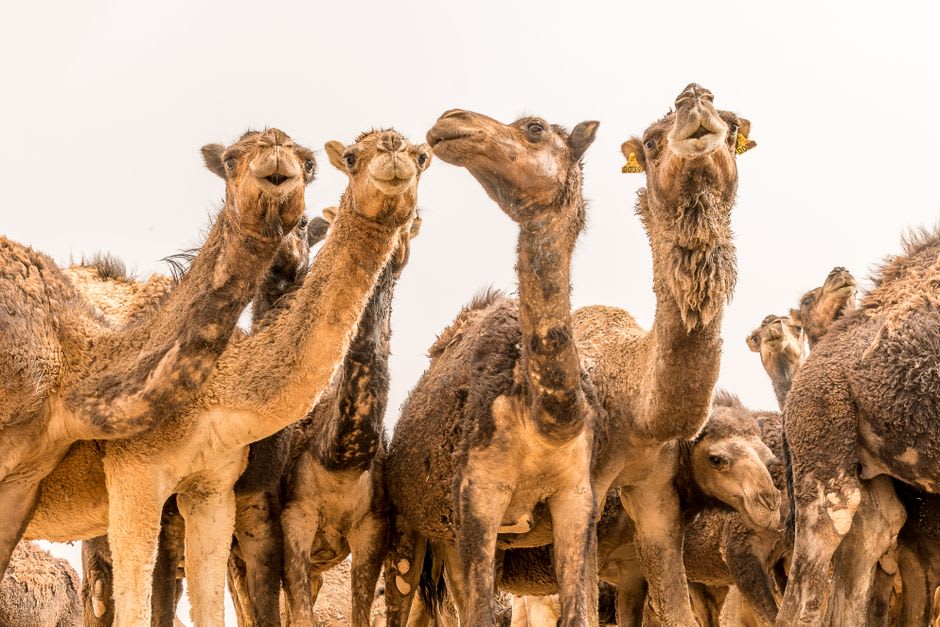
The National Research Centre on Camel, a government farm just outside town, breeds and studies the animal that built this desert’s entire economy for centuries — caravans, warfare, milk, wool, transport. I rode one at sunset across the dunes nearby with a guide who’d worked with camels his whole life, and he talked about them the way a rancher talks about cattle: practically, affectionately, without romance. It grounded the whole trip in something more real than the postcard version of desert Rajasthan.
When to go: November to February. Bikaner’s desert heat in summer is some of the harshest in Rajasthan, and the Karni Mata temple experience is far more bearable with bare feet on cool stone rather than scorching tile.