Belur-Halebidu
"I have seen a lot of carved stone in India. Nothing prepared me for what twelfth-century Hoysala sculptors did with soapstone."
Two Hoysala-era temples of such obsessive stone carving that even jaded temple-hoppers stop talking when they walk in.
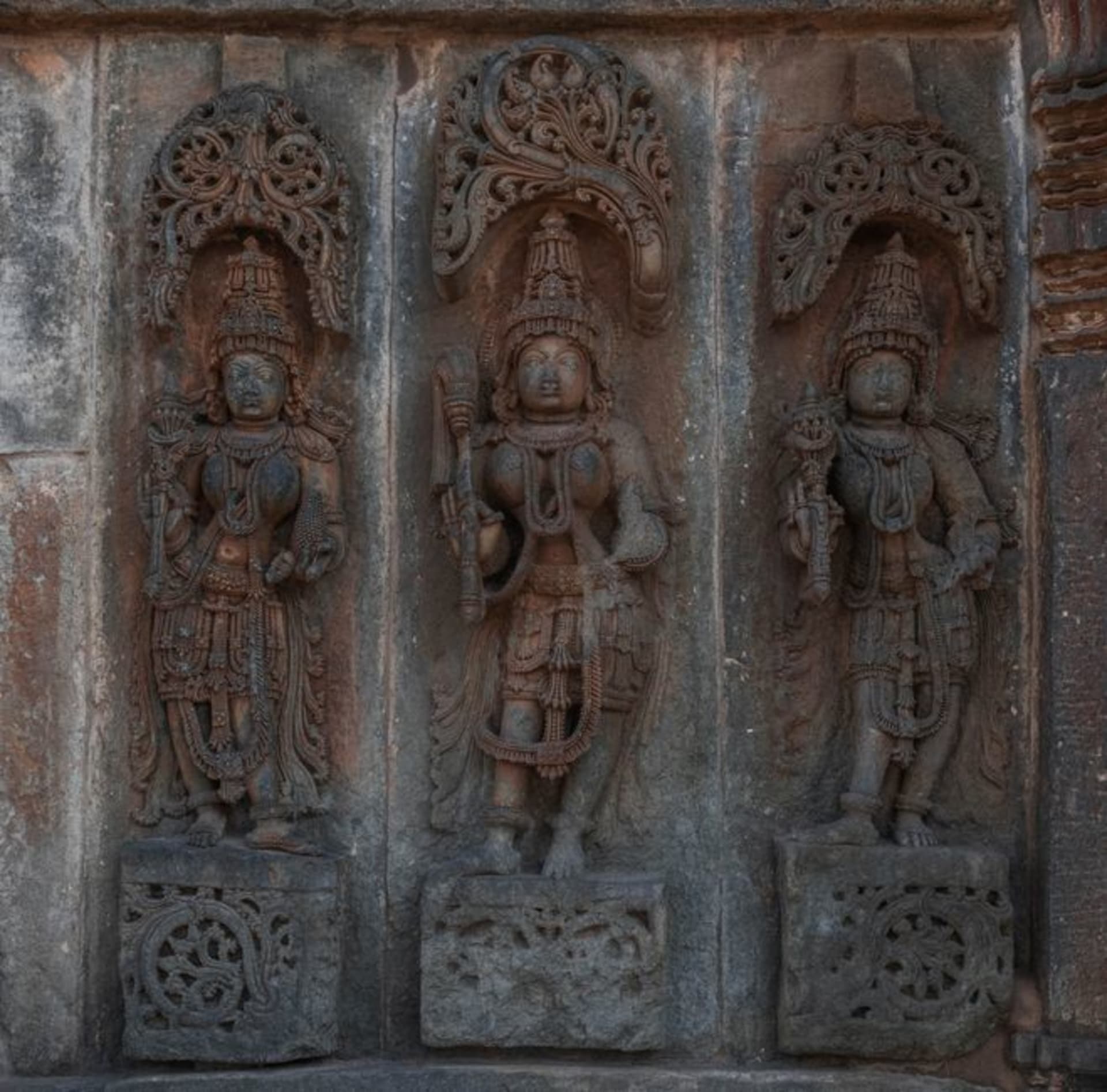
I had been warned, mildly, by a fellow traveler in Hassan not to expect too much — “it’s just two temples,” she said. I want to publicly disagree with her memory of that day, because I stood in front of the Chennakeshava Temple at Belur for the better part of two hours and did not run out of things to look at. Built starting in 1117 under the Hoysala king Vishnuvardhana to commemorate a military victory, the temple is carved almost entirely in soft soapstone, chosen specifically because it could be worked with the same precision as jewelry when freshly quarried and hardens with age — which is why, nine centuries later, you can still see individual strands of hair on a sculpted figure’s braid.
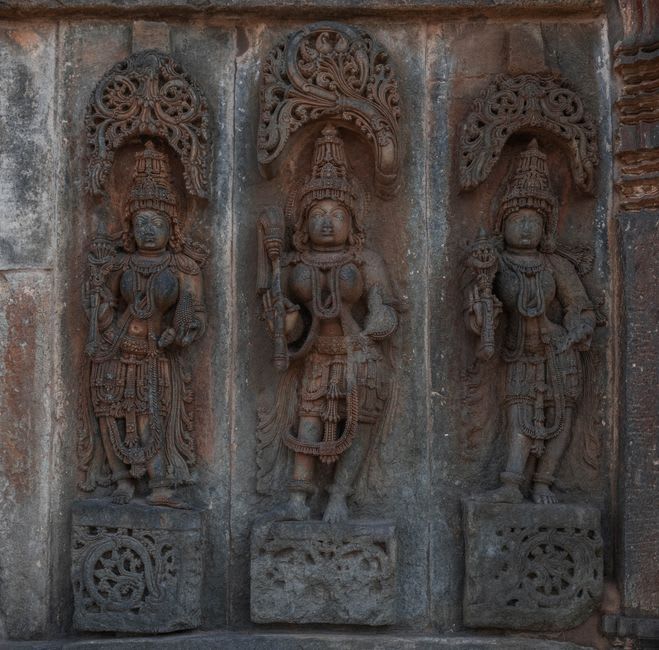
The temple’s exterior is a continuous band of narrow carved friezes stacked like the pages of a book: elephants, then horsemen, then a frieze of mythological scenes from the Ramayana and Mahabharata, then celestial dancers, the madanikas, caught mid-turn with jewelry and drapery rendered so finely it looks soft rather than stone. My guide pointed out one figure with an anklet whose individual bells are carved loose enough to have once rattled if you shook it — a detail put there purely because the sculptor could, with no possibility anyone would ever confirm it centuries later without a scaffold and a very determined arm.
Halebidu’s Ruined Grandeur
Halebidu, half an hour away, hits differently because it’s unfinished and half-destroyed, and somehow that makes the surviving carving hit harder. The Hoysaleswara Temple was never fully completed, and what stands wasn’t just neglected by time — it was sacked twice by Delhi Sultanate armies in the 1300s, and the old Hoysala capital, once called Dorasamudra, was abandoned and eventually renamed Halebidu, literally “old ruins,” by later generations who found only wreckage where a capital had stood. Walking the temple’s plinth, I counted through the same procession of carved friezes as at Belur — elephants, lions, foliage, mythological narrative — but here whole sections stop mid-panel, as if the sculptors were still working when the temple’s fortunes ran out.
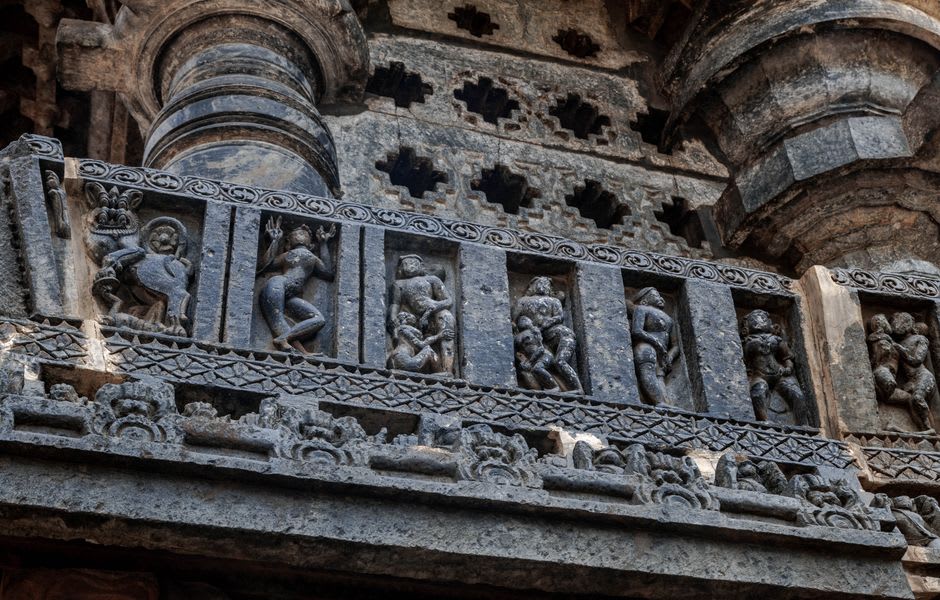
A local archaeology enthusiast I fell into conversation with near the shrine’s twin sanctums told me something that stuck with me: Hoysala sculptors reportedly signed their work, an unusual practice for the period, because the guild system here treated master carvers as artists in their own right rather than anonymous craftsmen. Looking closely at a pillar near the entrance, he showed me a faint inscription, worn nearly smooth, that he said was one such signature. I couldn’t verify it myself, but I believed him, standing there.
When to go: Early morning, ideally right at opening, before the tour buses from Hassan and Mysore arrive and the courtyards fill. October to March keeps the stone cool enough to walk barefoot, which both temples require.