
Bangalore
"Bangalore is the India that got a laptop and never quite finished the sentence it was writing before."
India's tech capital, where glass campuses and traffic jams sit on top of a garden city that is still, stubbornly, trying to be itself.
Everyone told me Bangalore before I arrived, and everyone meant something different by it — a friend meant the craft beer, a former colleague meant the traffic, my cousin who works in tech meant the campuses that look like they were airlifted in from California. All three were right, which is itself the story of the city. I landed at Kempegowda expecting a tech hub and got something stranger: a garden city that has been gradually paved over by its own success, still fighting to keep its identity under the weight of everything it built.
Lalbagh Botanical Garden is where that older Bangalore survives most intact. I went early on a Sunday and found the paths already full of joggers, elderly couples doing slow laps in matching tracksuits, and a glasshouse modeled on London’s Crystal Palace hosting a flower show that has run twice a year since the 1970s. The garden was laid out under Hyder Ali and expanded by the British, and the old rain trees along its avenues are wide enough that four people can’t link hands around the trunk. Standing under one of them, with the 3000-year-old granite outcrop known as Lalbagh Rock nearby, I understood why locals still call this the Garden City even though the nickname has become half nostalgic, half ironic.
The Traffic Is the Point, Sort Of
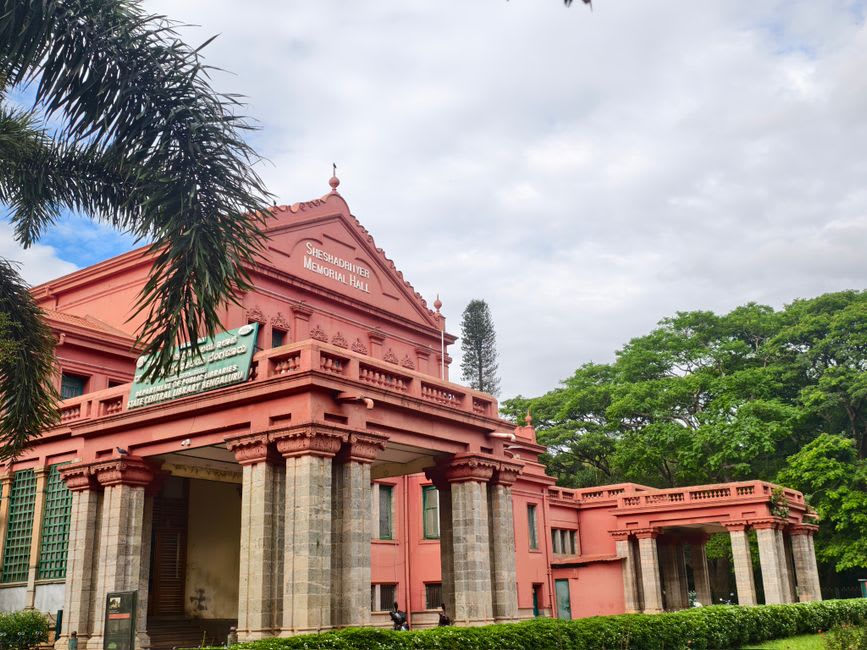
Cubbon Park, closer to the old cantonment area, is smaller and busier — office workers eating packed lunches under the shade of gulmohar trees on their break, the High Court’s red Gothic facade visible through the greenery at one end. But to actually understand Bangalore you have to sit in its traffic, which I did, for ninety minutes, in an Ola from Koramangala to Whitefield, watching the tech campuses of companies whose logos I recognized scroll past behind gates with private security and shuttle buses. The IT corridor is enormous and largely self-contained — cafeterias, gyms, sometimes apartments, built so employees barely need the city outside. It is the most visible evidence of what turned a colonial hill station into India’s Silicon Valley, and also the most visible evidence of what that transformation cost the city’s roads.
Pubs and a City That Drinks Differently
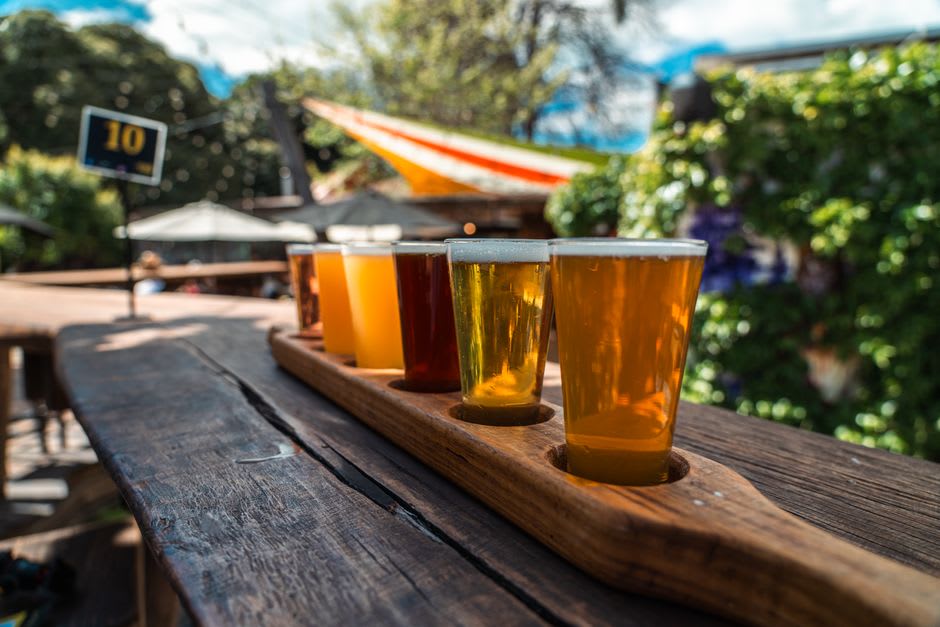
What surprised me most was the drinking culture. Bangalore has more microbreweries per capita than anywhere else in India, a legacy of looser state liquor laws and a young, well-paid workforce with disposable income and long work hours to unwind from. I spent an evening at a brewpub in Indiranagar with a table of software engineers who ordered a flight of six beers and argued about hop varieties with the seriousness other Indian cities reserve for cricket. It felt like a different country from the temple towns of Tamil Nadu three hundred kilometers south, and in some ways it is — Bangalore has always looked a little sideways at the rest of India, cosmopolitan and a bit apart.
When to go: October to February, when Bangalore’s elevation gives it the mildest weather of any major Indian city — genuinely pleasant evenings, rarely above 28°C. Avoid the traffic-choked commute hours, 9-11am and 6-8pm, if you can help it.