Auli
"The one place in India where I put on ski boots and stared at an 8,000-metre wall of ice while doing it."
A high-altitude ski slope in the Garhwal Himalayas where a cable car glides over pine and oak forest to meadows facing Nanda Devi, India's second-highest peak.
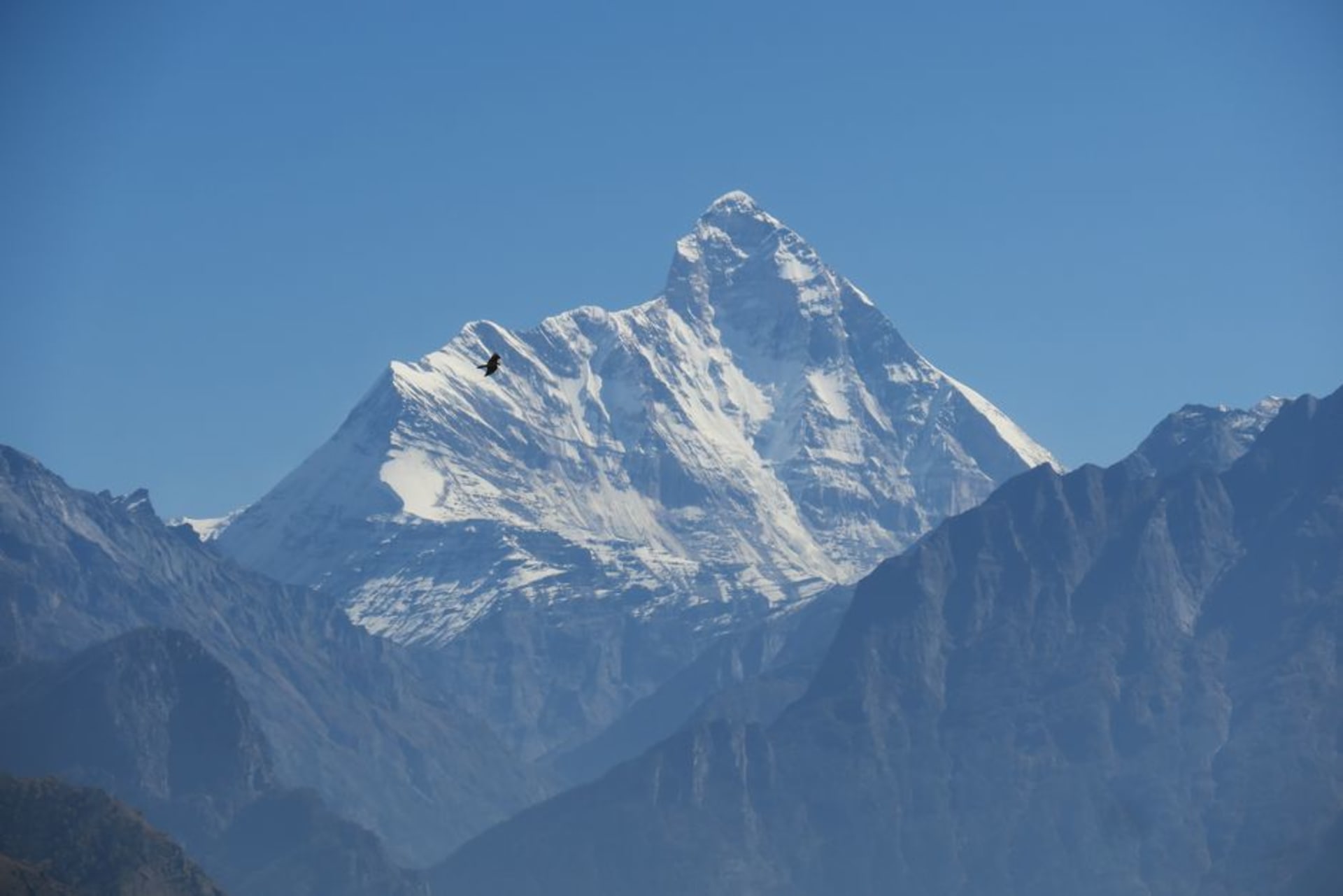
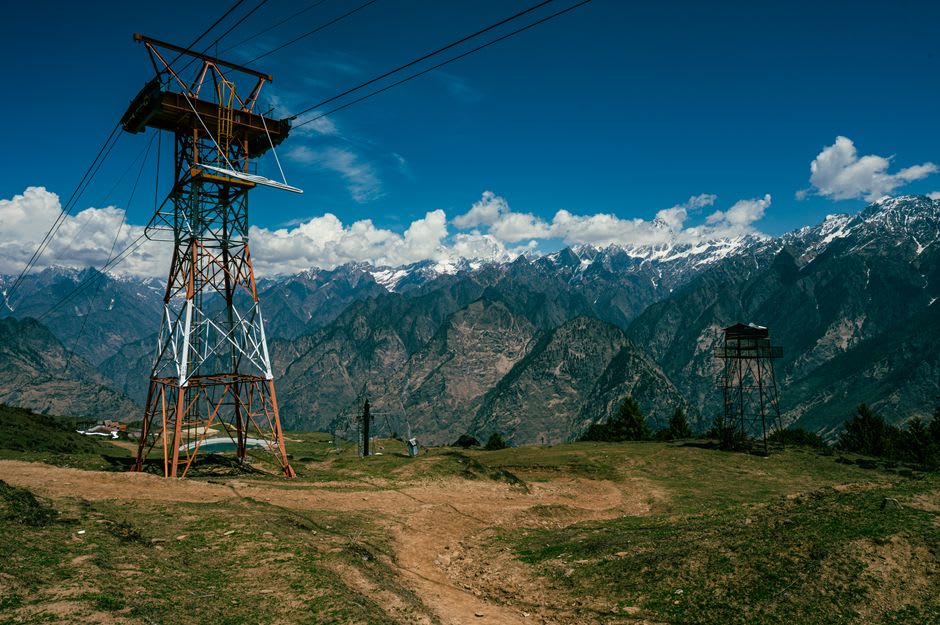
The Auli cable car — one of the longest and highest in Asia when it opened, running from Joshimath up to the slopes — takes about twenty-five minutes to cover four kilometres, gaining nearly a thousand metres in altitude as it glides over dense oak and conifer forest. I rode it up in early morning light with a handful of Indian families on their first-ever ski holiday, cameras out the whole way, and when the trees finally broke and the slope opened out, the view stopped every conversation in the cabin: Nanda Devi, at 7,816 metres the second-highest peak in India and long considered unclimbable by the British mountaineers who first surveyed it, filling the entire horizon in a single unbroken wall of ice and rock.
Auli itself is barely a town — a scattering of ski lodges, a GMVN-run resort, and slopes that were originally developed by the Indian Army for winter training before being opened up as a civilian ski destination in the 1980s. It has none of the market-town bustle of Manali or Nainital; the whole point of the place is the slope and the view, and everything else is support infrastructure. I rented gear from a shop at the top station, run by a local Garhwali instructor who’d learned to ski from an old Austrian coach brought in decades earlier as part of the original army program, and spent an entirely undignified first hour falling over on what he assured me was the beginner slope.
Skiing with an 8,000-metre neighbour
What makes Auli genuinely strange, in the best way, is the scale mismatch between the modest ski operation — a handful of runs, one main lift, gear that’s serviceable rather than glamorous — and the mountain wall it sits beneath. Nanda Devi sits inside a sanctuary so remote and ecologically sensitive that it’s been closed to climbers and trekkers since 1983, following environmental damage from earlier expeditions, which means you can ski directly beneath one of the most storied and least-visited high peaks on the planet, its inner sanctuary essentially never touched by human feet in any given year.
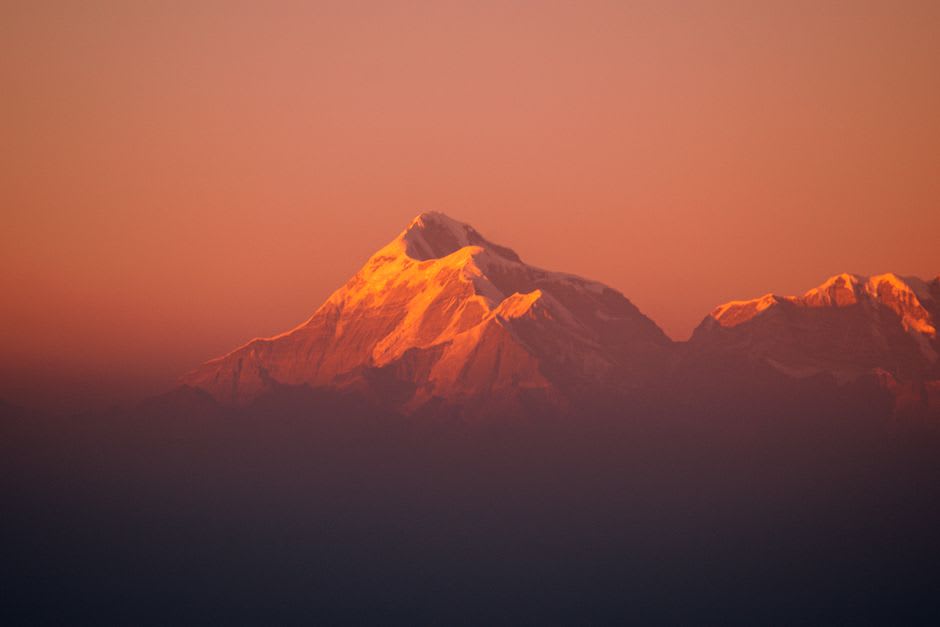
I stood at the top of the slope one late afternoon, boards off, just looking, while the light went pink on the summit ridge and a group of Garhwali porters below loaded supplies onto mules for the resort. One of them told me that in his grandfather’s generation, this whole slope was simply grazing land for sheep in summer, and nobody had thought to bring a chairlift up here until well after Indian independence. It’s a young ski resort wearing a very, very old mountain.
When to go: January to March for the best snow and skiing conditions. April to June offers clear Nanda Devi views without snow underfoot, for those coming just for the cable car and the scenery.