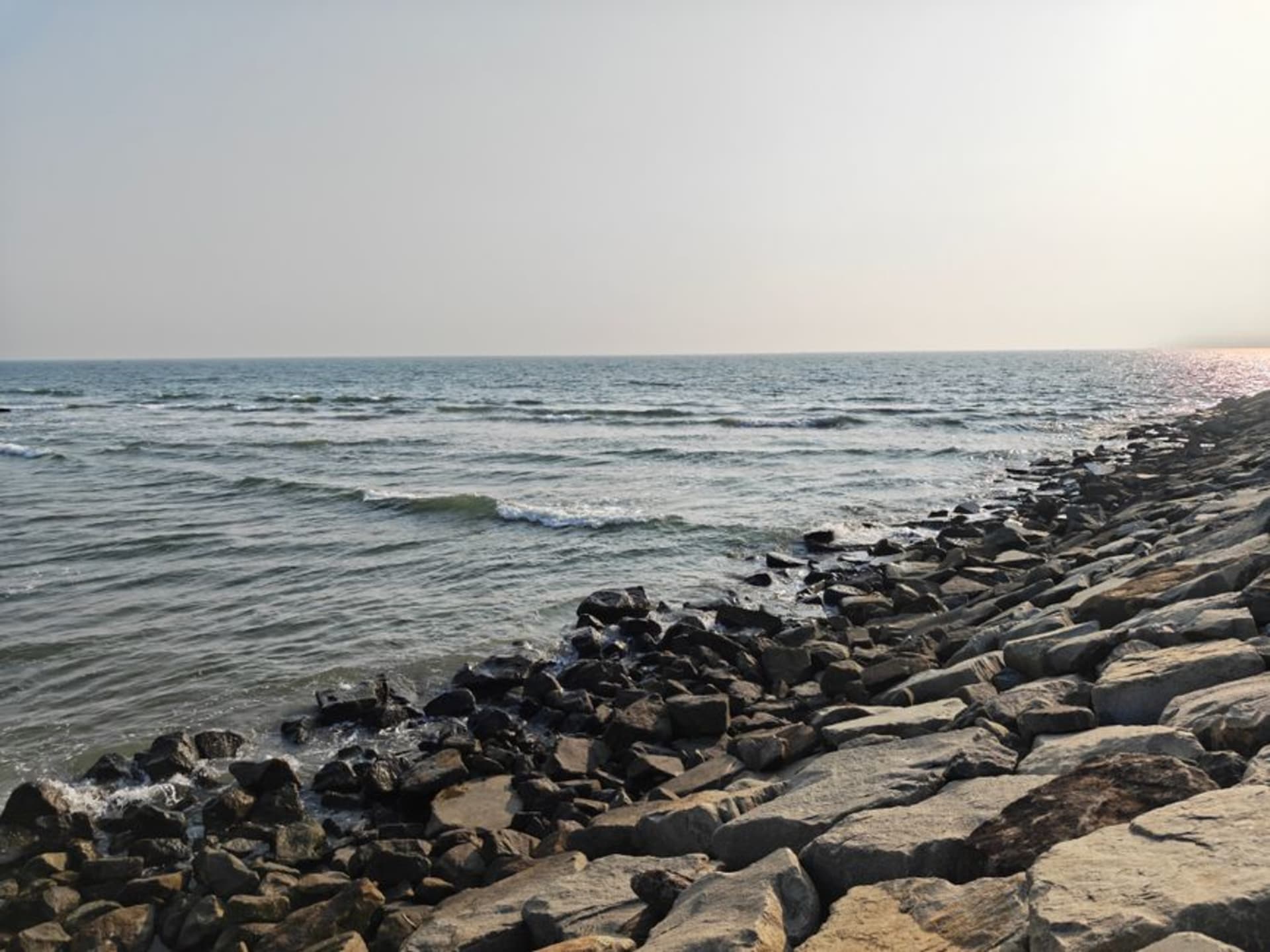
Alibaug
"Alibaug is Mumbai's answer to burnout -- a ferry ride away and a different century entirely."
The Konkan beach town where Mumbai exhales on weekends, reached by a ferry across the harbor and a fort you can only walk to when the sea pulls back.
I took the ferry from the Gateway of India, which is the correct way to arrive in Alibaug even though most people now drive the long way around through Panvel. The crossing takes about an hour, and somewhere in the middle of the harbor the skyline of Mumbai — all that vertical density, all that noise — shrinks down to a smudge behind you, and what’s ahead is just flat Konkan coastline, coconut palms, and a beach town that has spent decades quietly absorbing the city’s exhausted weekenders. I got off the boat at Mandwa jetty and shared an auto-rickshaw into town with a Mumbai couple who told me, unprompted, that they come here “whenever Mumbai gets to be too much” — which felt like it summarized the entire local economy in one sentence.
Walking to a fort in the sea
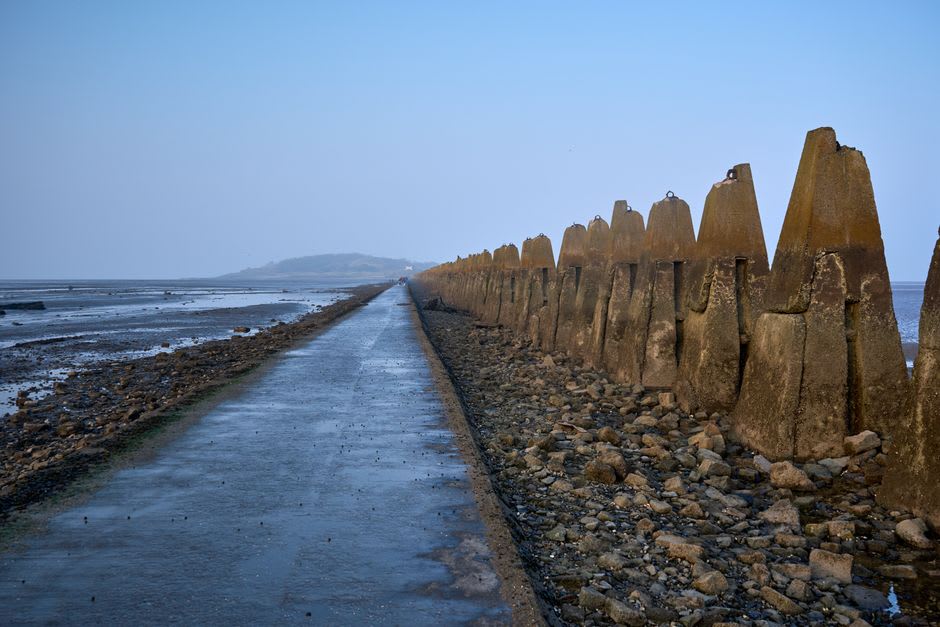
Kolaba Fort is the reason I’d actually planned the trip, and it only works on a schedule the ocean sets, not you. Built in the late 1600s under Maratha ruler Sambhaji, the fort sits about a kilometer offshore, and at low tide a sandy causeway opens up across the seabed, letting you walk out to it on foot among fishermen collecting shellfish and kids racing each other across the wet sand. I checked the tide tables the night before, got the timing wrong by twenty minutes, and ended up wading through ankle-deep water for the last stretch with my shoes tied around my neck — which, I was told by a local vendor selling coconut water at the fort’s entrance, is basically a rite of passage for first-time visitors. The fort itself is mostly ruins now, a lighthouse, a small shrine, and cannons half-swallowed by salt and time, but the walk there and back, timed against a tide that doesn’t care about your schedule, is the actual experience.
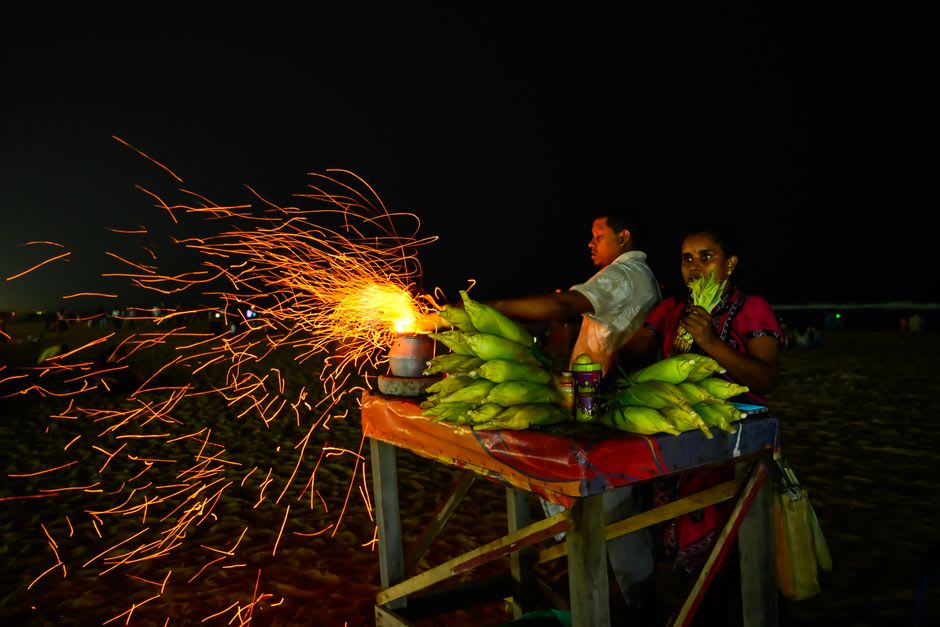
Alibaug’s beaches themselves are not the postcard turquoise of Goa — the Arabian Sea here runs a murkier grey-green, and the sand is dark and a little coarse. What Alibaug has instead is a rhythm: bhutta (roasted corn) vendors working charcoal braziers right on the sand at Nagaon and Kihim beaches, weekend farmhouse resorts with mango and chikoo orchards that Mumbai’s wealthier crowd has been buying up for a generation, and an unhurried pace that Mumbai itself has completely forgotten how to produce. I ate a plate of fried Bombay duck and surmai fish curry at a shack near Alibaug beach, watching the sun go down orange over water that, an hour before, had been walkable all the way to a seventeenth-century fort.
When to go: November through February for the driest, coolest weather and the most reliable low tides for the Kolaba Fort walk — avoid the monsoon months of June to September, when the crossing gets rough and the causeway disappears for weeks at a time.