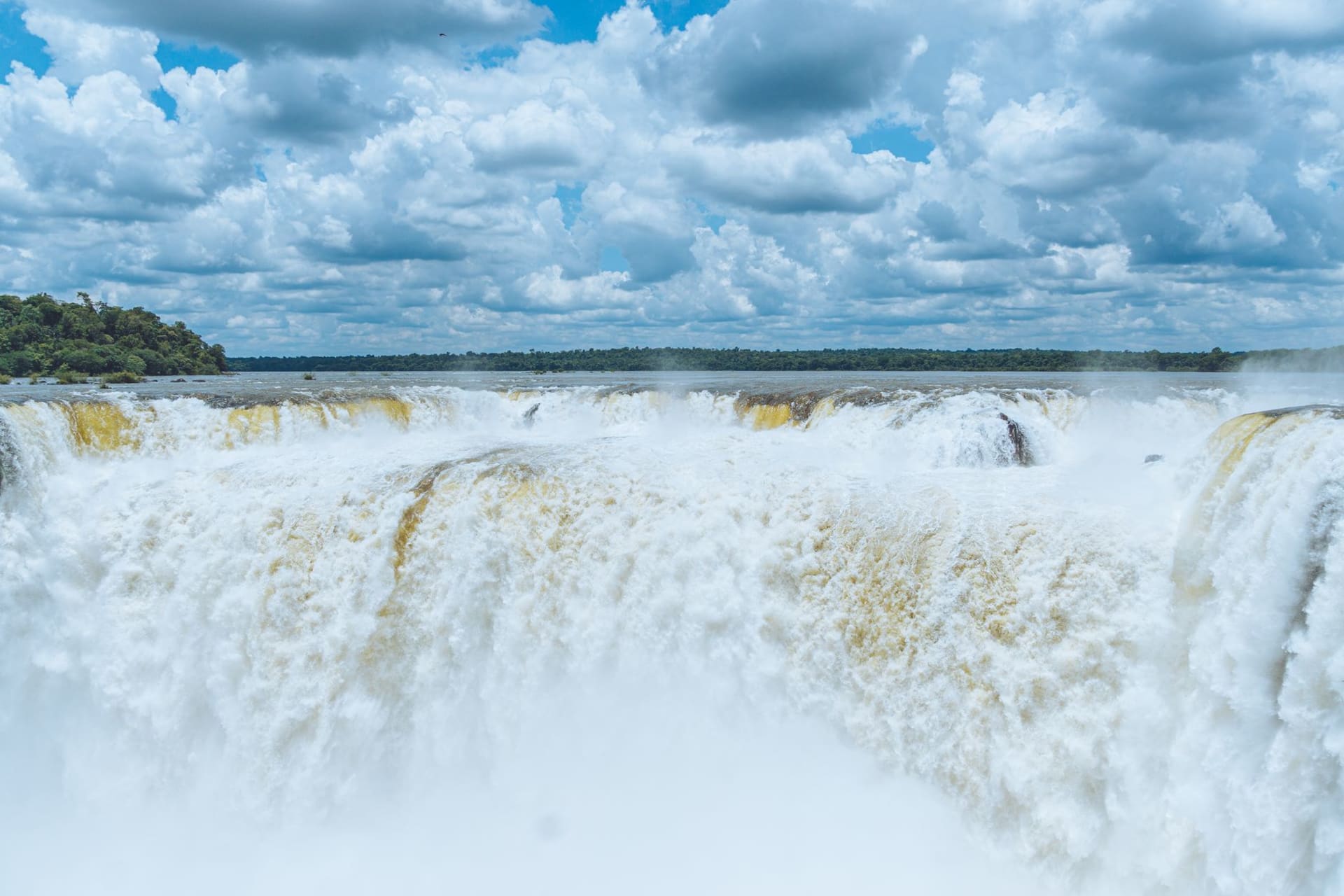
I took the little train out to the trailhead at six in the morning, before the park had properly woken up, and walked the kilometre-long boardwalk alone except for a pair of coatis nosing through the undergrowth beside the planks. The Iguazú River was running slow and bronze in the early light, and the boardwalk stretched out over it like a pier extending into the interior of the continent. I could hear the falls before the first tendril of mist reached me — a low, building frequency that you feel in your sternum more than your ears. Then the spray hit my face and the sound became everything.
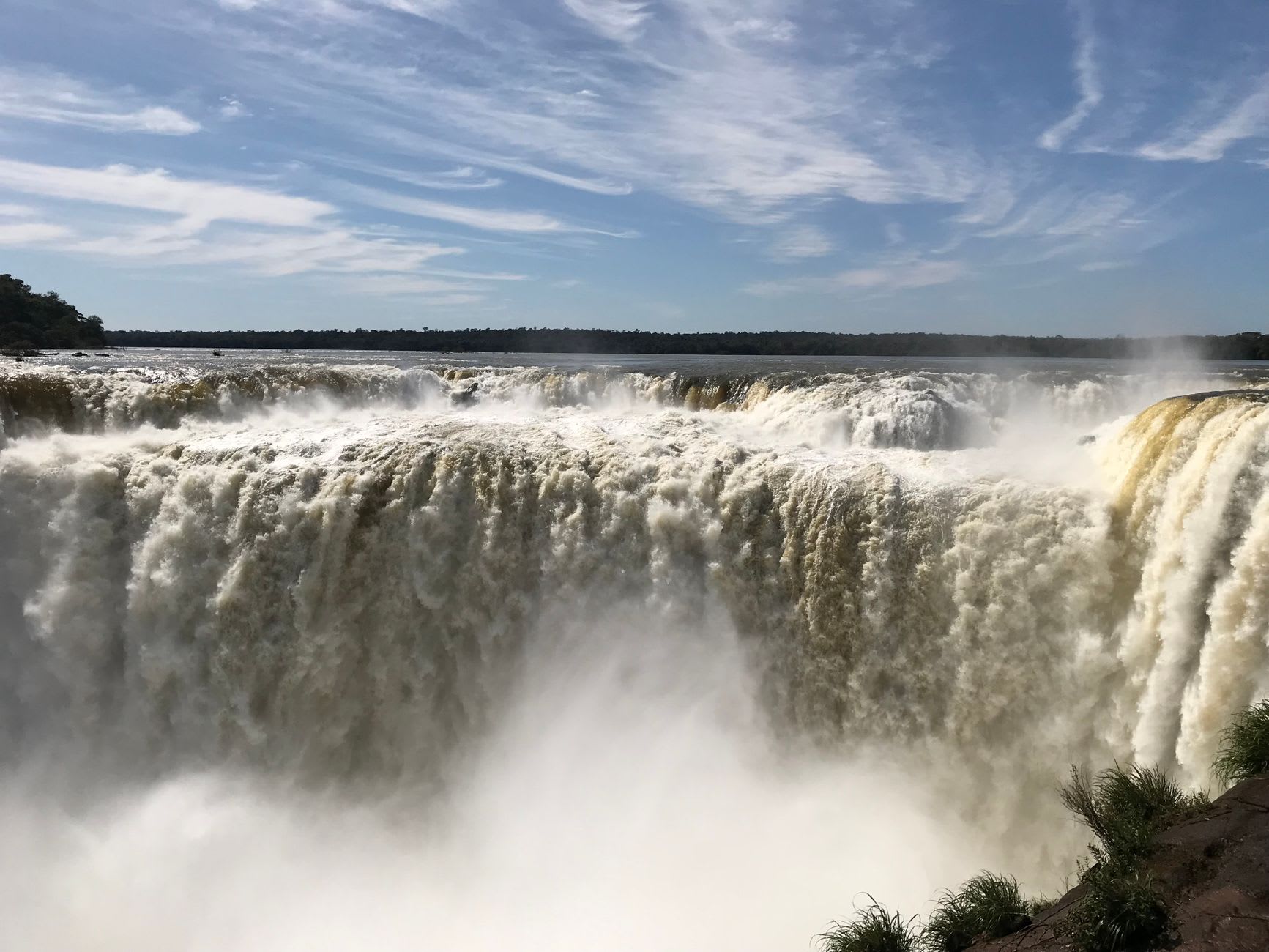
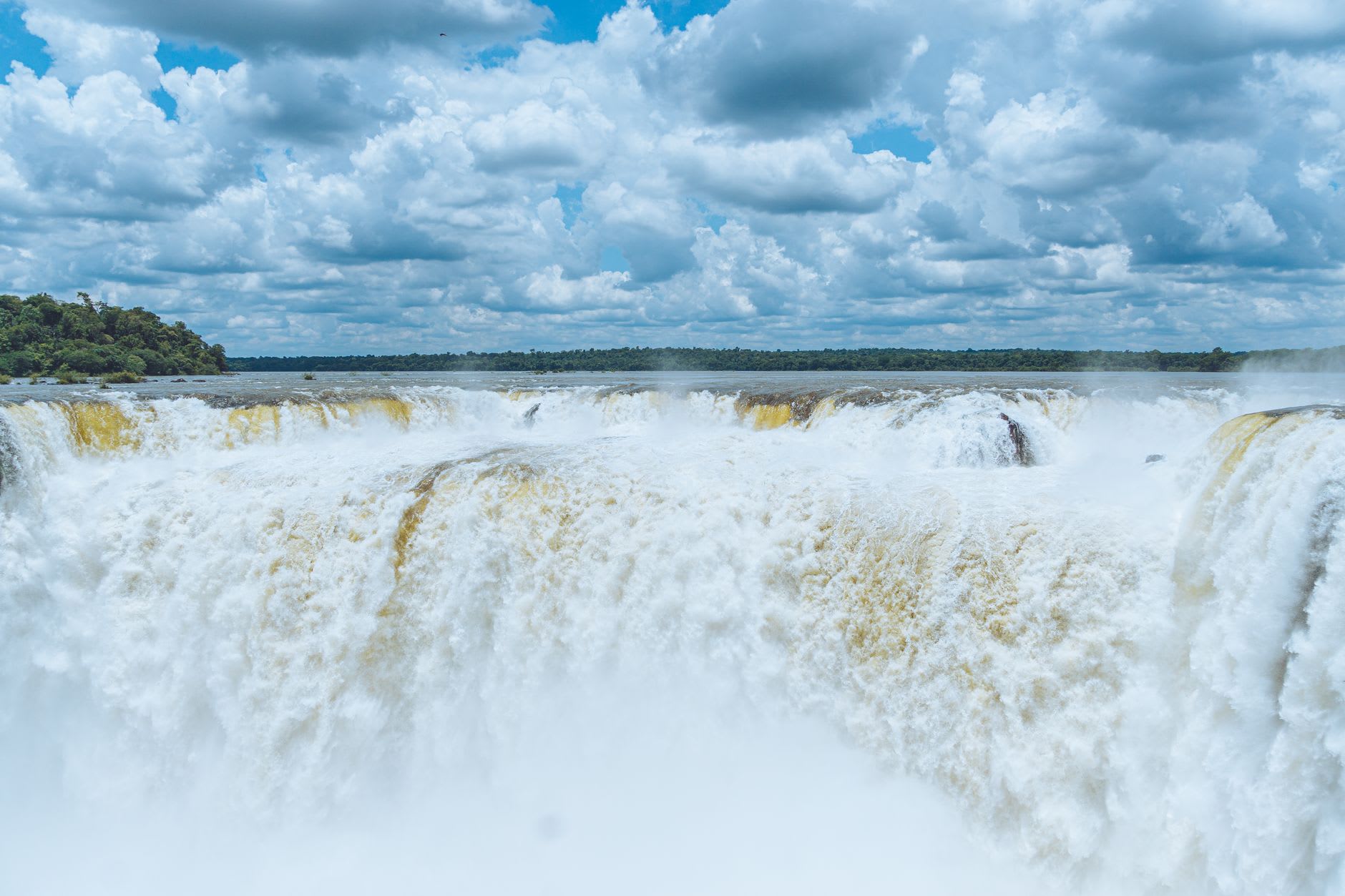
The platform at the edge of the Devil’s Throat is a rectangle of metal grating cantilevered over the lip of a horseshoe chasm roughly 150 metres wide and 80 metres deep. Fourteen cataracts pour into it simultaneously. The combined volume of water — something like sixty-five thousand cubic metres per minute at high season — hits the bottom and explodes upward as a column of mist so dense that it has its own micro-weather. Clouds form and dissipate. Rainbows appear, rotate, vanish. My camera lens fogged within seconds. I kept wiping it and accepting it would fog again, because the impulse to document and the physical reality of being there were in direct conflict. The reality was winning. I stood gripping the railing and felt something that I don’t have a precise word for in French or Spanish — not fear exactly, but a sharp awareness of scale that makes the human body briefly feel like the wrong size for the world.
What surprised me, coming back in the afternoon on day two, was how different it felt. Morning had been solitude and mist and a quality of light that turned the spray pink. Afternoon brought harder light, more visitors, and a different texture to the thunder — somehow deeper, more indifferent. The falls don’t perform. They just are, relentlessly, with or without an audience. A pair of great dusky swifts were diving into the falls themselves and nesting on the wet rock behind the water curtains, which struck me as either the bravest or the most surreal piece of real estate I’d ever seen.
The coatis on the return walk were bolder than I remembered from the morning. One investigated my bag with the practiced confidence of an animal that has learned tourists are a reliable food source. I gave it nothing and it regarded me with what I can only describe as contempt before moving on to more promising targets. After the overwhelming scale of the falls, the normalcy of a disgruntled raccoon felt like a good re-entry into the human world.
When to go: The Devil’s Throat is most dramatic from August through November, when water levels remain high after the wet season and the morning light creates the best rainbow conditions in the spray. Go at opening time — 8am on the Argentine side — and walk to the Garganta first, before the day-trippers arrive. The experience is unrecognisable before 9am versus after 11am.