Americas
Iguazú Falls
"Standing at the Devil's Throat, I understood why Eleanor Roosevelt said poor Niagara."
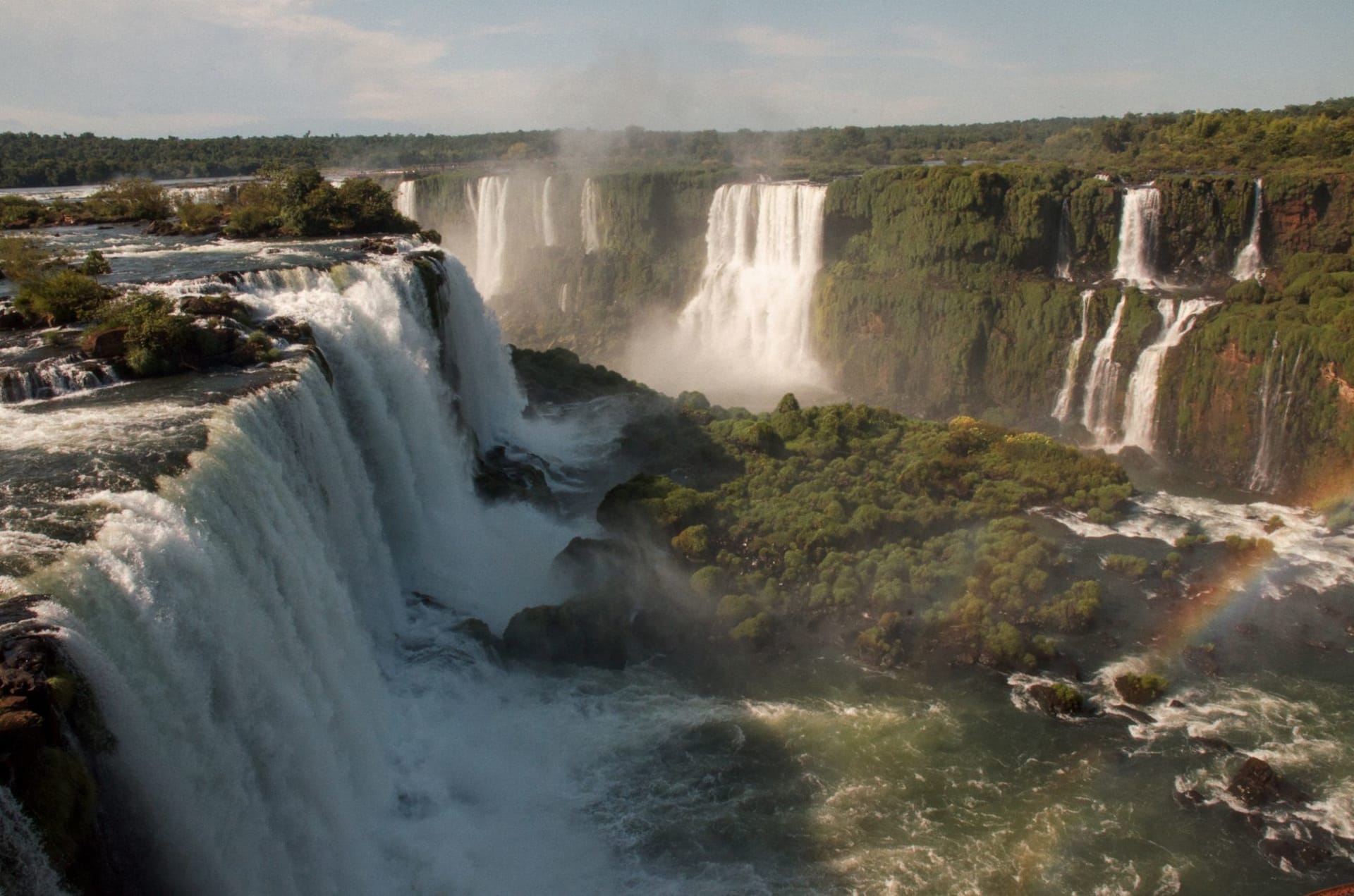
I heard the falls before I saw them. Walking the forest boardwalk on the Argentine side, there’s a low rumble that builds for a good ten minutes — a sound somewhere between thunder and a running engine — before the first curtain of water appears through the trees. Nothing prepares you for the scale. Iguazú is not one waterfall. It’s 275 waterfalls spread across nearly three kilometres of the Iguazú River, and when you finally reach the Garganta del Diablo — the Devil’s Throat — and peer over the edge into that churning horseshoe of white water and spray, your brain briefly refuses to process what it’s seeing. I got soaked to the bone standing on that platform, camera uselessly fogged, and I didn’t move for twenty minutes.
The two countries offer genuinely different experiences, and visiting both is not optional — it’s mandatory. Argentina puts you inside the falls: the national park’s elevated walkways bring you face-to-face with individual cataracts, close enough to feel the air displacement. Brazil gives you the panorama: the viewpoint at Foz do Iguaçu shows you the full arc of the system in one sweep, the kind of image that makes sense of the geography. I crossed the border by taxi on day two, and the contrast was immediately apparent. On the Argentine side, you lose perspective in the best way. On the Brazilian side, you regain it. You need both.
The town of Puerto Iguazú itself is forgettable in the pleasant way of service towns built around a single attraction — a few good restaurants along the waterfront, cold Quilmes at sundown, the surprisingly decent chipa from the street stalls near the bus terminal. Eat at El Quincho del Tío Querido if it’s your last night and you want something that feels like Argentina rather than a national park canteen. Order the surubí — the local river fish — because you’re on the Iguazú River and you should eat what’s in it.
When to go: August through October hits the sweet spot — water levels are high from the wet season runoff, crowds are lower than the summer holiday peak, and the heat is bearable. Avoid January and February if you can: the humidity is crushing and the walkways are packed. November through March brings the highest water volume but also the most rain, which makes the mist situation genuinely extreme.
What most guides get wrong: They underestimate how physical the visit is. The Argentine side alone involves several kilometres of walking across multiple circuits, often in full sun and high humidity. Most tourists do the Upper Circuit, Lower Circuit, and Devil’s Throat in one day and come back hollowed out. Split it across two days. Go to the Devil’s Throat first thing in the morning when the light hits the mist and the tour groups haven’t arrived yet. The falls will still be there after lunch.