Americas
Iguazú Falls
"Standing at the Devil's Throat, I understood why Eleanor Roosevelt said poor Niagara."
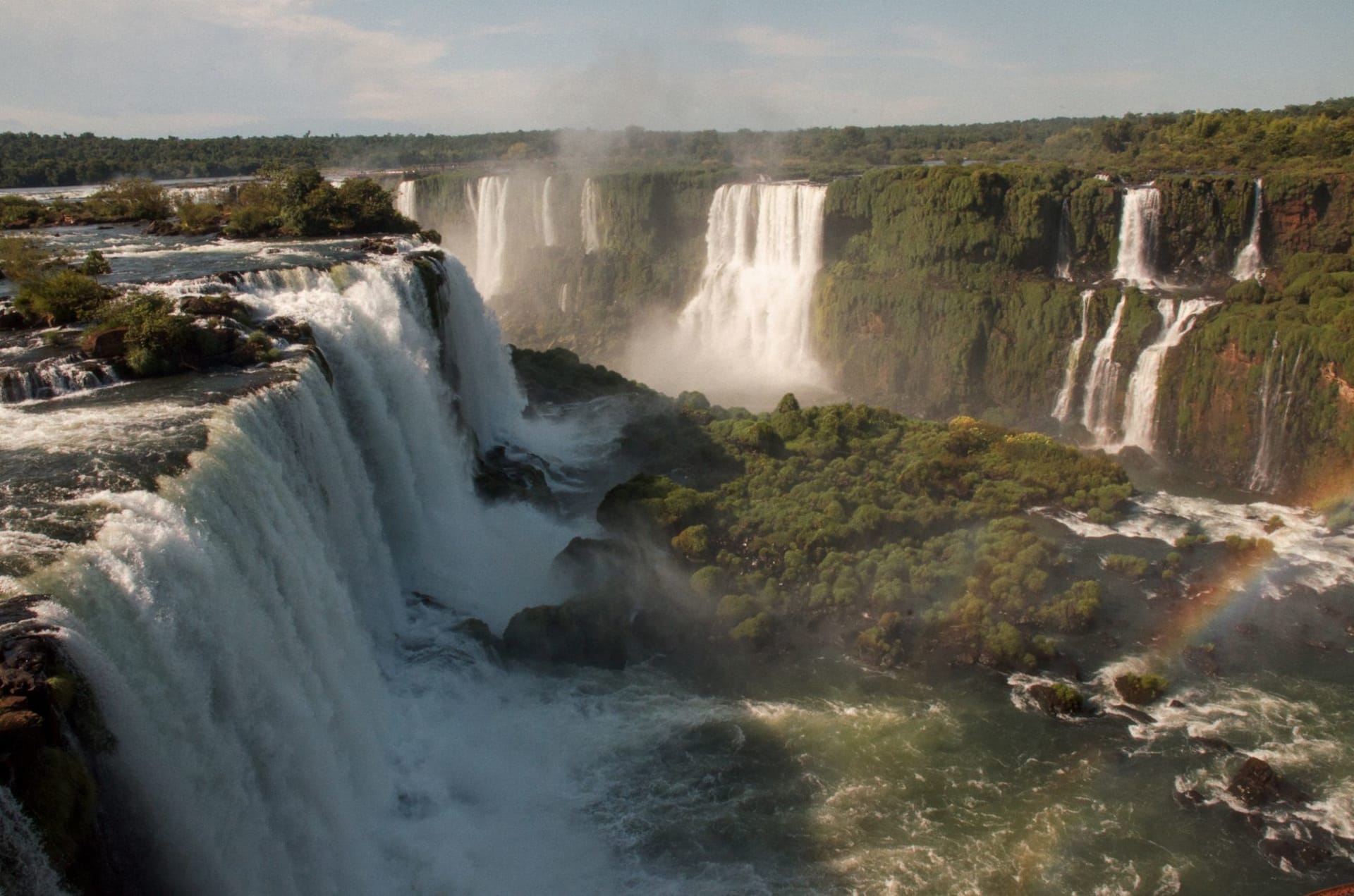
The world's widest waterfall system doesn't just impress — it physically overwhelms, drenching you in mist before you've even reached the railing.

I heard the falls before I saw them. Walking the forest boardwalk on the Argentine side, there’s a low rumble that builds for a good ten minutes — a sound somewhere between thunder and a running engine — before the first curtain of water appears through the trees. Nothing prepares you for the scale. Iguazú is not one waterfall. It’s 275 waterfalls spread across nearly three kilometres of the Iguazú River, and when you finally reach the Garganta del Diablo — the Devil’s Throat — and peer over the edge into that churning horseshoe of white water and spray, your brain briefly refuses to process what it’s seeing. I got soaked to the bone standing on that platform, camera uselessly fogged, and I didn’t move for twenty minutes.
The two countries offer genuinely different experiences, and visiting both is not optional — it’s mandatory. Argentina puts you inside the falls: the national park’s elevated walkways bring you face-to-face with individual cataracts, close enough to feel the air displacement. Brazil gives you the panorama: the viewpoint at Foz do Iguaçu shows you the full arc of the system in one sweep, the kind of image that makes sense of the geography. I crossed the border by taxi on day two, and the contrast was immediately apparent. On the Argentine side, you lose perspective in the best way. On the Brazilian side, you regain it. You need both.
The town of Puerto Iguazú itself is forgettable in the pleasant way of service towns built around a single attraction — a few good restaurants along the waterfront, cold Quilmes at sundown, the surprisingly decent chipa from the street stalls near the bus terminal. Eat at El Quincho del Tío Querido if it’s your last night and you want something that feels like Argentina rather than a national park canteen. Order the surubí — the local river fish — because you’re on the Iguazú River and you should eat what’s in it.
When to go: August through October hits the sweet spot — water levels are high from the wet season runoff, crowds are lower than the summer holiday peak, and the heat is bearable. Avoid January and February if you can: the humidity is crushing and the walkways are packed. November through March brings the highest water volume but also the most rain, which makes the mist situation genuinely extreme.
What most guides get wrong: They underestimate how physical the visit is. The Argentine side alone involves several kilometres of walking across multiple circuits, often in full sun and high humidity. Most tourists do the Upper Circuit, Lower Circuit, and Devil’s Throat in one day and come back hollowed out. Split it across two days. Go to the Devil’s Throat first thing in the morning when the light hits the mist and the tour groups haven’t arrived yet. The falls will still be there after lunch.
Explore
Places in Iguazú Falls
 iguazu-falls
 Circuito Inferior
The Lower Circuit drops you to water level — wet boots, spray in your face, the falls so close you can feel their breath.
Explore iguazu-falls
 Circuito Superior
The Upper Circuit gives you the aerial perspective — looking down into the tops of waterfalls as they vanish into jungle below.
Explore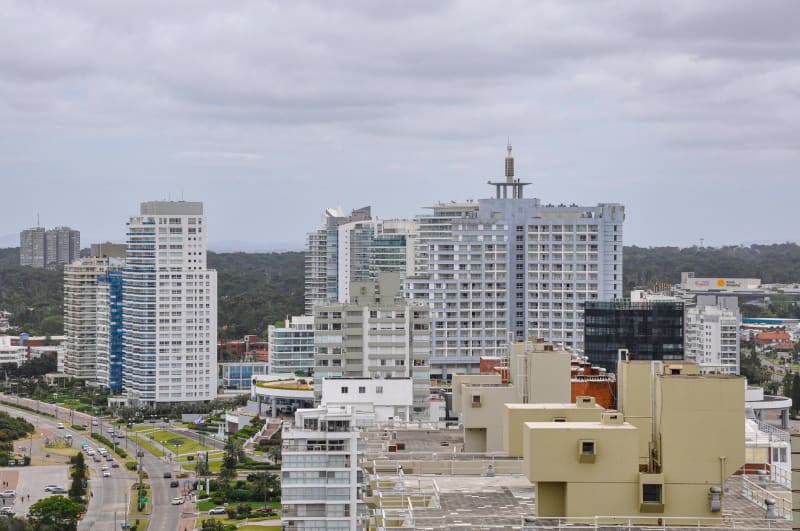 iguazu-falls
 Ciudad del Este
Paraguay's chaotic border city and the Triple Frontier landmark — where three countries share a river and the commerce never quite stops.
Explore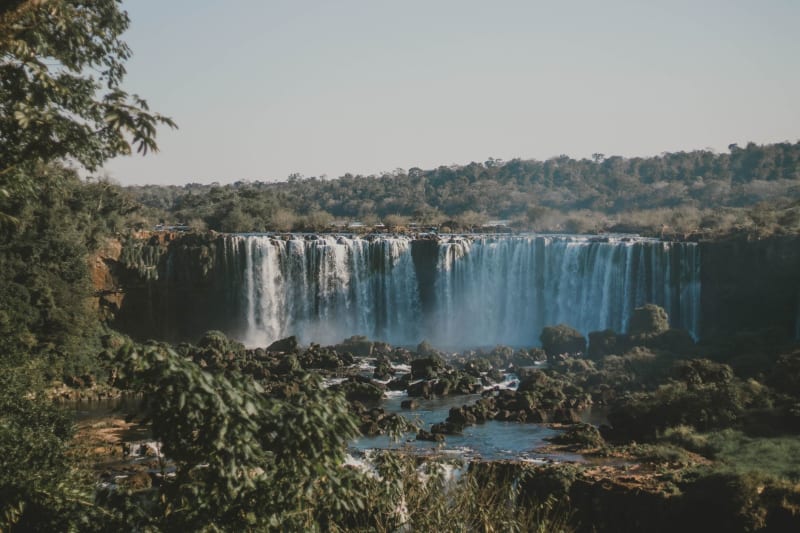 iguazu-falls
 Foz do Iguaçu
The Brazilian side trades intimacy for panorama — and that panorama, showing all 275 falls in a single sweeping arc, makes the whole geography click.
Explore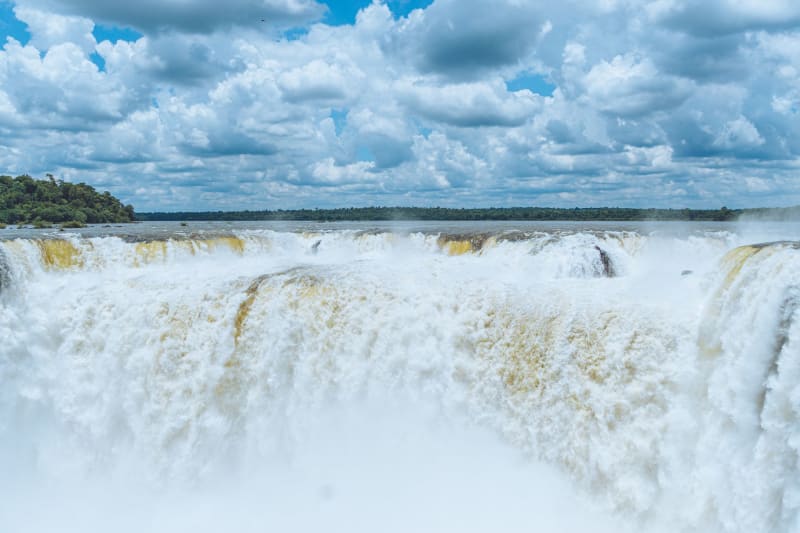 iguazu-falls
 Garganta del Diablo
The Devil's Throat is where the river ends and something else entirely begins — a horseshoe of annihilating white water.
Explore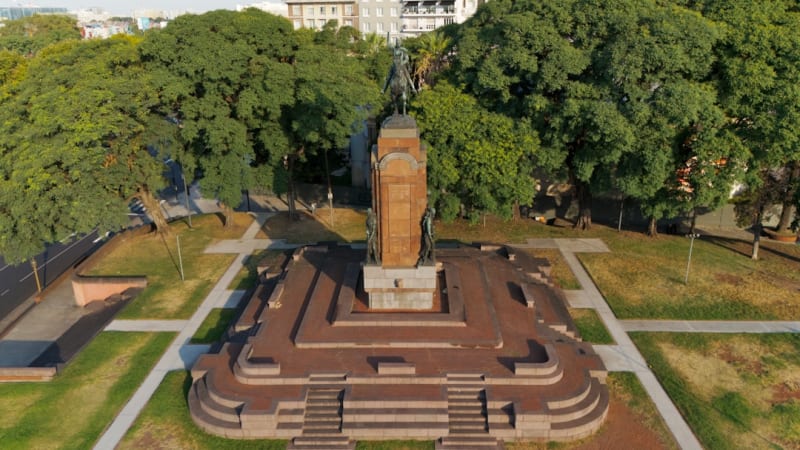 iguazu-falls
 Hito Tres Fronteras
A striped obelisk on the Argentine riverbank where the Iguazú and Paraná rivers meet three countries at once.
Explore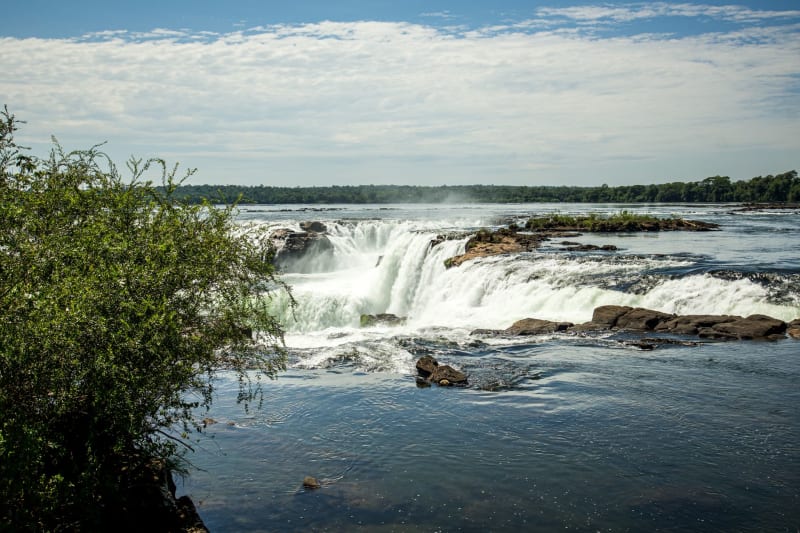 iguazu-falls
 Isla San Martín
An island planted in the middle of the falls, reached by a short but exhilarating boat ride, with views no walkway can replicate.
Explore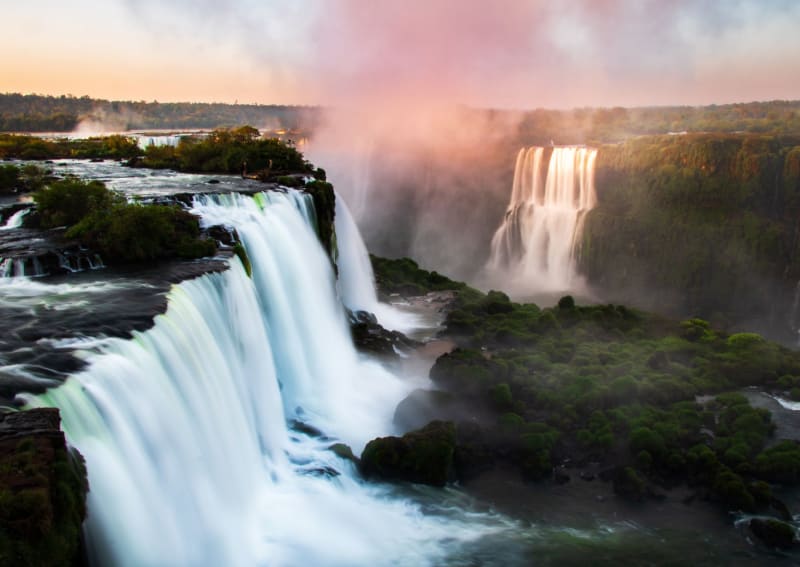 iguazu-falls
 Itaipú Dam
The world's most productive hydroelectric dam is a monument to scale that makes the engineering imagination stretch in uncomfortable directions.
Explore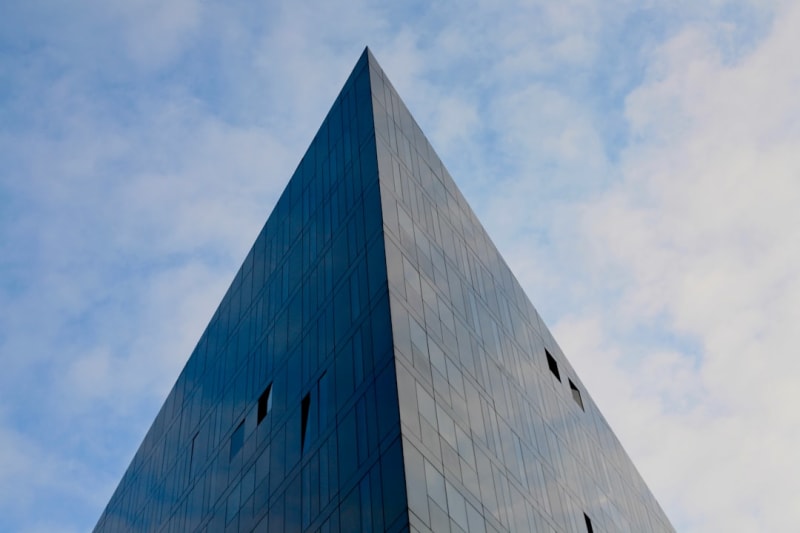 iguazu-falls
 Marco das Tres Fronteiras
The Brazilian mirror monument facing Argentina's tri-border marker, with sweeping views over the meeting of two rivers and three nations.
Explore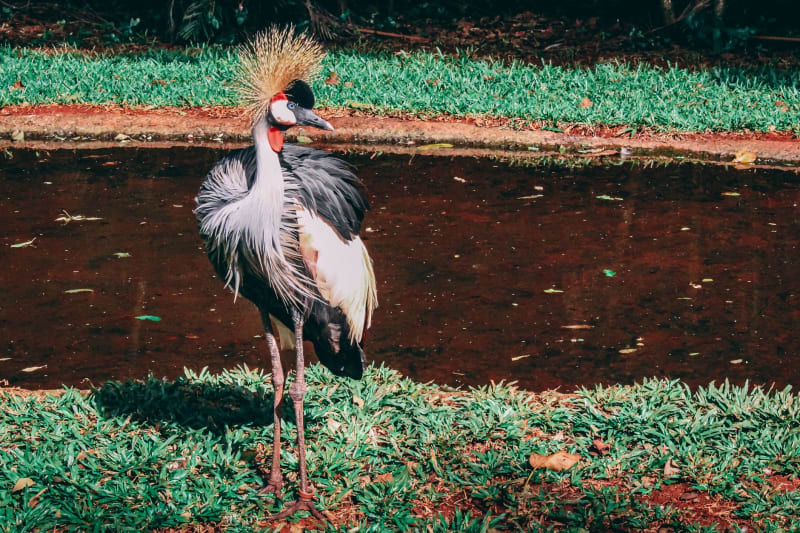 iguazu-falls
 Parque das Aves
A Brazilian bird sanctuary where you walk through aviaries large enough to hold full trees — and the toucans are indifferent to your presence in the best way.
Explore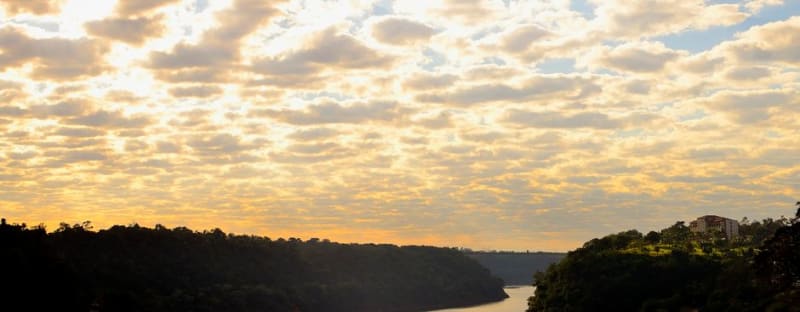 iguazu-falls
 Puerto Bemberg
A private nature reserve and boutique lodge on the Paraná River, a slow, green detour from the crowds at Iguazú.
Explore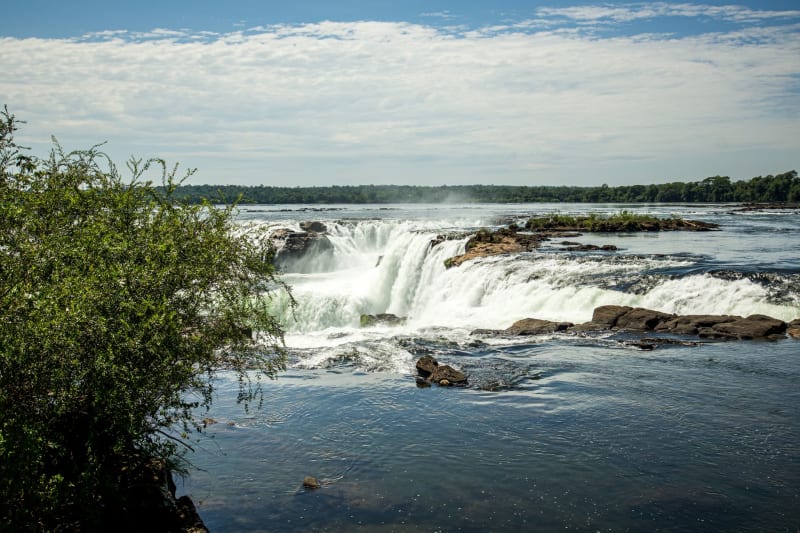 iguazu-falls
 Puerto Iguazú
The Argentine gateway town — functional, warm, and more interesting than its reputation as mere base camp suggests.
Explore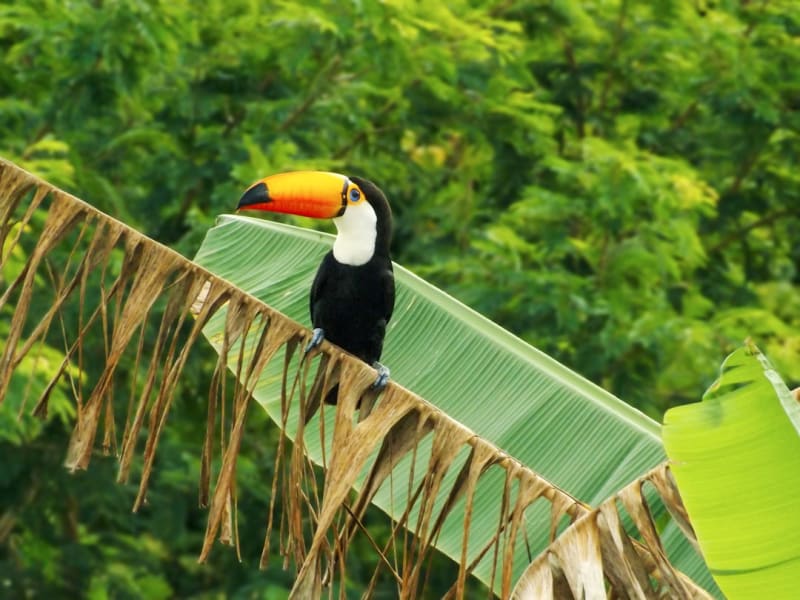 iguazu-falls
 Refugio Güira Oga
A wildlife rescue center near Puerto Iguazú that rehabilitates injured native species, from toucans to jaguars, for release back into the forest.
Explore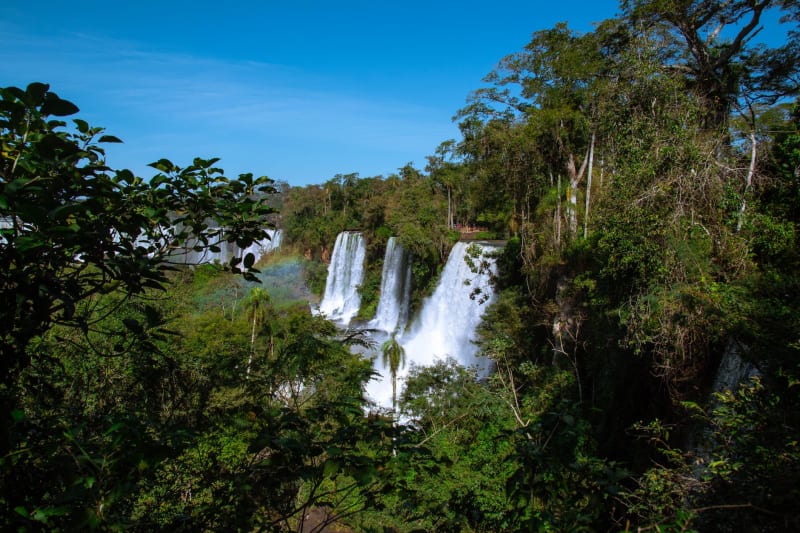 iguazu-falls
 San Ignacio Mini
The Jesuit ruins of Misiones rise from the red earth in sandstone grandeur — a lost republic built by Bach-singing Guaraní in the jungle interior.
Explore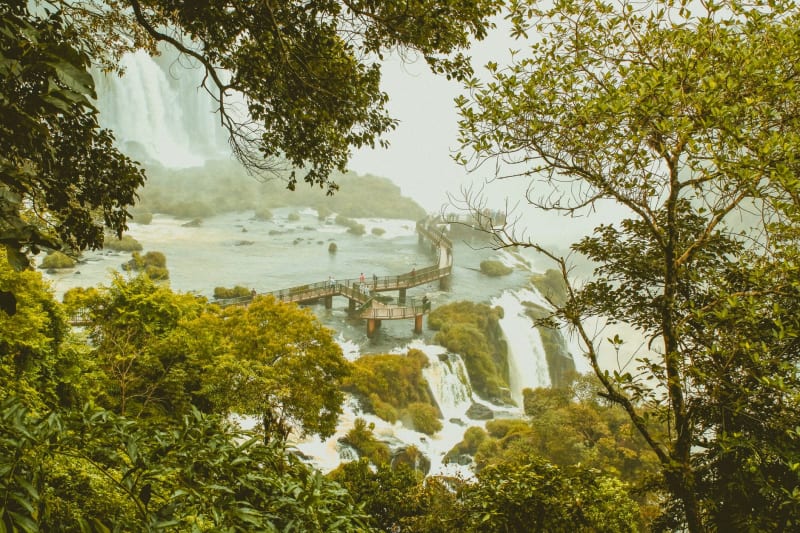 iguazu-falls
 Sendero Macuco
A quiet rainforest trail on the Argentine side of Iguazú that leaves the crowds behind and ends at a hidden waterfall you can actually swim beneath.
Explore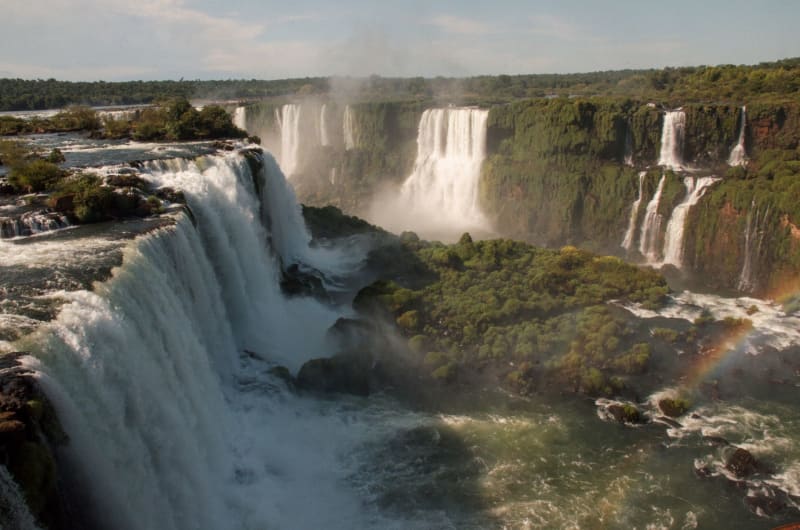 iguazu-falls
 Wanda Mines
A small town in Misiones where semiprecious gems grow inside basalt geodes — and the mines let you crack them open yourself.
Explore