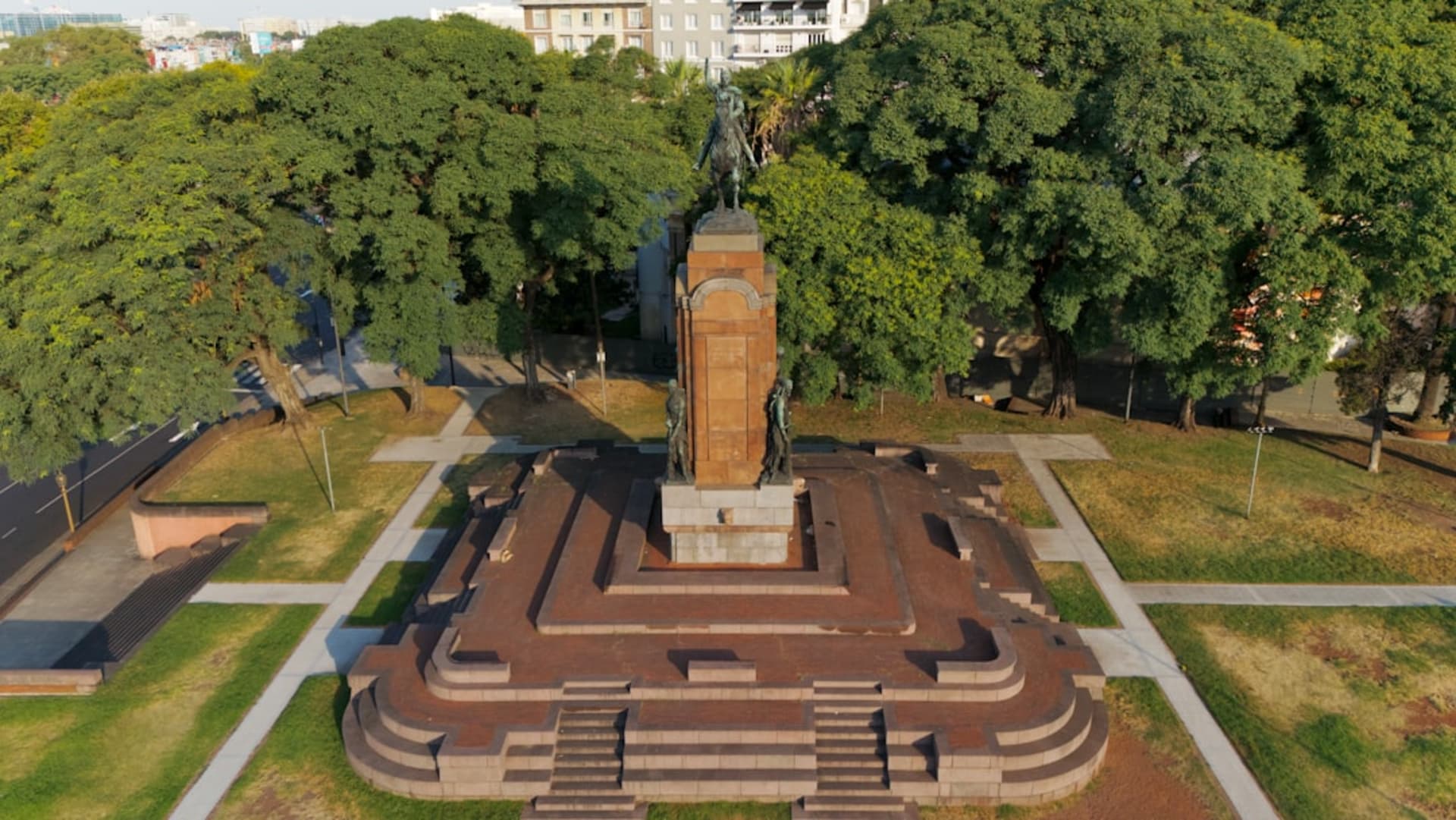
Hito Tres Fronteras
"I stood there counting flags across the water, Argentina under my feet, and felt strangely proud of a border I had nothing to do with."
A striped obelisk on the Argentine riverbank where the Iguazú and Paraná rivers meet three countries at once.

I almost skipped Hito Tres Fronteras. After two days of being flattened by the falls themselves, a monument on a riverbank sounded like the kind of thing you photograph for two minutes and forget. I was wrong, or at least the light was on my side that evening. We walked down from downtown Puerto Iguazú, past the souvenir stalls selling maté gourds and yerba packets, and the crowd noise just dropped away as the ground opened onto the water.
The obelisk itself is modest, blue and white, planted right where the Iguazú River drains into the wider brown sweep of the Paraná. Across the water you can pick out Brazil’s answer to it, a taller pale tower on the far shore, and if you squint past a spit of green you’ll find Paraguay’s marker doing the same thing from its own bank. Three countries, one T-junction of rivers, no fence, no line painted on the water. Lia kept saying it felt like standing in a room with three open doors.

What sold me on the spot wasn’t the monument, honestly, it was the light around 6pm, when the water goes from muddy brown to almost bronze and the swifts start cutting low over the surface hunting insects. There’s a small amphitheater of steps built into the bank so you can sit and just watch the rivers do their slow, silent merging. A vendor was selling chipa nearby, that cheesy bread you get all over this triple-border zone, and I ate mine watching a cargo barge push upriver toward Paraguay, completely indifferent to the tourists pointing at obelisks.

There’s a small paid platform right by the obelisk with a better angle and a gift shop, but I’d honestly skip it — the free public viewpoint just below gives you the same rivers, the same three flags, and none of the queue. What stuck with me afterward wasn’t the geography lesson so much as the ordinariness of it: people fishing on the Paraguayan bank, someone’s music drifting off a boat, life going on in three languages within shouting distance of each other, none of them paying much attention to the line I’d come to see.
When to go: Aim for late afternoon, an hour or two before sunset, when the heat breaks and the river light turns gold — avoid midday when the open plaza has zero shade.
Keep exploring
More from Iguazú Falls
 iguazu-falls
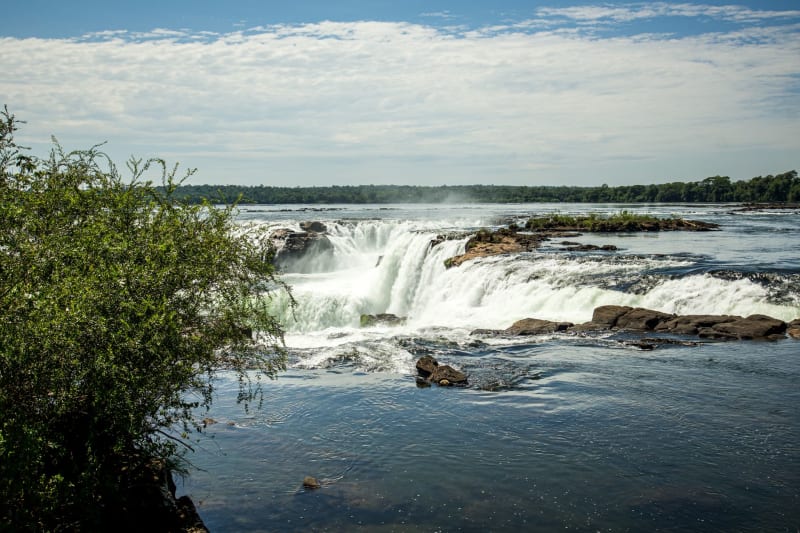
 Isla San Martín
An island planted in the middle of the falls, reached by a short but exhilarating boat ride, with views no walkway can replicate.
Explore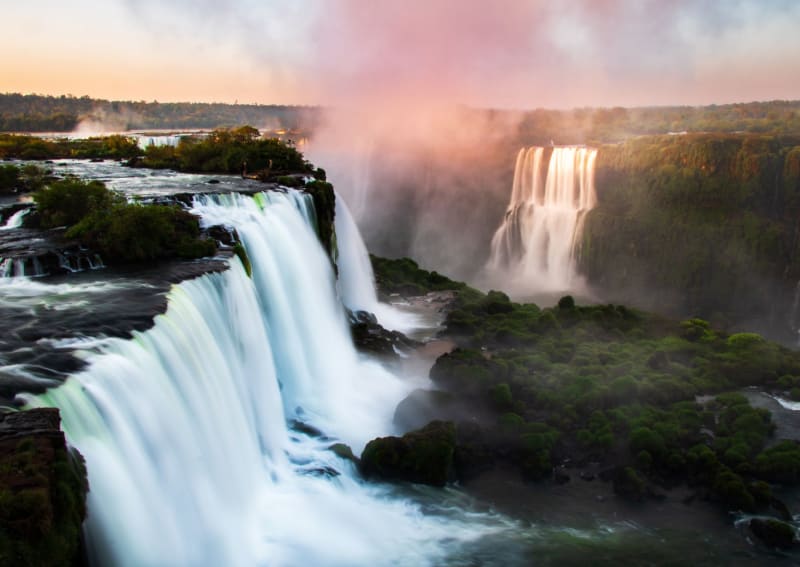 iguazu-falls
 Itaipú Dam
The world's most productive hydroelectric dam is a monument to scale that makes the engineering imagination stretch in uncomfortable directions.
Explore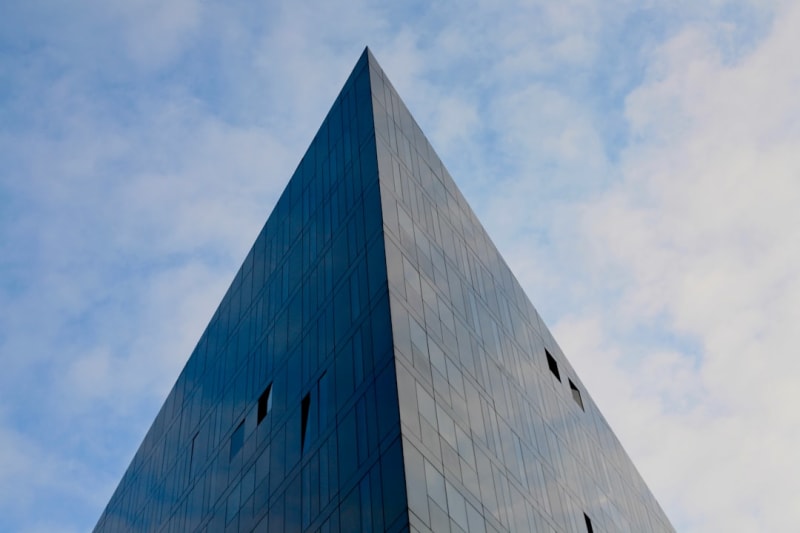 iguazu-falls
 Marco das Tres Fronteiras
The Brazilian mirror monument facing Argentina's tri-border marker, with sweeping views over the meeting of two rivers and three nations.
Explore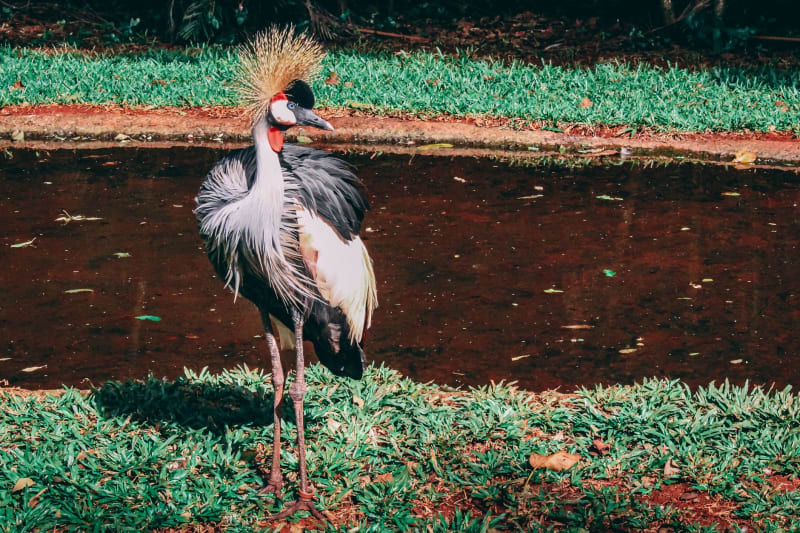 iguazu-falls
 Parque das Aves
A Brazilian bird sanctuary where you walk through aviaries large enough to hold full trees — and the toucans are indifferent to your presence in the best way.
Explore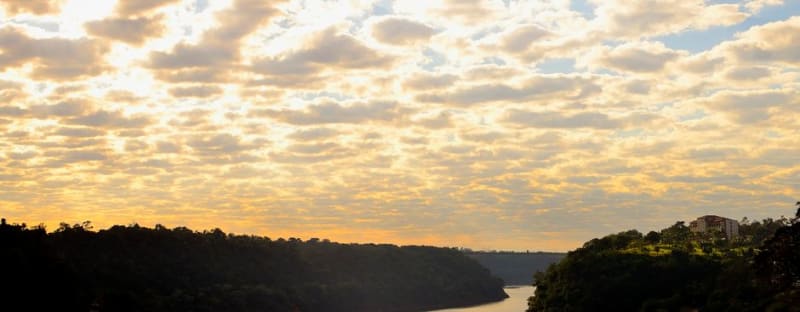 iguazu-falls
 Puerto Bemberg
A private nature reserve and boutique lodge on the Paraná River, a slow, green detour from the crowds at Iguazú.
Explore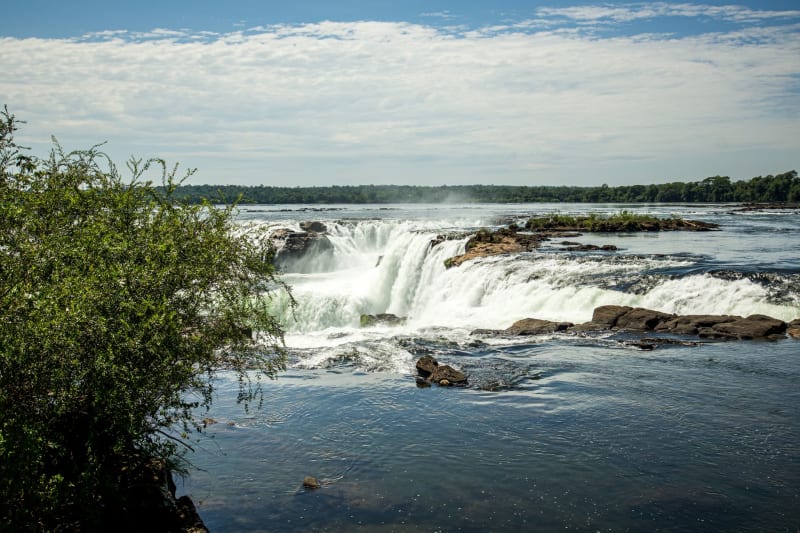 iguazu-falls
 Puerto Iguazú
The Argentine gateway town — functional, warm, and more interesting than its reputation as mere base camp suggests.
Explore