Mývatn
"Mývatn is where Iceland stops pretending to be a normal landscape and shows you what it actually is — a place still being made."
The name Mývatn means “midge lake,” which is the most honest place name in Iceland and possibly the world. We arrived in late June and within ninety seconds of stepping out of the car had inhaled, by my conservative estimate, several hundred midges each. They do not bite — these are the non-biting kind, mostly — but they swarm in clouds so dense that locals wear head nets as a matter of routine and we, having no head nets, spent the first afternoon doing a sort of constant low-grade dance of arm-waving that Lia named, accurately, “the Mývatn salute.” Bring a head net. I cannot stress this enough.
A landscape still cooling
That nuisance aside, Mývatn is one of the strangest and most rewarding landscapes I have stood in anywhere. The lake is shallow and dotted with little grass-topped cones called pseudocraters — formed not by eruptions but by steam explosions when lava flowed over wet ground — and they give the whole shoreline a bubbled, blistered quality, as if the earth had boiled and then set. We walked among them at Skútustaðir in the long northern evening, the light going gold and then golder without ever quite committing to setting, and the pseudocraters threw long shadows across the grass.
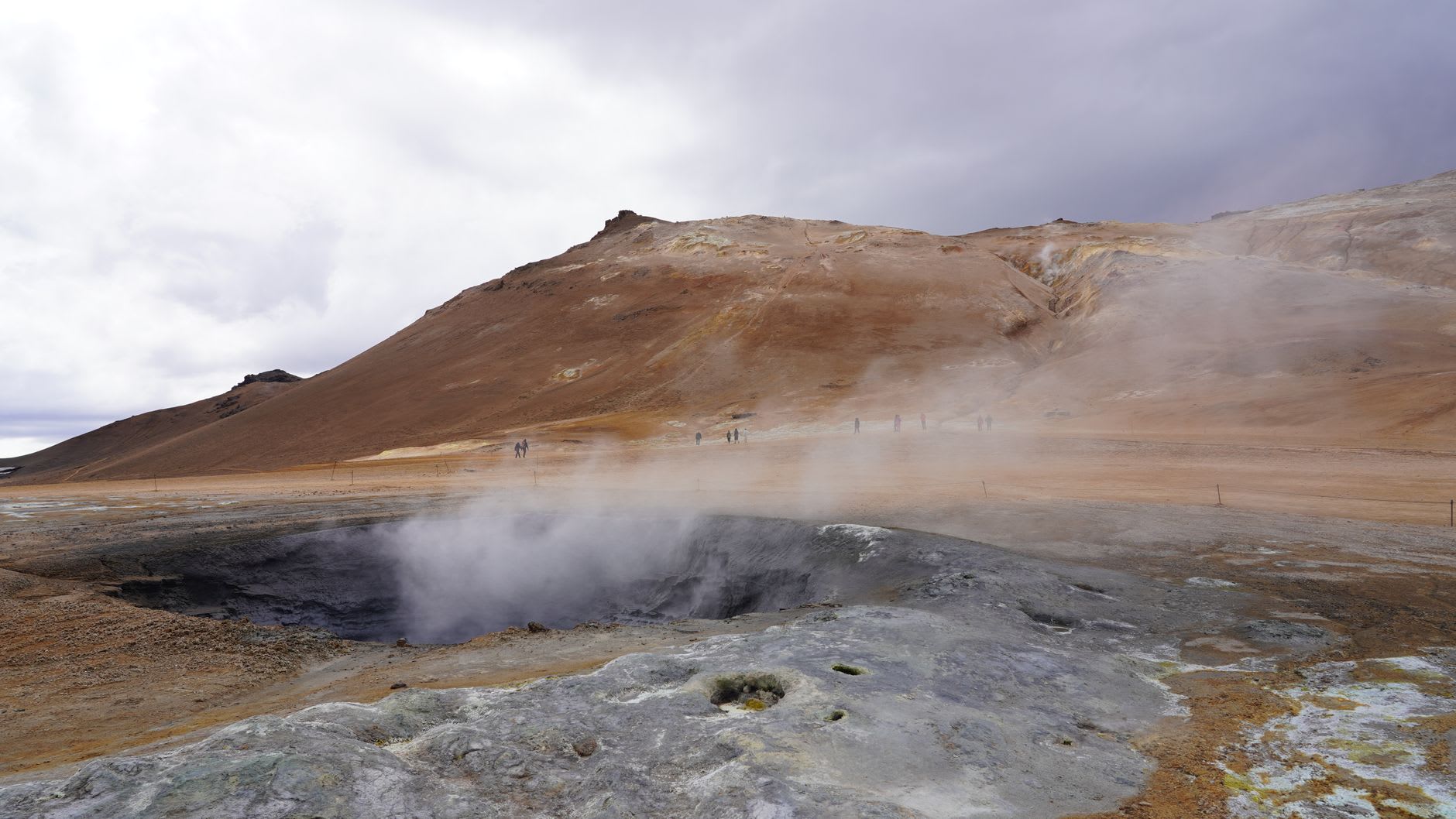
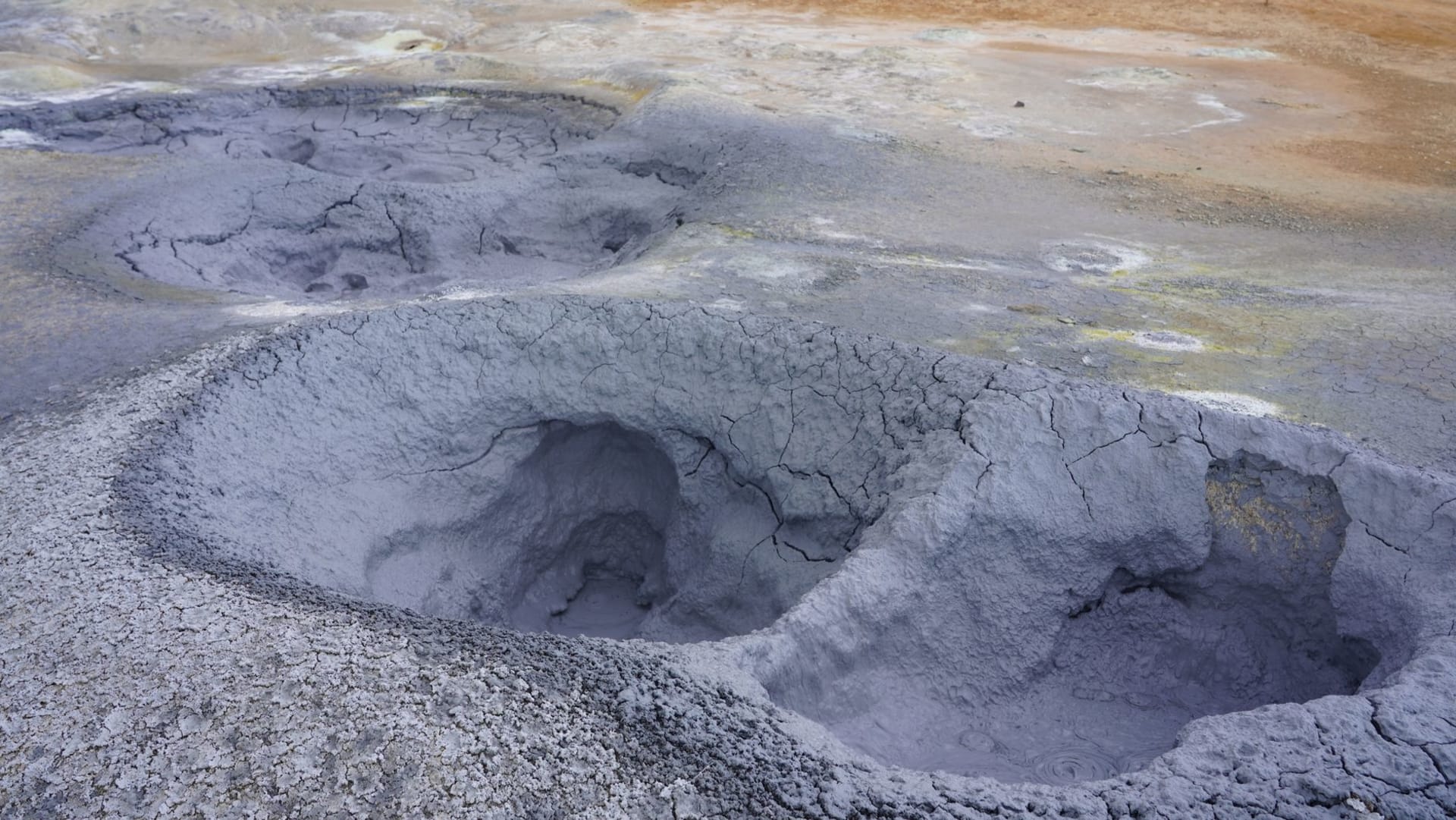
Just east of the lake the land turns properly volcanic. At Dimmuborgir — the name means “dark fortresses” — a field of collapsed lava has left towers and arches and hollows of black rock that you can walk through on marked paths, and it genuinely does feel like the ruin of some enormous building. Beyond that, the Hverir geothermal field steams and bubbles and stinks of sulphur, with mud pots plopping like thick porridge and the ground hot enough in places that you feel it through your boots. I have never been anywhere that made the inside of the planet feel so close to the surface.
The nature baths
After two days of midges and sulphur and walking, the Mývatn Nature Baths were exactly what we needed — the north’s quieter, cheaper, less crowded answer to the Blue Lagoon, a milky blue geothermal pool looking out over the lava country. We lowered ourselves in as the evening cooled and stayed until our fingers wrinkled, watching the steam drift off the surface and the light refuse, hour after hour, to go dark.

There is a kind of fatigue that comes from being constantly amazed, and northern Iceland induces it efficiently. By the time we soaked in the baths I had run out of adjectives and was reduced to simply pointing at things and saying “look.” Lia, equally depleted, would look, and nod, and we would lapse back into silence. That, I have decided, is the correct response to Mývatn. It does not need your adjectives. It was here long before them.
When to go: June to August for the midnight sun, warmth, and access to everything — but accept the midges as the price of admission. September brings fewer insects and the first chance of northern lights. Winter is spectacular and stark but many tracks around the lake become impassable.