Hargeisa
"Nobody else knew where we were, and for once that felt like the whole point."
A rebuilt capital where a downed MiG stands as memorial and camel caravans still trade khat under the acacia trees.
I’ll admit it took three separate conversations with our fixer, Yusuf, before I actually believed Somaliland issues its own visa on arrival. Lia kept pulling up the passport in her hands, turning it over like it might explain itself, this little grey booklet from a country that, on paper, doesn’t exist. We landed in Hargeisa a little after noon, the heat pressing flat against the tarmac, and within twenty minutes we were sitting in Yusuf’s Land Cruiser being handed bottles of warm Coke and a rundown of everything we weren’t allowed to photograph. It’s a strange feeling, arriving somewhere that has run itself — currency, parliament, passport control — since 1991, and that almost nobody outside the Horn of Africa can point to on a map.
The war memorial got me in a way I hadn’t expected. It’s just a MiG fighter jet, mounted nose-up on a plinth in the middle of a traffic circle, but the concrete base is covered in painted murals showing the bombing that leveled this city in 1988 — and the jet itself is the very type that did it, shot down over Hargeisa during the civil war. Lia stood there a long time reading the Somali text she couldn’t fully translate, and a teenager selling phone credit nearby ended up narrating half the story to us in decent English, unprompted, like he’d done it a hundred times for visitors. Which, I suspect, he had.
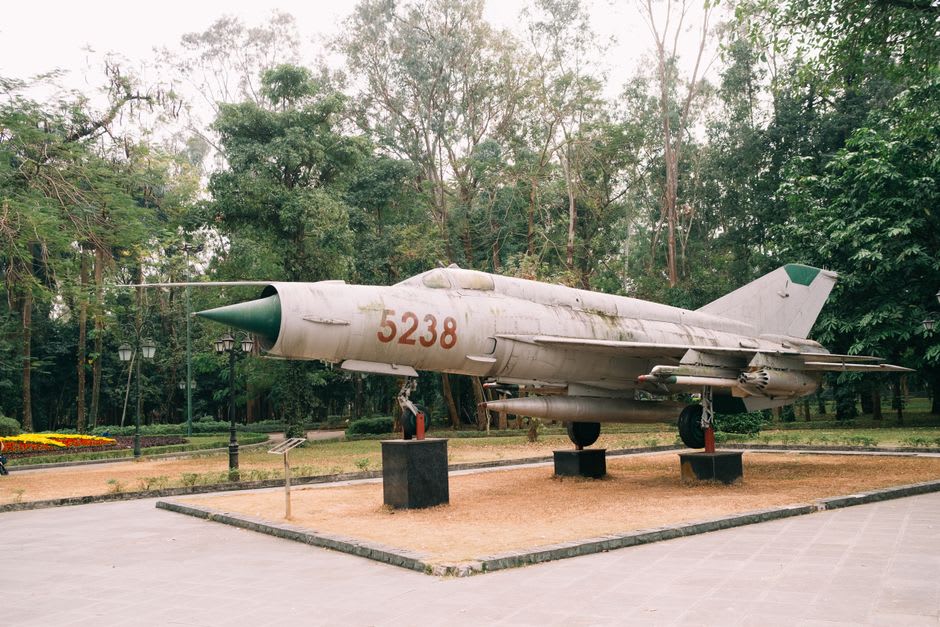
What I didn’t expect was how alive the place feels now. We walked through the livestock market at dawn — goats mostly, some camels being haggled over in a language of gestures and repeated numbers — and by mid-morning the khat market a few streets over was already in full swing, trucks arriving from the Ethiopian highlands with bundles wrapped in plastic and banana leaves, men fanning through bunches to check freshness before the afternoon chew sessions began. Nobody seemed bothered by two foreigners wandering with a camera half-raised. A few grinned. One insisted I try a leaf, which I did, and regretted mildly, the bitterness lasting longer than I expected.
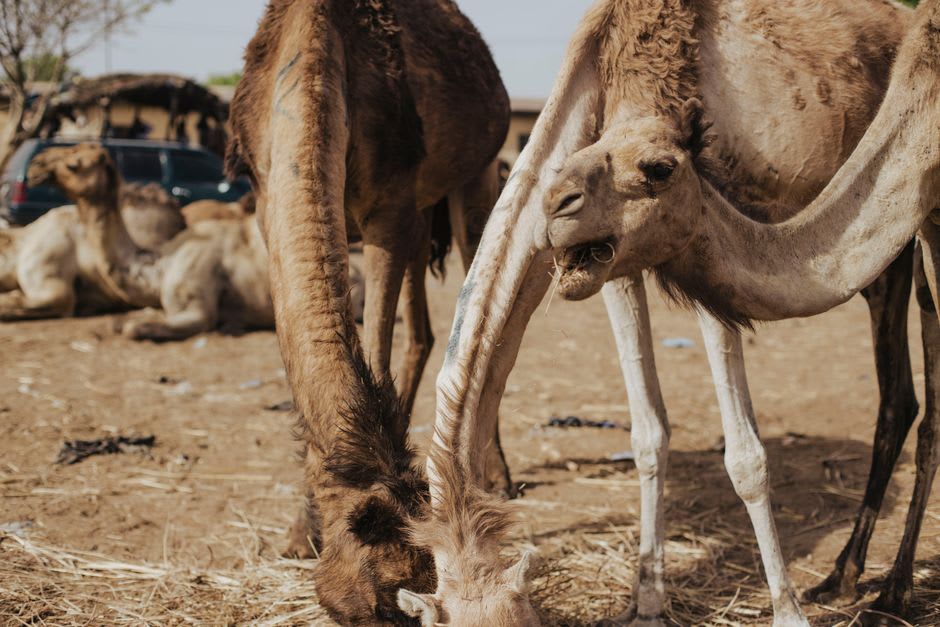
We used Hargeisa mostly as a launchpad — Laas Geel was the real draw, those ochre rock paintings of cattle and herders a couple hours out, thousands of years old and barely visited — but the city held its own. It’s not comfortable in any conventional sense: dusty, hot, short on the kind of infrastructure I take for granted in Mexico City. But it’s rebuilding itself in full view, unrecognized by the world and entirely unbothered by that fact, and there’s something in that stubbornness I keep thinking about.
When to go: We went in December, and I’d steer anyone toward that November-to-February window — outside of it, between May and September, the heat and dryness turn the whole plateau into something considerably less forgiving.
Keep exploring
More from Horn of Africa
 horn-of-africa
 Laas Geel
A cluster of granite rock shelters outside Hargeisa holding some of Africa's oldest and most vivid cave paintings, where Neolithic cattle still glow red and white on the stone.
Explore horn-of-africa
 Lake Turkana
The Jade Sea — a wind-lashed alkaline lake in the northern Kenyan desert where Nile crocodiles and ancient human fossils share the same volcanic shoreline.
Explore horn-of-africa
 Lalibela
Eleven rock-hewn churches carved from solid red granite in the 12th century, still holding liturgical services that smell of incense and eight hundred years of devotion.
Explore horn-of-africa
 Mogadishu
A shattered, luminous capital where ninth-century trade routes, Italian colonnades, and Indian Ocean surf collide in ways I still think about.
Explore horn-of-africa
 Simien Mountains
A fractured highland plateau in northern Ethiopia where gelada baboons graze at cliff edges and the horizon is too large for a single field of vision.
Explore horn-of-africa
 Socotra Island
A geological orphan in the Arabian Sea where dragon blood trees spread their mushroom canopies over beaches that barely seem to belong to this planet.
Explore