
Africa
Horn of Africa
"The place that made me realize how much of the planet I'd been ignoring."
Where ancient trade routes dissolve into cracked earth, dragon blood trees punctuate alien plateaus, and the Red Sea still smells faintly of frankincense — the Horn is Africa at its most remote and most itself.

I landed in Djibouti City at two in the morning and the heat hit me like a held breath — forty degrees and absolutely still, the Gulf of Tadjoura flat and black beyond the port cranes. A man at the taxi rank asked where I was from, nodded when I said France, then told me without irony that I was in the most interesting country in the world. Standing there in that furnace air, watching dhows drift past container ships, I was not inclined to argue.
The Horn of Africa is four countries — Djibouti, Eritrea, Ethiopia, Somalia — and a dozen overlapping histories that no single map can contain. Camel caravans still carry salt from the Danakil Depression, one of the lowest and hottest places on earth, where sulphur springs bubble in shades of yellow and green that look computer-generated and smell like the planet’s interior. In Ethiopia’s Tigray region, rock-hewn churches carved into cliff faces in the twelfth century still hold services, their walls frescoed in pigments that have outlasted most of Europe’s medieval paintings. Harar, in the east, is a walled city of 368 mosques squeezed into lanes so narrow you can touch both walls simultaneously, where men have been feeding spotted hyenas by hand at the city gates for generations. These are not attractions engineered for foreign visitors. They exist because they have always existed.
Then there is Socotra, technically Yemeni but geographically and culturally a world apart — an island in the Arabian Sea that evolved in total isolation for so long it has become a fever dream of endemic species. Dragon blood trees spread their mushroom canopies against skies that range from bone-white to violent violet. The coastline alternates between coral lagoons and dunes that spill directly into the ocean. Fishermen still use traditional wooden boats their grandfathers built. Getting there is difficult. Staying is easy. Leaving is hard in the way only genuinely strange places make it hard — the sense that you have visited something the world does not quite know exists yet.
When to go: October to April for Ethiopia and Djibouti, when temperatures are tolerable and the Danakil is accessible. Eritrea is best November to February. Socotra is open May to October when the southwest monsoon clears, though flights are infrequent — check availability before planning any itinerary around it.
What most guides get wrong: They treat the Horn as a conflict zone to be approached with apology. Parts of Somalia remain genuinely dangerous, and that deserves honest acknowledgment. But Djibouti is stable and straightforward to visit. Ethiopia’s northern historic circuit — Axum, Lalibela, Gondar — is as logistically manageable as anywhere in sub-Saharan Africa. Eritrea is complicated by its political situation but deeply rewarding for those who navigate it. The Horn’s reputation for inaccessibility keeps crowds away, which is precisely why what remains feels so intact.
Explore
Places in Horn of Africa
 horn-of-africa
 Asmara
Eritrea's capital is a perfectly preserved Art Deco city at 2,400 metres, where Italian espresso culture survived decolonisation with remarkable serenity.
Explore horn-of-africa
 Axum
The ancient capital of the Aksumite Empire, where stone obelisks rise from dry earth and the city quietly claims to hold the original Ark of the Covenant.
Explore horn-of-africa
 Berbera
Somaliland's ancient port where Ottoman limestone warehouses face a Gulf of Aden beach so undiscovered it makes you feel like the first person to find it.
Explore horn-of-africa
 Danakil Depression
One of the hottest and lowest places on earth, where sulphur vents bubble in alien colours and Afar salt miners still work the ancient white flats.
Explore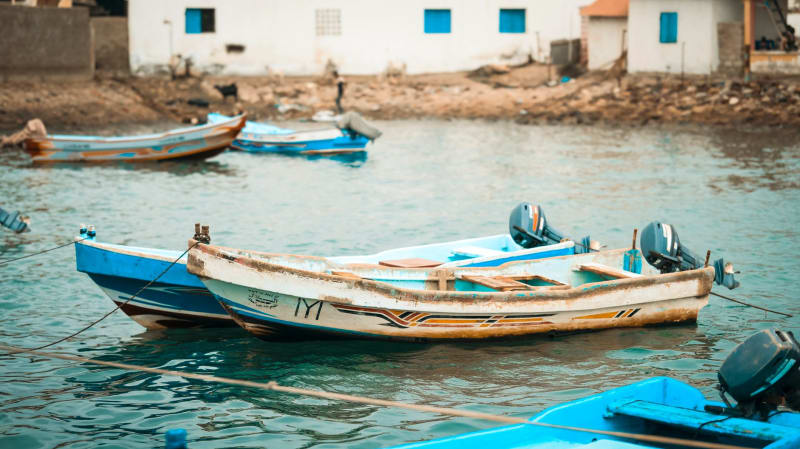 horn-of-africa
 Djibouti City
A port city where French colonial facades meet Somali fish markets and the Gulf of Tadjoura glitters like hammered tin.
Explore horn-of-africa
 Harar
A walled city of 368 mosques and lanes so narrow you turn sideways to pass, where men have fed wild spotted hyenas by hand at the gates for generations.
Explore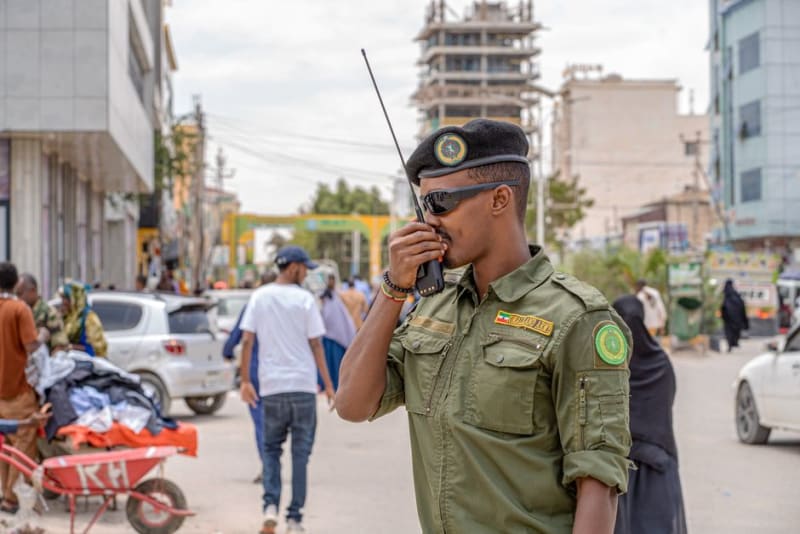 horn-of-africa
 Hargeisa
A rebuilt capital where a downed MiG stands as memorial and camel caravans still trade khat under the acacia trees.
Explore horn-of-africa
 Laas Geel
A cluster of granite rock shelters outside Hargeisa holding some of Africa's oldest and most vivid cave paintings, where Neolithic cattle still glow red and white on the stone.
Explore horn-of-africa
 Lake Turkana
The Jade Sea — a wind-lashed alkaline lake in the northern Kenyan desert where Nile crocodiles and ancient human fossils share the same volcanic shoreline.
Explore horn-of-africa
 Lalibela
Eleven rock-hewn churches carved from solid red granite in the 12th century, still holding liturgical services that smell of incense and eight hundred years of devotion.
Explore horn-of-africa
 Mogadishu
A shattered, luminous capital where ninth-century trade routes, Italian colonnades, and Indian Ocean surf collide in ways I still think about.
Explore horn-of-africa
 Simien Mountains
A fractured highland plateau in northern Ethiopia where gelada baboons graze at cliff edges and the horizon is too large for a single field of vision.
Explore horn-of-africa
 Socotra Island
A geological orphan in the Arabian Sea where dragon blood trees spread their mushroom canopies over beaches that barely seem to belong to this planet.
Explore