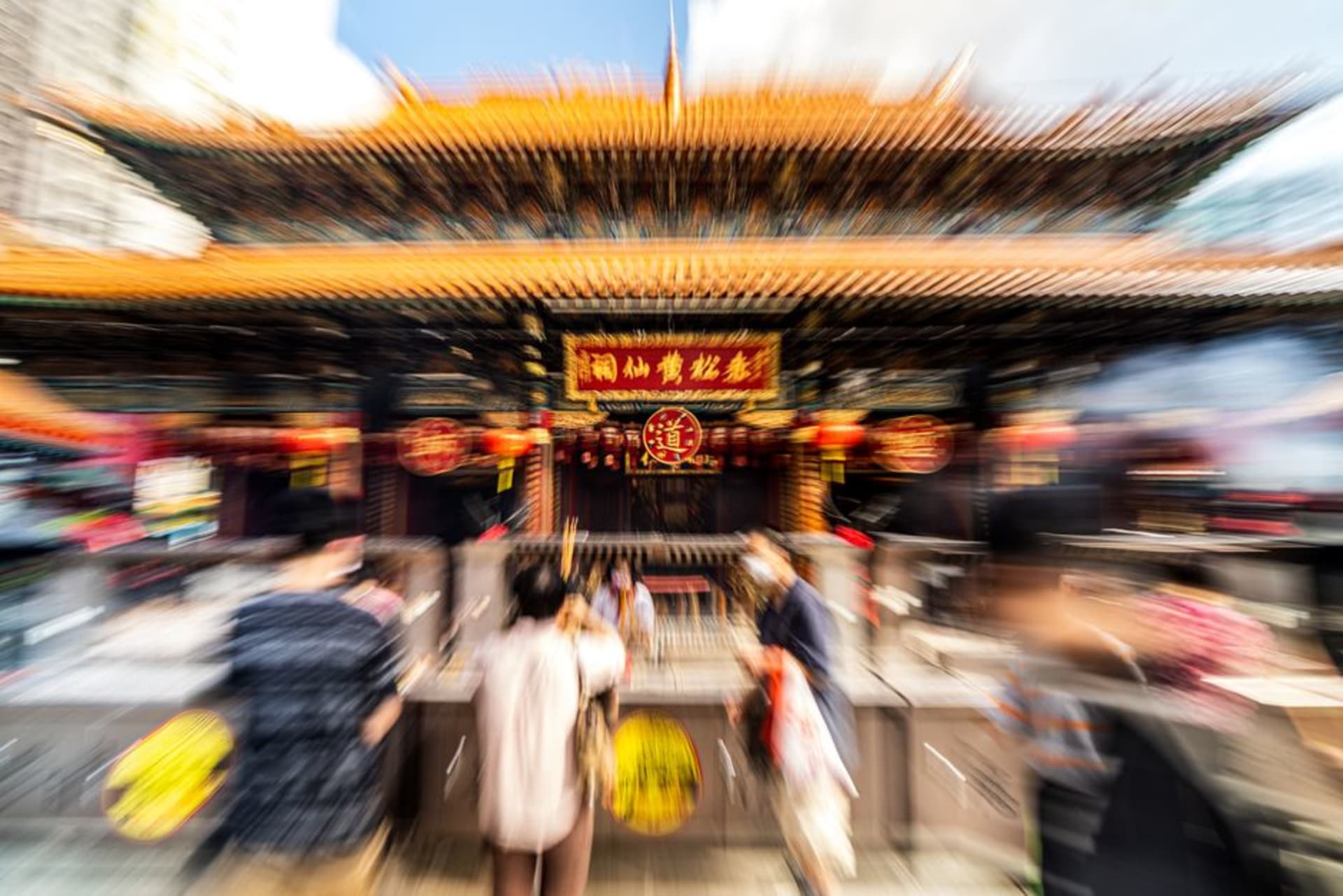
Wong Tai Sin Temple
"I shook the fortune stick canister until one clattered out onto the floor, and an elderly woman beside me laughed at how nervous I looked about it."
Kowloon's busiest temple, where incense smoke, fortune sticks, and a genuinely startling density of devotion sit a few floors below an ordinary MTR station.
You come up out of the Wong Tai Sin MTR station directly into the temple grounds, no transition at all, which is a slightly disorienting way to go from fluorescent-lit transit to one of the most active religious sites in Hong Kong. The air changes first — thick with incense smoke that catches in your throat within the first few steps — and then the sound does, a low continuous murmur of prayer and the rattle of fortune stick canisters being shaken by dozens of people at once. Lia grew up going to Catholic mass with her grandmother and said the intensity of devotion here reminded her more of a pilgrimage site in Mexico than anything else we’d seen in Hong Kong.
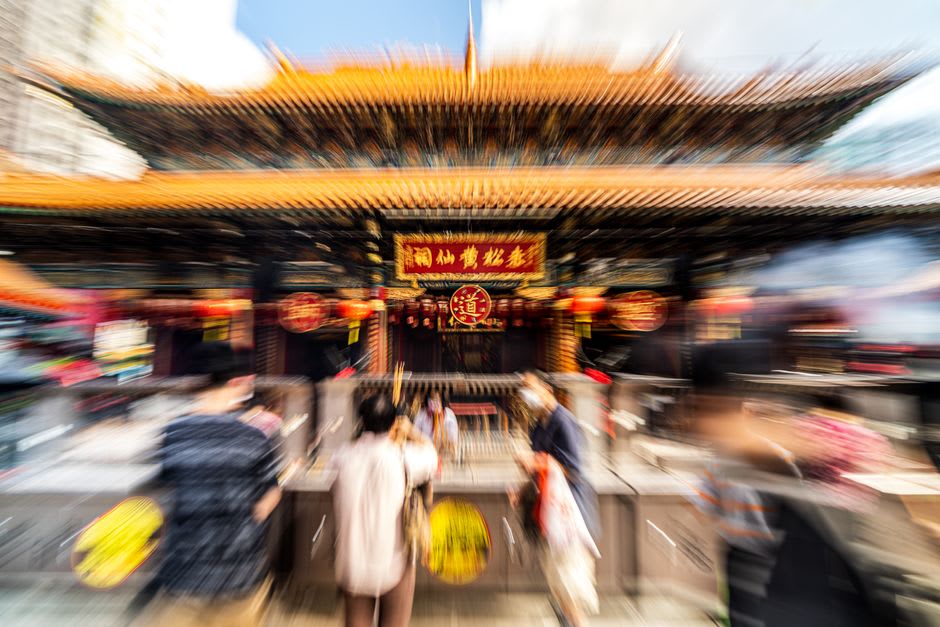
The temple is dedicated to Wong Tai Sin, a shepherd said to have gained the power of healing and later become a Taoist deity, and it draws worshippers from all three of Hong Kong’s major traditions — Taoist, Buddhist, and Confucian — which is part of why the grounds feel so continuously full regardless of the hour. The main draw for most visitors, myself included, is kau cim: you kneel before the altar, shake a cylinder of numbered bamboo sticks until one falls out, then take your numbered fortune to one of the dozens of fortune-telling booths that line the temple’s arcade for an interpretation. Mine came back cautiously optimistic, with a specific warning about business partnerships that I have chosen to take seriously.
The Good Wish Garden, tucked into the temple’s western corner, is a smaller and much quieter Chinese classical garden built around a pond and a set of pavilions modeled on the Suzhou style. After the crowd and incense of the main hall, it functions almost like a decompression chamber — we sat there for twenty minutes doing nothing but watching koi move under a bridge, which after the intensity outside felt like exactly the right pacing.
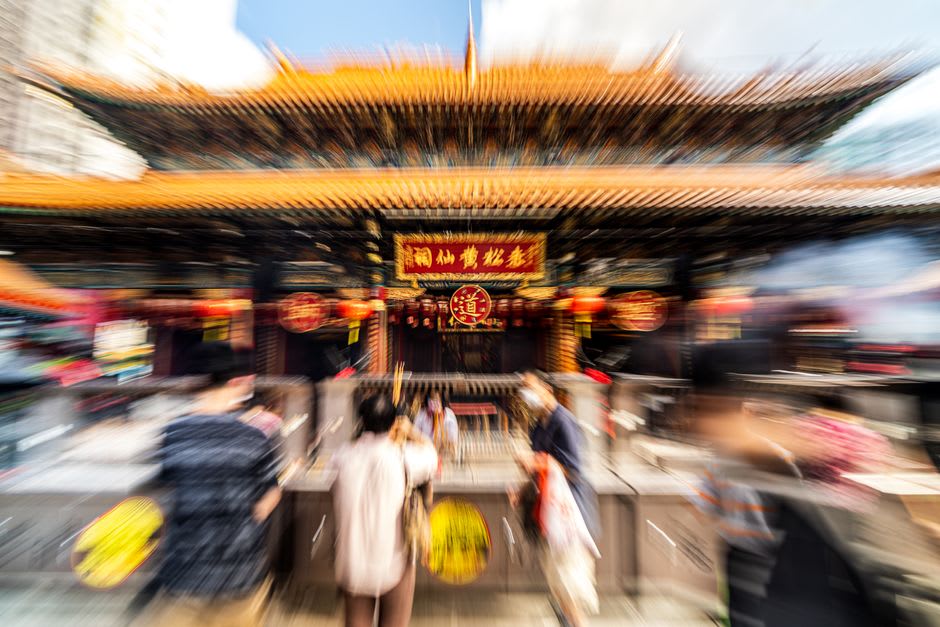
The arcade of fortune-telling stalls surrounding the temple is worth a slow walk even if you skip the reading — dozens of practitioners, each with their own specialty in palmistry, face reading, or birth chart astrology, sitting behind small tables stacked with reference books that look decades old. Some speak English, most don’t, and a few of the stalls post laminated menus with prices in several currencies for visitors, which felt like a very Hong Kong compromise between tradition and tourism.
When to go: Early morning, before 9am, for the temple at its most active with local worshippers and before the tour groups arrive. Chinese New Year draws the single largest crowd of the year, with devotees queuing overnight to be first to place incense — extraordinary to witness, but plan around it rather than into it unless crowds don’t bother you.