Wong Chuk Hang
"Nobody tells you to go to Wong Chuk Hang, which is exactly why you should."
A former industrial district reborn as a warehouse gallery scene — Hong Kong's answer to Berlin's converted factories, minus the crowds.

A former colleague who’d moved to Hong Kong for work sent me a single message before my last trip: “skip the big galleries in Central, go to Wong Chuk Hang instead.” I had never heard of it. It turns out to be a district on the south side of the island, historically full of factories and industrial warehouses, that quietly became one of the more interesting contemporary art scenes in Asia over the last decade or so, precisely because the rent was cheap enough for galleries to take risks that Central’s retail-adjacent art spaces couldn’t afford.
The buildings themselves are the tell — raw concrete industrial towers with cargo lift access, functional in a way that has nothing to do with the polished glass aesthetic of the rest of the island. Galleries like de Sarthe and Gallery Exit occupy entire floors of these former factories, and because it’s still primarily an industrial zone rather than a designated arts district, there’s none of the manufactured cool you get in more commercialized creative quarters elsewhere. You take a service elevator up past what’s clearly still an active textile warehouse and step into a white cube space showing serious contemporary work, often by artists you won’t have heard of yet.
What I liked most, honestly, was how few people were there. A Saturday afternoon spent gallery-hopping in Wong Chuk Hang meant having entire rooms to myself, no crowds to navigate, no pressure to move through quickly. The area is also home to a growing cluster of specialty coffee roasters and craft breweries that have taken over other industrial units nearby — Young Master Brewery does tours and tastings out of its original warehouse space, and it’s worth timing a visit around one if beer is your thing.
The MTR South Island Line reaches Wong Chuk Hang directly now, which has started to change the neighborhood’s character — more residential towers going up, rents creeping higher — so there’s a real sense that this particular version of the district, raw and slightly overlooked, has a limited shelf life. Worth seeing while it still feels like a discovery rather than a destination.
When to go: Weekend afternoons, when most galleries are open and staffed, but before the district gets fully discovered by the wider art crowd. Many spaces close Mondays.
Keep exploring
More from Hong Kong
 hong-kong
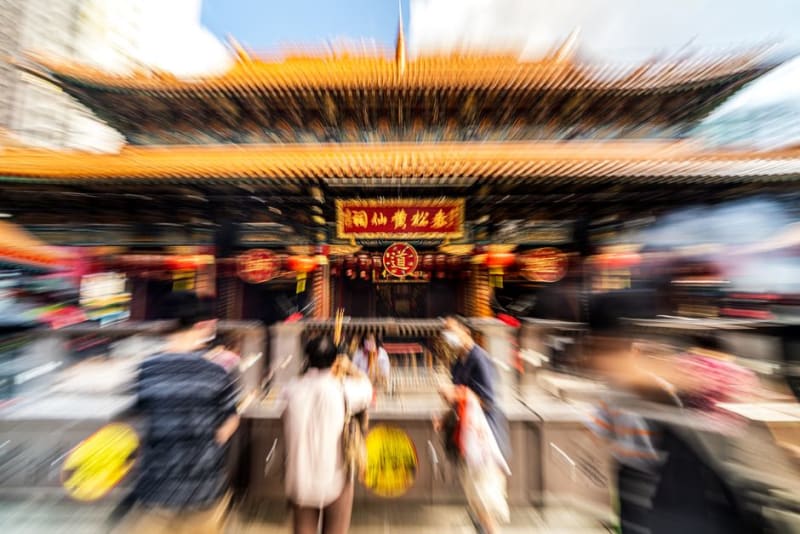
 Wong Tai Sin Temple
Kowloon's busiest temple, where incense smoke, fortune sticks, and a genuinely startling density of devotion sit a few floors below an ordinary MTR station.
Explore hong-kong
 Yau Ma Tei Fruit Market
A century-old wholesale fruit market that runs almost entirely at night, when trucks unload and the whole block smells like citrus and diesel.
Explore hong-kong
 Yim Tin Tsai
A near-abandoned salt-farming island off Sai Kung, brought back to life one chapel restoration and one Venice Biennale prize at a time.
Explore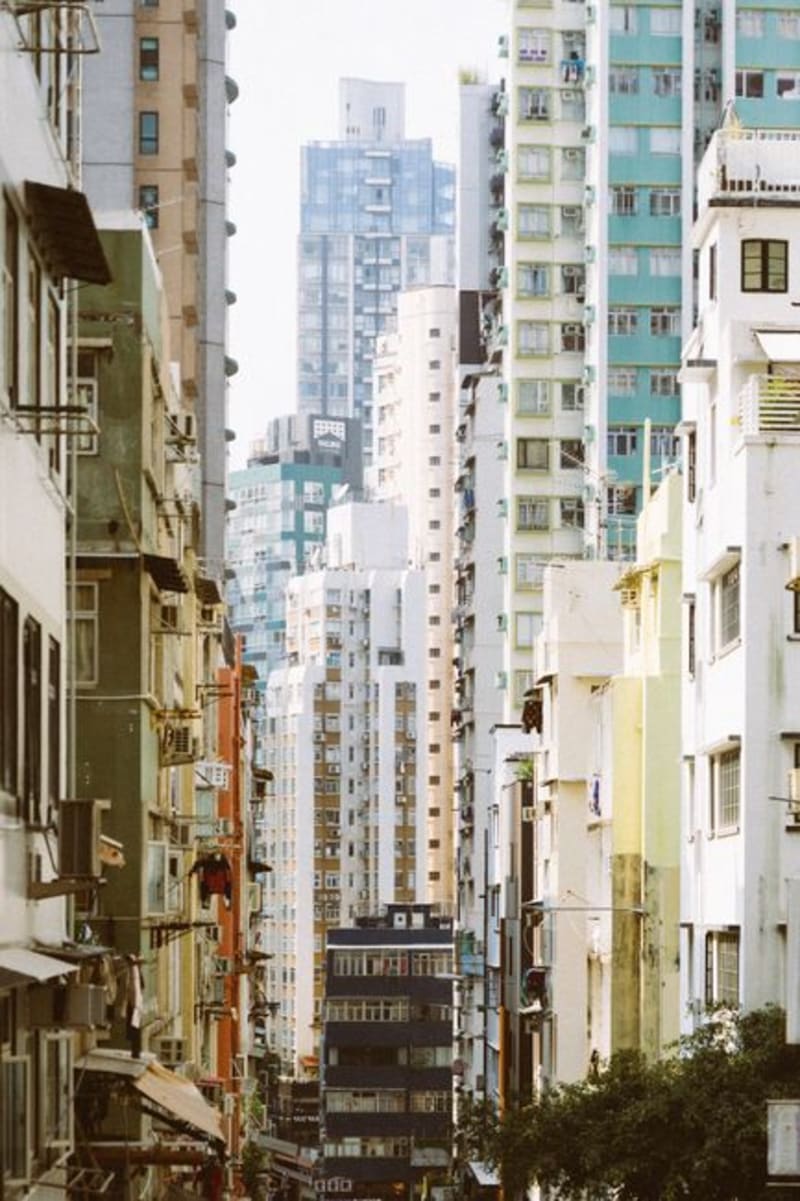 hong-kong
 Yuen Long
A New Territories market town synonymous with roast goose, where walled villages and century-old restaurants sit inside the same few square kilometres.
Explore hong-kong
 Yuen Yuen Institute
A Tsuen Wan hilltop temple built around one idea: that Taoism, Buddhism, and Confucianism are really the same conversation.
Explore hong-kong
 Aberdeen
A fishing village that industrialized around it — houseboats, a floating restaurant the size of a small hotel, and typhoon shelter life that predates the skyscrapers by centuries.
Explore