Sunset Peak
"The huts were empty and the grass was on fire with evening light, and I understood immediately why people used to live up here just for this."
Lantau's second-highest summit, ringed with abandoned stone huts and grassland that turns gold exactly when its name promises.
Sunset Peak, or Tai Tung Shan, is the second-highest mountain on Lantau Island, and unlike most of Hong Kong’s peaks it comes with a genuine architectural mystery scattered across its upper slopes: a cluster of small stone huts, roughly a hundred of them, built in the 1920s and 30s by missionaries and wealthy Hong Kong families as a cool-season retreat from the heat and density of the city below. Most are abandoned now, roofless, walls intact, sitting in grassland that has grown up around them like a slow-motion reclamation. I’d read about them in an old guidebook and gone up specifically to see them, only realising once I got there how much the view itself would end up competing for my attention.
The climb from Pak Kung Au is steep and mostly stairs for the first hour, the kind of relentless, evenly-spaced ascent that Hong Kong trail builders seem to favour over switchbacks, and I was properly out of breath by the time the gradient eased near the huts. The grassland up here has almost no tree cover, which in one direction means brutal sun exposure and in the other means an uninterrupted view that swings from Lantau’s peaks to the airport’s runways laid flat on reclaimed land to the outline of Hong Kong Island on a clear day.
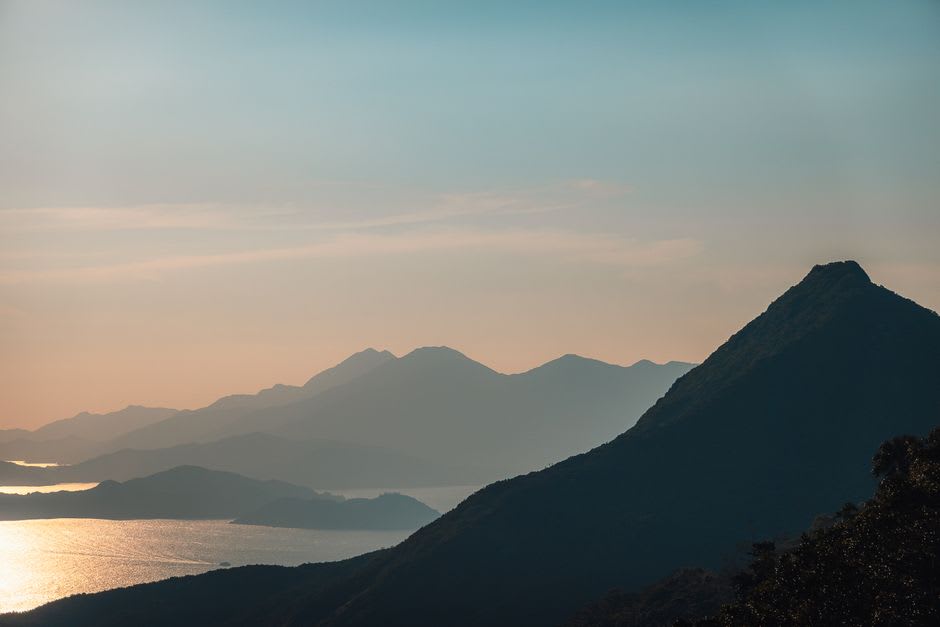
I’d timed the hike badly on my first attempt, arriving at the summit at midday under flat, characterless light, and understood then why the name matters so much — this is a mountain built for one specific hour. I went back a few months later, timed properly, and watched the grassland turn from green-gold to deep amber to something closer to bronze as the sun dropped toward the sea past Lantau’s western hills, the shadows of the ruined huts stretching long and theatrical across the slope.
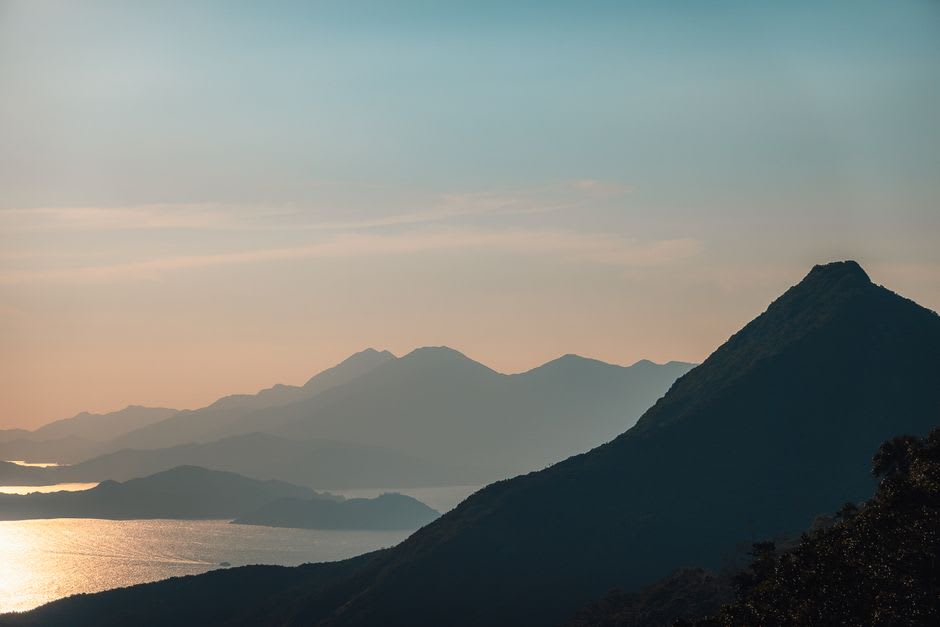
Camping is technically permitted near the huts and a fair number of hikers do it specifically to catch both sunset and sunrise from the same spot, which struck me as the correct way to treat a mountain this committed to a single lighting effect. I didn’t have a tent that trip, and made do with the memory and a headlamp for the descent instead.
When to go: Clear, dry days between October and April give the sharpest sunset colour and the best odds of a cloud-free horizon. Arrive at least ninety minutes before sunset to reach the upper slopes with time to find a good spot before the light turns.
Keep exploring
More from Hong Kong
 hong-kong
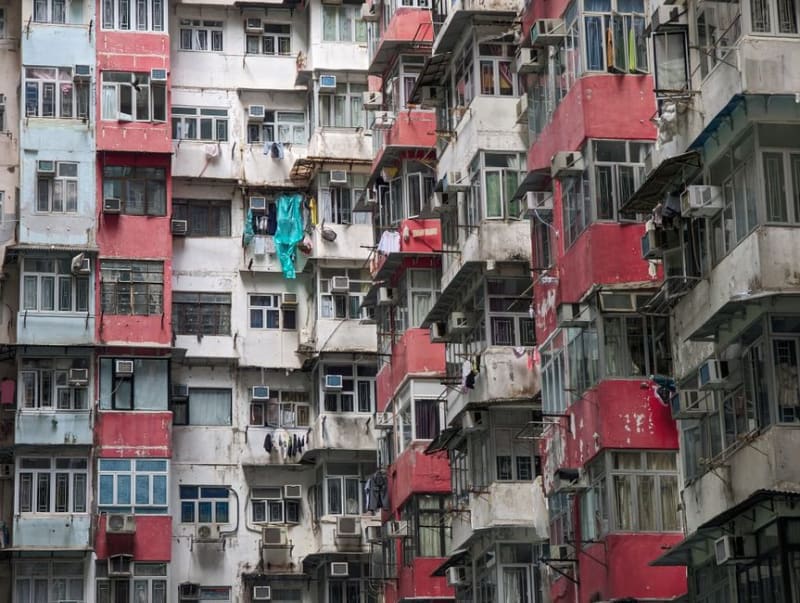
 Tai Fu Tai Mansion
A Qing dynasty scholar's house buried in the New Territories, its plaster carvings and shell-lime walls barely touched by the century since.
Explore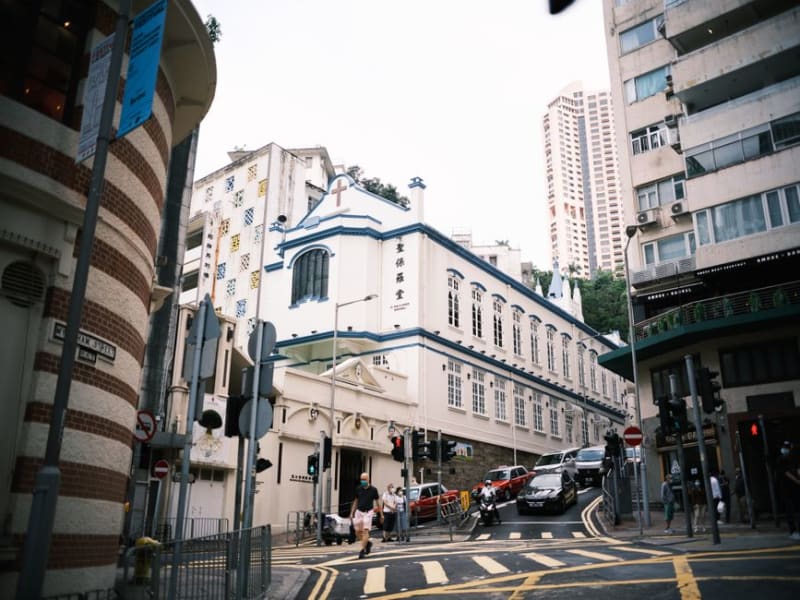 hong-kong
 Tai Hang
A former squatter village turned quiet café district, famous once a year for a 67-meter fire dragon made of straw and incense sticks.
Explore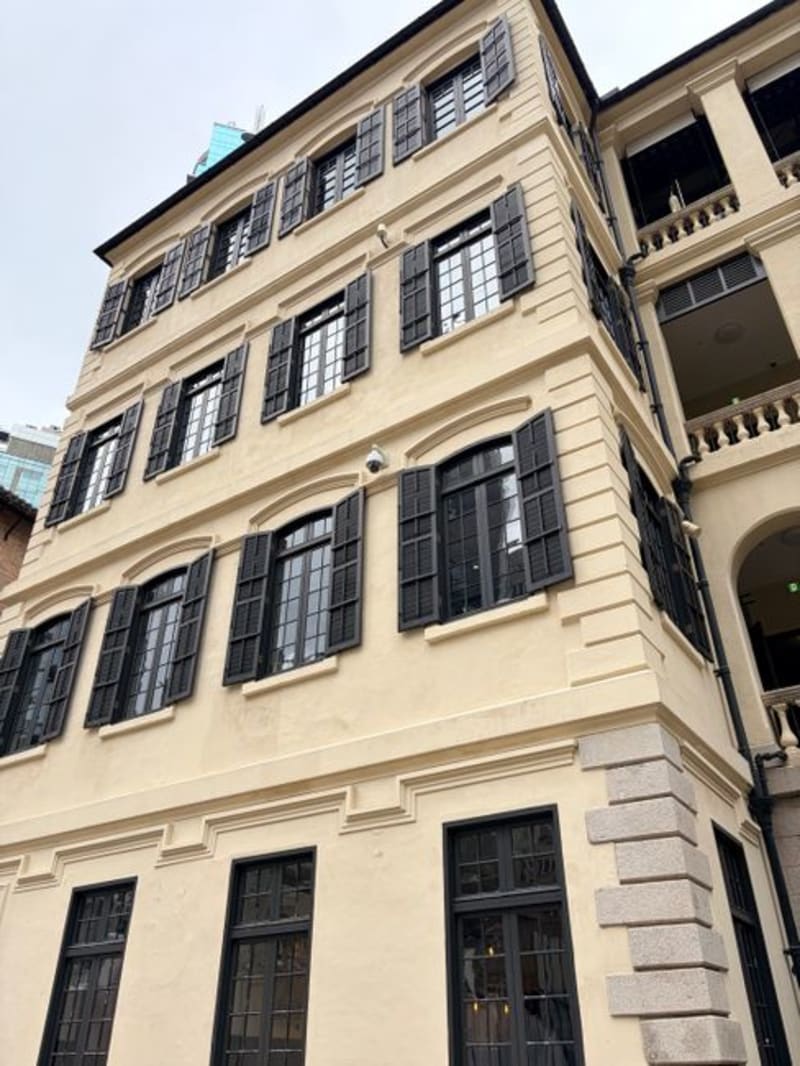 hong-kong
 Tai Kwun
A former colonial police station and prison reborn as Central's arts and heritage compound, where cell blocks now hold contemporary galleries and a rooftop bar.
Explore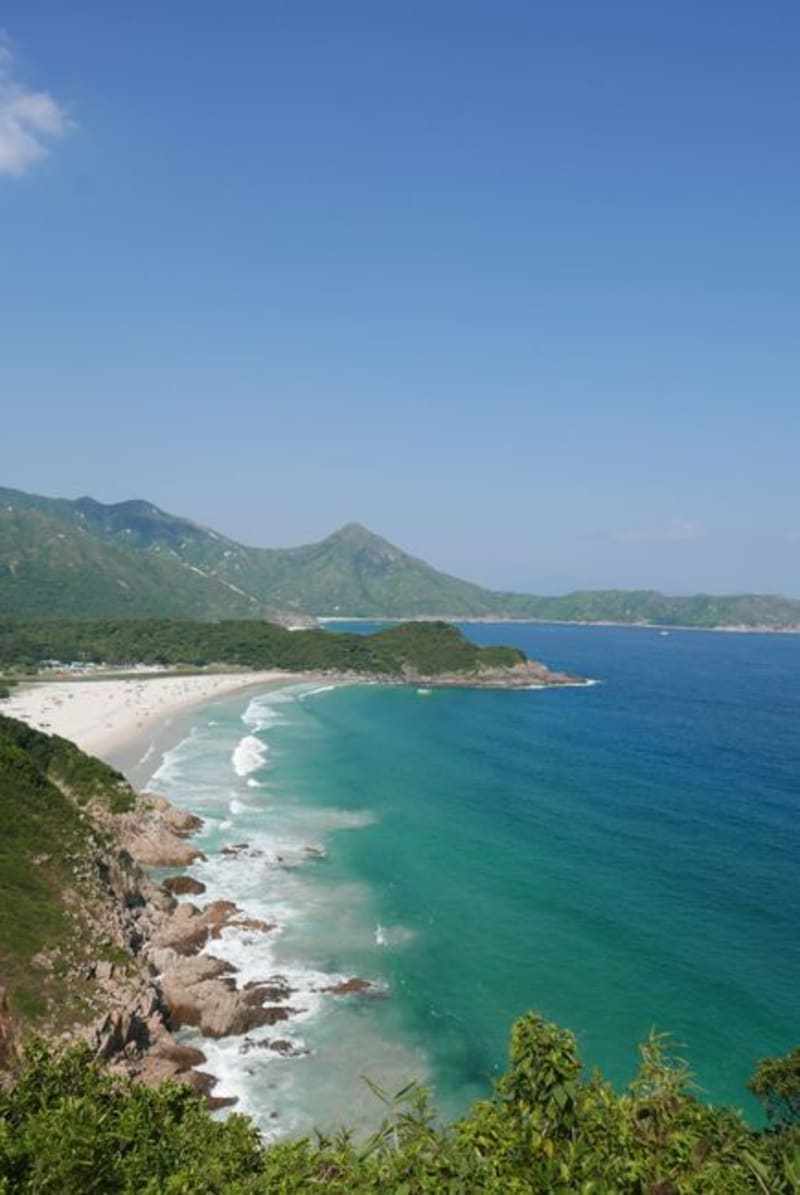 hong-kong
 Tai Long Wan
Sai Kung's reward-for-effort beach — a two-hour hike through the geopark to what most people who've seen it call Hong Kong's finest stretch of sand.
Explore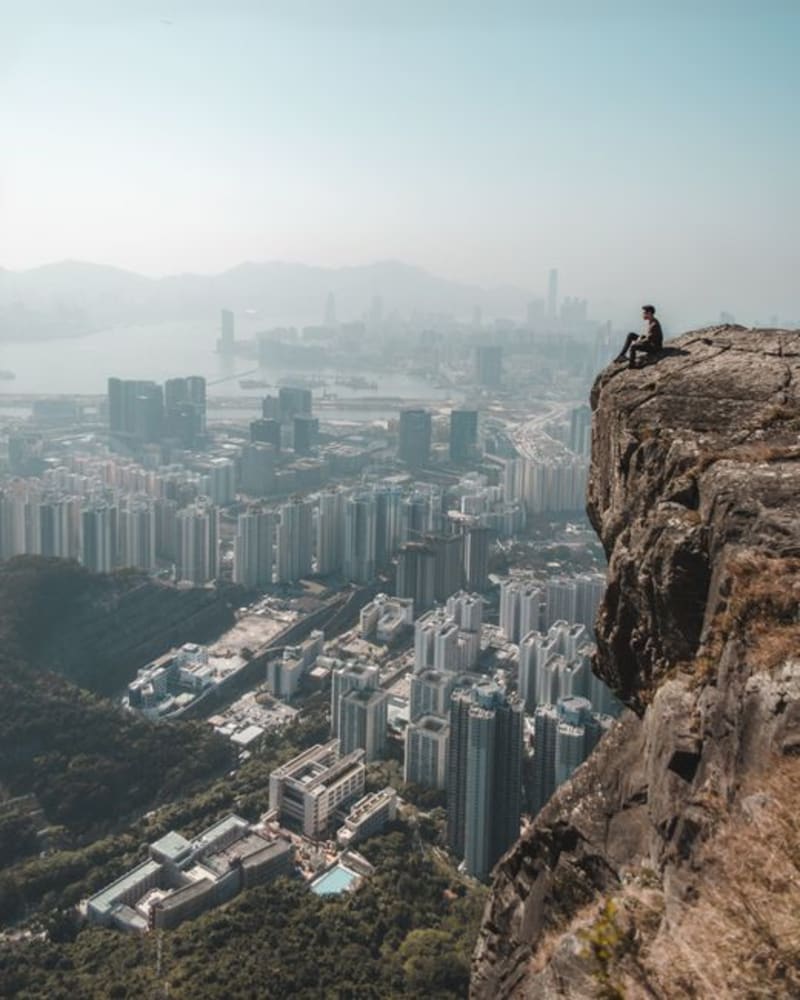 hong-kong
 Tai Mo Shan
Hong Kong's highest peak, where the clouds actually sit below you and the summit trail is quiet enough to hear your own breathing.
Explore hong-kong
 Tai O
A stilt village at Lantau's western tip where time and the tides both move at their own pace, and the shrimp paste is unlike anywhere else.
Explore