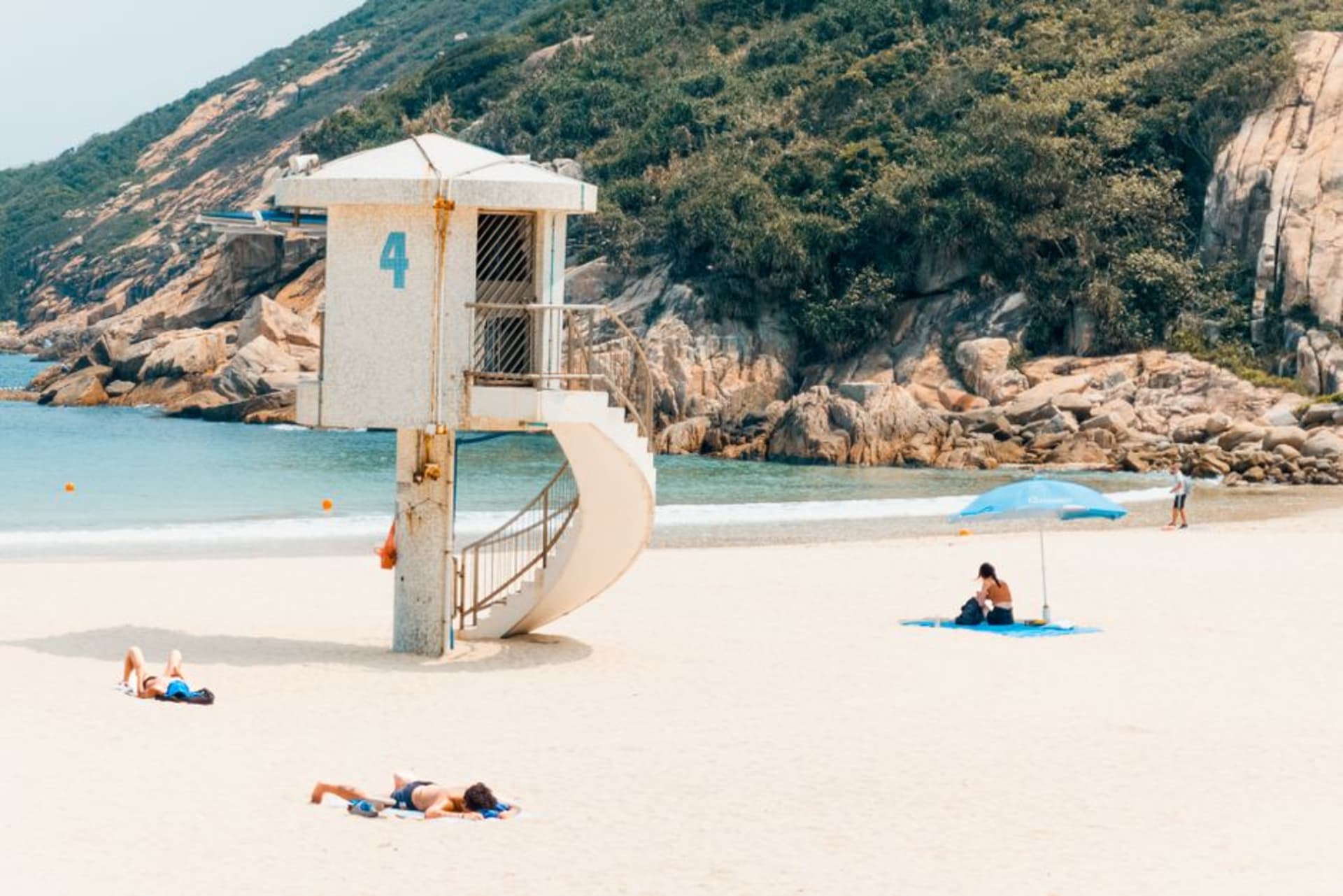
Shek O
"Shek O is the one part of Hong Kong Island where the buses slow down because there's genuinely nowhere else to be."
A beach village at the far southeast corner of Hong Kong Island that feels smuggled in from somewhere in the Mediterranean — barbecue pits, a Thai food stall institution, and almost no traffic.
The bus to Shek O takes the long way, over Dragon’s Back and down through switchbacks that make you understand why the ridge above is one of Asia’s most-hyped urban hikes, and by the time it deposits you at the village terminus you have mentally left Hong Kong Island’s version of Hong Kong entirely. Shek O sits at the very tip of the southeast coast, and it has resisted, more successfully than almost anywhere else this close to Central, the pressure to become a resort. The main street is one lane, lined with a barbecue-supplies shop, a couple of surf shacks, and Chinese and Thai restaurants that have clearly been feeding the same regulars for decades.
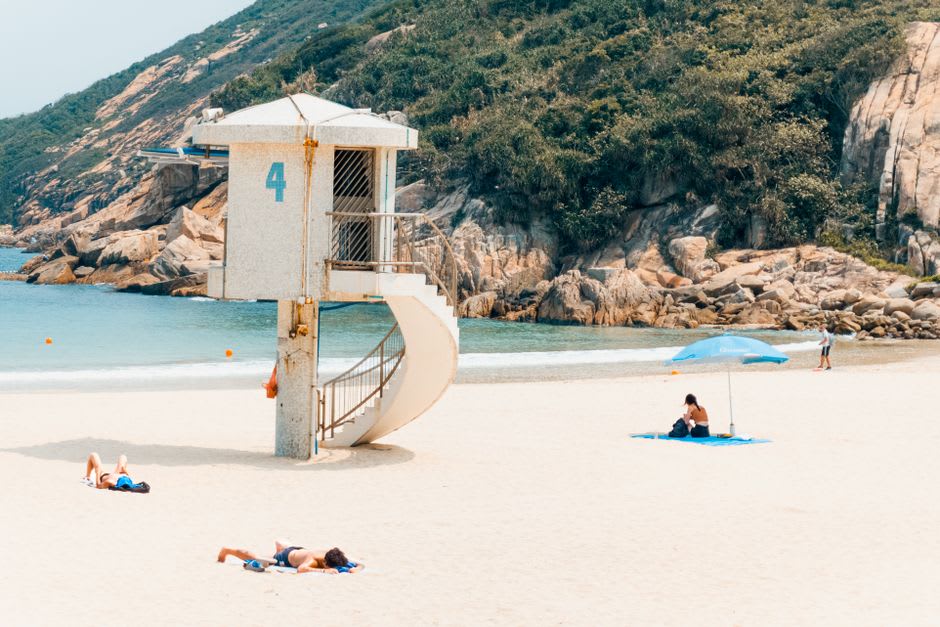
The beach is long and generous by Hong Kong standards, shark-netted and lifeguarded, with a grid of free barbecue pits set back from the sand that fill with extended families on weekends — the smoke and the smell of marinated chicken wings drifting across the whole village by early evening. Lia and I came on a Tuesday specifically to avoid that, and had probably two hundred meters of sand entirely to ourselves for most of the afternoon, which is not an experience Hong Kong offers often. We ate afterward at a hole-in-the-wall Thai spot that a friend swore was the best Thai food in the territory, tucked behind the market stalls with no sign to speak of — the kind of place you’d walk past without a recommendation and regret it for the rest of your trip.
Past the village, a coastal path leads out to Shek O Headland and the old Chinese pavilion at its tip, a short but genuinely spectacular walk along cliffs that drop straight into open water, with views back toward Big Wave Bay to the north and, on a clear day, out toward the shipping lanes of the South China Sea. There’s also a golf course wedged into the hills behind the village — one of Hong Kong’s oldest, dating to the 1890s — which tells you something about how long this particular corner has been a retreat from the rest of the city, colonial officials included.
When to go: Weekdays year-round for a quiet beach; weekends from May through September if barbecue smoke and a full sand grid full of families sounds like your idea of a good time rather than a deterrent. October and November bring the clearest air for the headland walk.