Ngong Ping
"Somewhere over the second pylon, the cable car swings a little and you stop pretending you're not nervous."
A cable car ride into the clouds above Lantau, ending at a bronze Buddha the size of a building and a monastery that still means it.
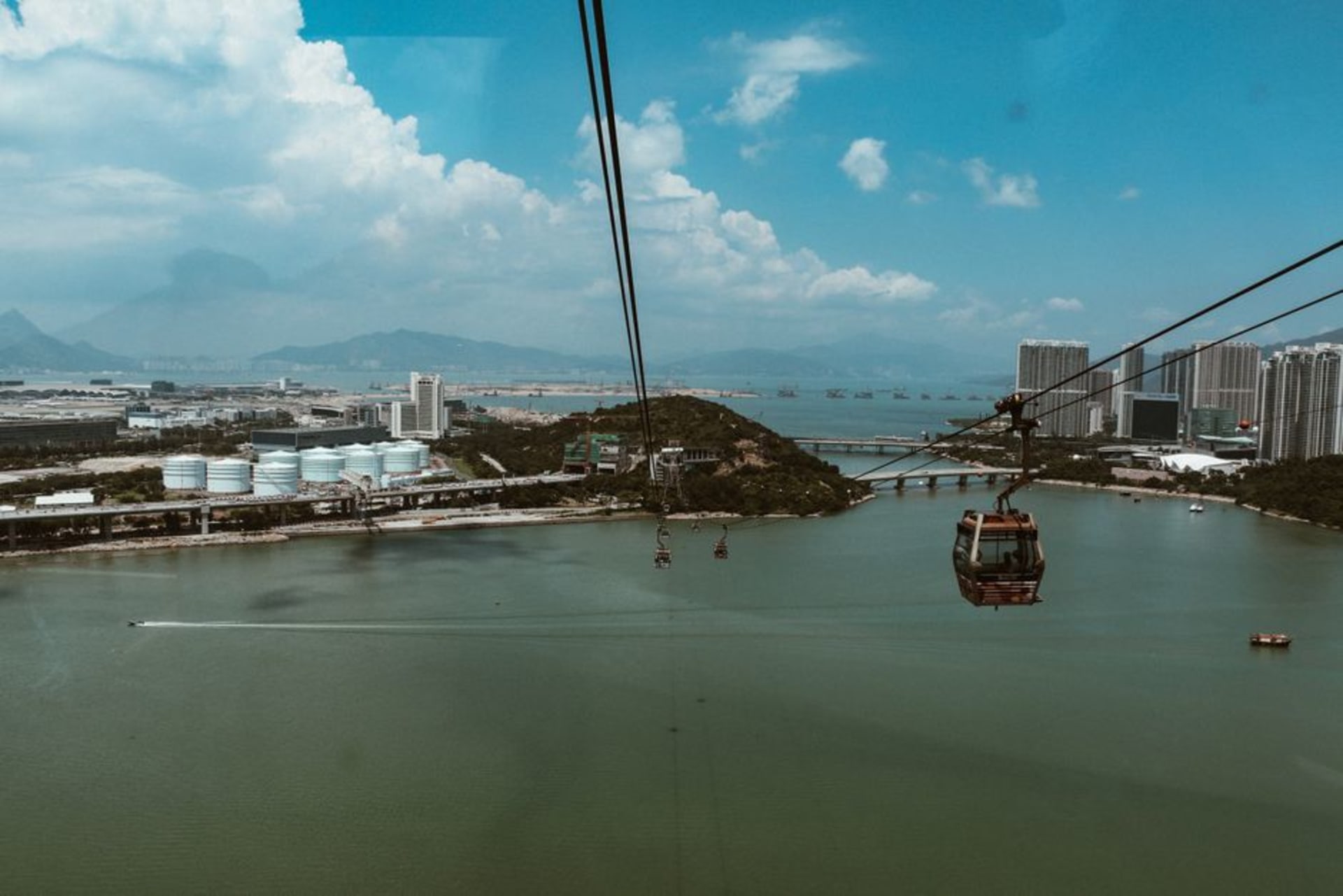
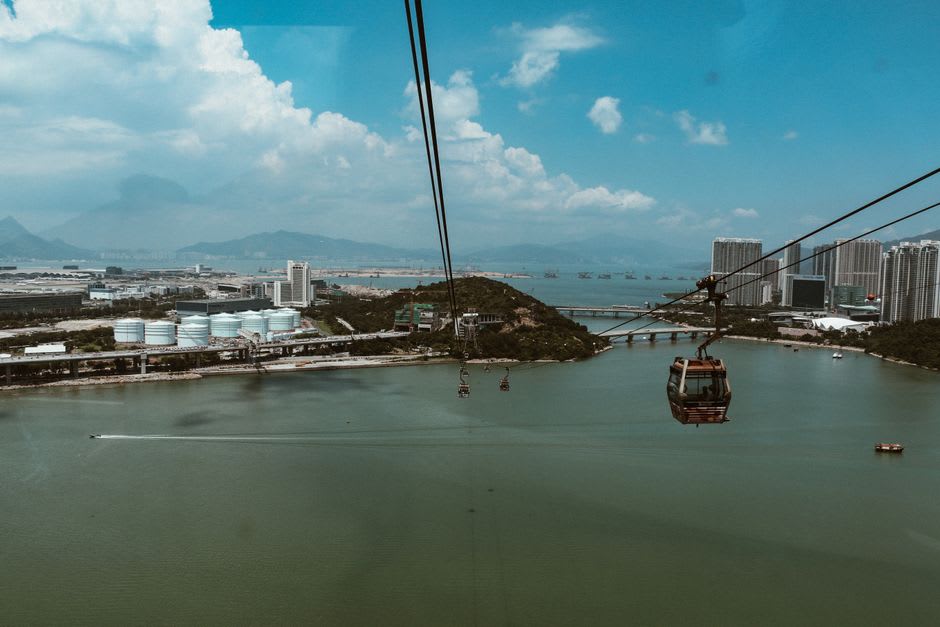
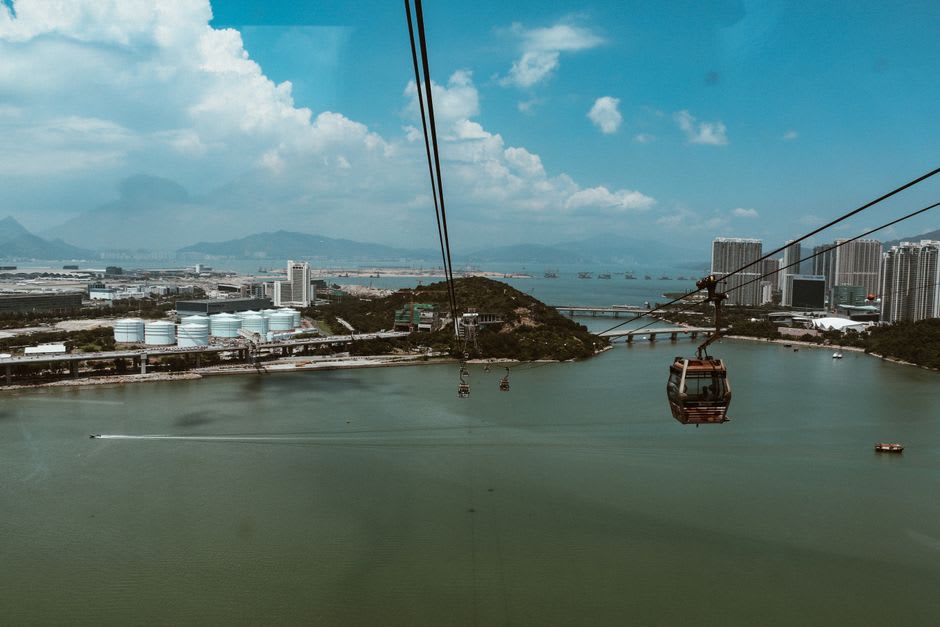
The cable car up to Ngong Ping leaves from Tung Chung, and for the first few minutes you are still very much in urban Hong Kong — container terminals, the airport runway laid out flat below you, the MTR line running alongside. Then the ground rises and the water disappears and you are suspended over Lantau’s forested peaks with nothing beneath you but a very long drop and, on a good day, a view all the way to Macau. Lia gets motion sick on almost everything with wheels but is somehow fine on cable cars, so she spent the twenty-five minute ride pointing out things I was too busy gripping the handrail to notice — a temple roof, a hiking trail switchbacking up a ridge, the crystal cabin option we did not pay extra for and, watching other cars go by with glass floors, do not regret.
The Tian Tan Buddha is the reason most people make this trip, and photographs undersell it — twenty-six metres of bronze, seated on a lotus throne at the top of two hundred and sixty-eight steps, facing north toward mainland China in a way that is apparently deliberate and symbolic and which I only understood after reading the plaque three separate times. Climbing the steps in the Hong Kong humidity is its own small pilgrimage, and the crowd thins the higher you go, which felt appropriate. From the base of the statue, the views back down across Ngong Ping plateau and out to the sea are the kind that make you stop talking for a minute, which for me is rare enough to be worth mentioning.
Po Lin Monastery, just below the Buddha, is still an active Buddhist site rather than a museum piece — incense smoke thick enough to sting your eyes, monks moving between the halls in saffron and grey, an enormous vegetarian restaurant that serves a set meal to visitors and pilgrims alike. I ate there on my second visit, mostly out of curiosity, and the food was better than the tourist-menu presentation suggested it would be — mock “meats” made from wheat gluten and mushroom, done with a technique that has clearly been refined over generations rather than invented for foreign visitors.
Ngong Ping Village, the cluster of shops and restaurants at the cable car terminus, is unapologetically touristy, and I’d budget your patience accordingly — treat it as a waypoint rather than a destination. The Wisdom Path, a short walk from the Buddha, is a better use of remaining time: a series of wooden pillars inscribed with the Heart Sutra, arranged in a figure-eight on a hillside with almost nobody else on it when we went.
When to go: October through December for clear skies and cool enough temperatures to enjoy the walking without arriving at the Buddha drenched in sweat. Check cable car status before you go, since it closes in high winds and during scheduled maintenance days, and arrive early to beat both the crowds and the afternoon haze that tends to settle in by midday.