Mong Kok
"I came looking for a market. I ended up in an argument about football with a man selling tropical fish."
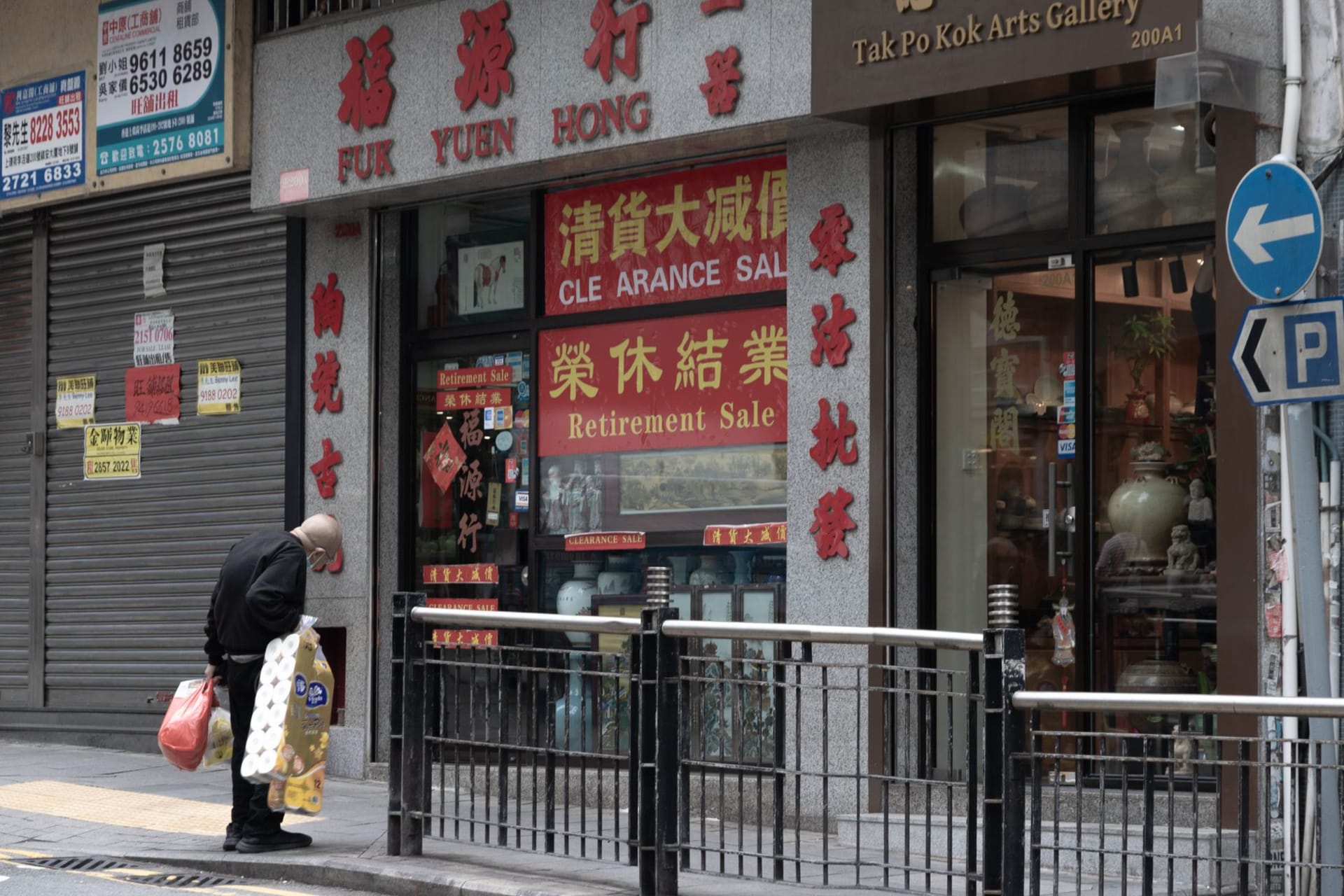
I had read that Mong Kok held the record for the highest population density of any place on earth. I did not fully understand what that meant until I stepped out of the MTR on a Thursday evening and the crowd immediately closed around me — not hostilely, just with the absolute certainty that there was no space not being used by someone. Somewhere above my head, signs in red and gold and white stacked four storeys up. The smell of roast meat from a cha chaan teng mixed with diesel and something sweet I couldn’t identify for a full block. Mong Kok is not a place that introduces itself gently.

The market streets are what most visitors come for, and they earn it. Tung Choi Street splits into two characters depending on which direction you walk: head north and it becomes the Goldfish Market — blocks of tiny shops where aquarium tanks are stacked floor to ceiling and shopkeepers carry fish in plastic bags with the ease of grocers carrying tomatoes. The sheer variety — fish I had no names for, corals, water plants in bunches — makes it feel less like commerce and more like a private obsession made public. Head south and the same street becomes the Ladies Market, which despite the name sells everything from bootleg sunglasses to kitchen gadgets to phone cases with unlikely sentiments printed on them. I bought a watch that lasted eleven days and have no regrets whatsoever.
The real Mong Kok is in the side streets. Sneaker boutiques line Fa Yuen Street — not chains, but specialists who can source trainers that don’t officially exist in most countries, who talk about colourways with the authority of sommelier. Bird Street, officially Yuen Po Street Bird Garden, sells singing birds in lacquered cages along with the seeds and live crickets to feed them, operating according to a culture of bird-keeping that is slowly fading but not yet gone. On weekend evenings the old men playing Chinese chess in the squares near Portland Street draw small crowds of kibitzers who comment loudly and freely on every move. One of them spoke some English and translated for me until we were both laughing at moves I didn’t fully understand.

The Flower Market on Flower Market Road is Mong Kok’s least chaotic pleasure — long buckets of fresh blooms that smell improbably good for somewhere this dense and this central. Orchids, chrysanthemums, roses in quantities I’d never seen before outside of a wholesaler. At dawn, when the market is restocking for the day, the whole block becomes a controlled chaos of beauty, vendors unloading van after van while the morning light comes sideways off the buildings and makes everything look briefly like a painting.
When to go: Mong Kok runs at full volume almost year-round. Weekday evenings have good energy without peak weekend crush. Chinese New Year transforms the Flower Market into something almost overwhelming in the best possible way — whole families buying orange trees and lucky blooms, the stalls open until midnight, everyone carrying something fragrant and alive on the MTR home.