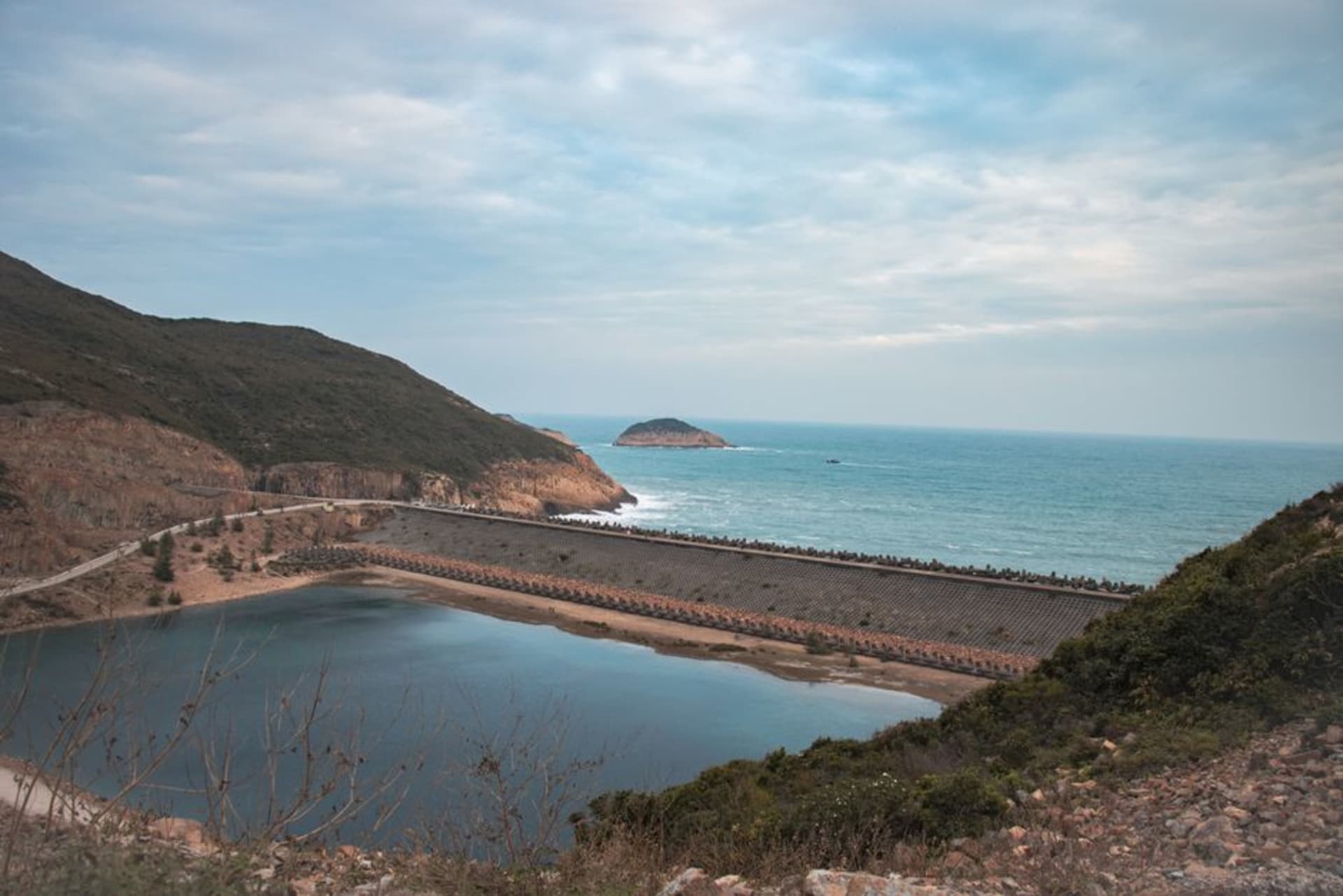
High Island Reservoir
"I have seen a lot of rock formations. I had never seen rock that looked like it had been folded by hand."
Hexagonal volcanic rock columns twisted sideways by ancient pressure, standing at the edge of a reservoir built where the sea used to be.
I did not expect geology to be the highlight of a trip to Hong Kong, and yet here we are. High Island Reservoir sits at the far eastern edge of Sai Kung Country Park, a freshwater reservoir engineered in the 1970s by damming a sea channel between two islands — an enormous feat of civil engineering that, on its own, would be a curiosity rather than a destination. What makes it extraordinary is what the dam construction exposed: hexagonal volcanic columns, some of the largest and most well-formed in the world, laid down around 140 million years ago when a supervolcano in the area cooled slowly enough to crack the rock into these near-perfect six-sided pillars.
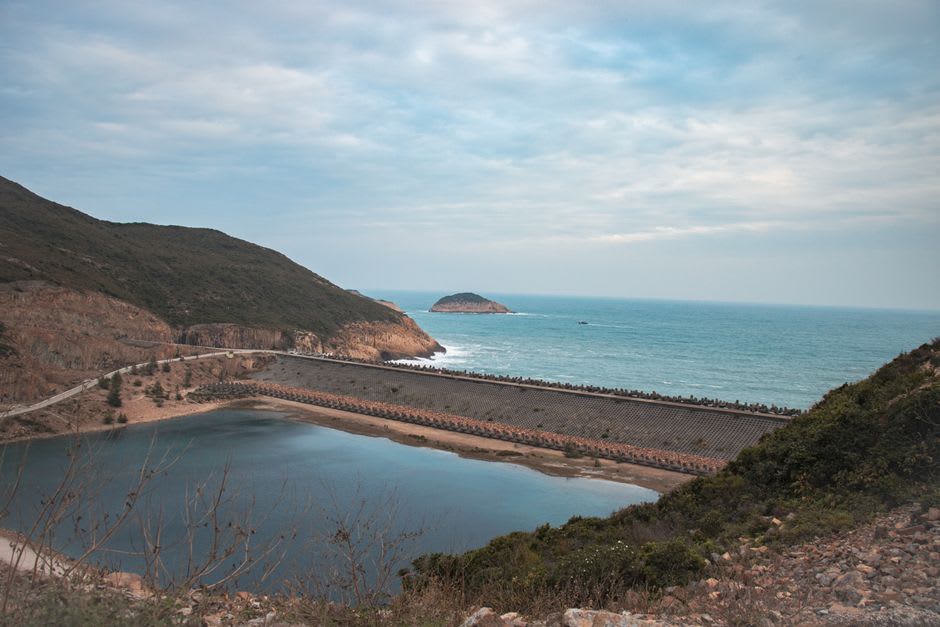
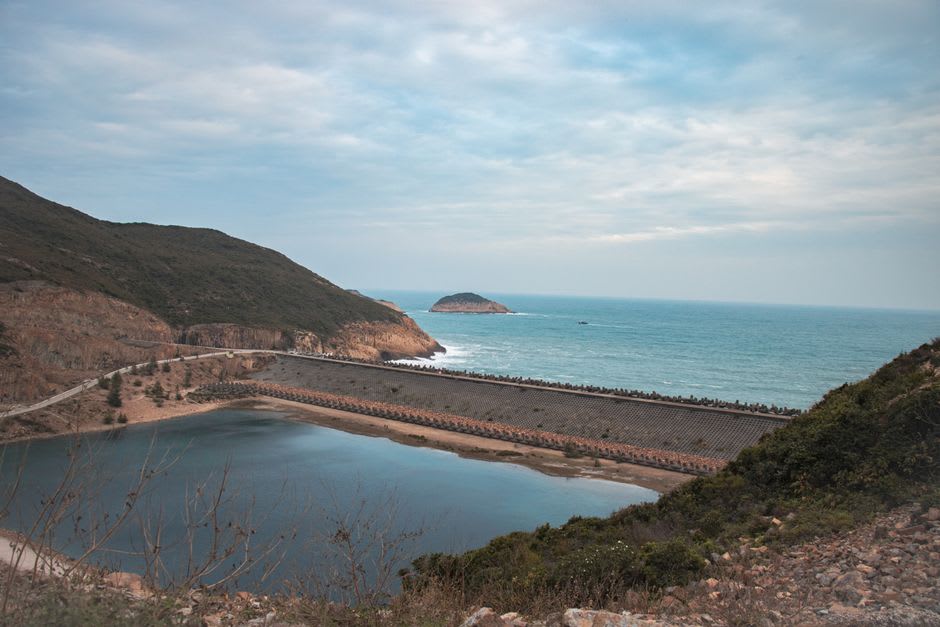
Getting there requires either a hired minibus, a taxi willing to make the run, or a fairly long hike in from Pak Tam Chung, and Lia and I opted for the taxi after underestimating the distance on a previous, aborted attempt on foot. The East Dam itself is a strange, slightly surreal place to stand — a narrow strip of engineered concrete with reservoir on one side and open ocean on the other, close enough that in a typhoon the two have been known to exchange water. But it’s the far side of the dam, where the coastal cliffs are made entirely of these hexagonal columns, that stops you.
Some sections of the columns run perfectly straight and vertical, like a stack of pencils viewed end-on. Others — and this is the part that genuinely unsettled my sense of what rock is supposed to do — are bent, curved into arcs and folds as if the stone had been pushed sideways while it was still soft. It wasn’t soft, of course; the folding happened over unthinkable timescales under pressures I can’t really picture. But standing next to a curved wall of six-sided stone columns, it is very hard not to reach out and touch it, which I did, more than once, as if my hand could confirm what my eyes were reporting.
A short walk from the dam leads to a viewpoint above Po Pin Chau, a narrow sea stack split from the mainland, where the columns rise straight from turquoise water in a way that makes the whole scene look assembled rather than natural. It’s one of the few places in Hong Kong where the geology, not the food or the skyline, is the entire reason to go.
When to go: Year-round is possible, but clear autumn and winter days (October to March) give the best light on the rock formations and the calmest water for photos. Hire a taxi or join a small group tour rather than attempting the full walk-in unless you have a full day to spare.