Tela
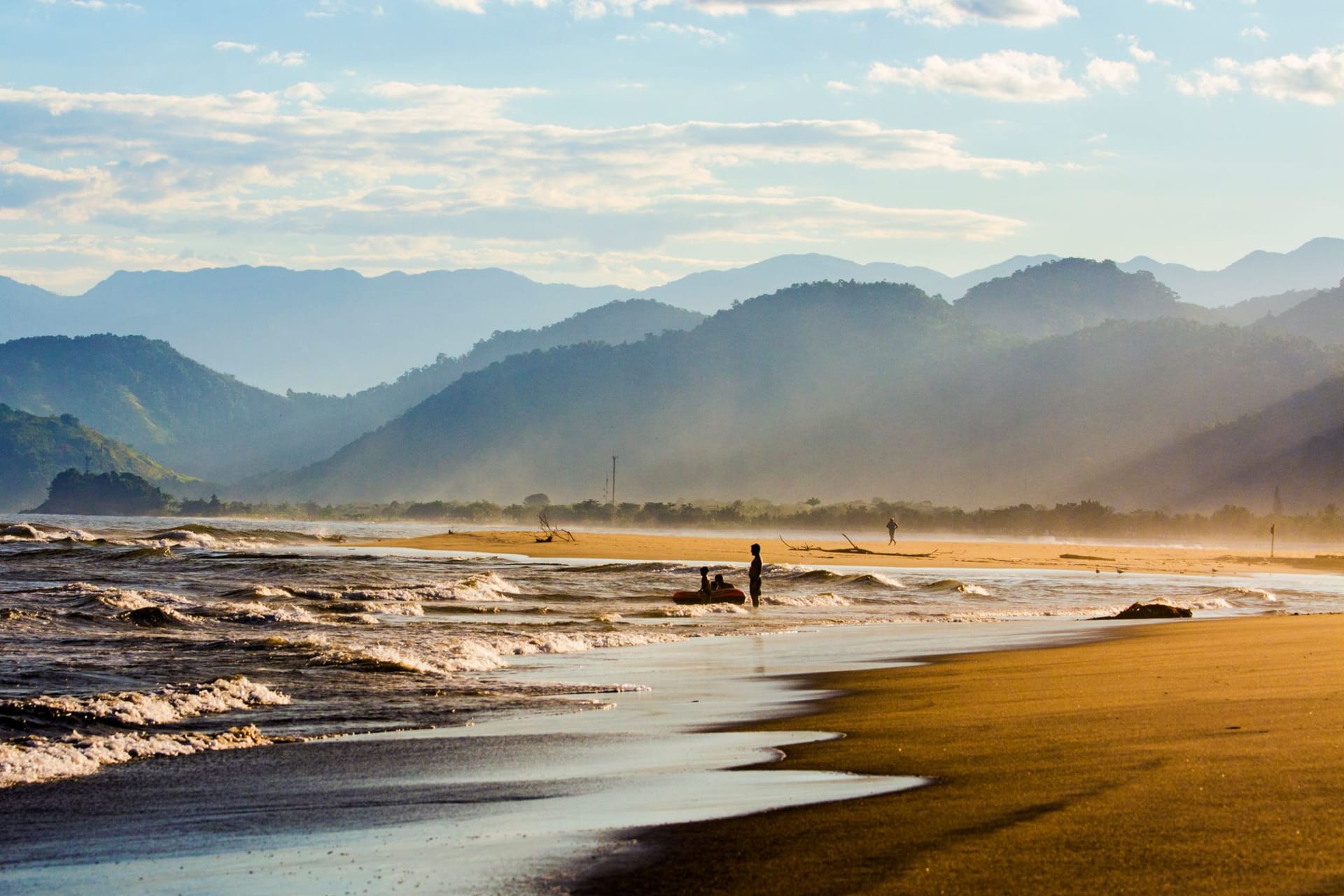
"The beach was so long I genuinely stopped checking how far I'd walked — which is either freedom or poor planning, depending on the day."
Tela has two distinct personalities separated by the mouth of the Río Tela. On the west side: the original Garífuna settlement, a grid of streets that smell of coconut oil and wood smoke, with fishing boats hauled up on black sand and women selling cassava bread from plastic-covered trays. On the east: Tela Nueva, built by the United Fruit Company in the early twentieth century for its American management — wide streets, white clapboard houses with wraparound porches, a peculiar ghost of corporate American tropics. I spent most of my time on the west side. It was less photogenic in an obvious way and considerably more alive.
The Garífuna Village of Miami
About seven kilometers west of town, the Garífuna community of Miami — yes, named for the American city, in a complicated history of migration — sits at the edge of Punta Sal peninsula and the beginning of the Jeannette Kawas National Park. I got here by colectivo taxi along a sand track that became increasingly optimistic as a road, and arrived at a village of maybe three hundred people where children were playing in the surf and someone was playing punta music from inside a house that hadn’t introduced glass into its windows yet. I ate at a family-run place on the beach: tapado, the Garífuna seafood stew made with coconut milk and whatever the boats brought in that morning, served with a heap of rice and a bottle of cold water that was more refreshing than any beer I’ve had.
Parque Nacional Jeannette Kawas
The park — named for the Honduran environmental activist murdered in 1995 for her work protecting this coastline — encompasses mangrove lagoons, coral reef, seagrass beds, and more than three hundred bird species. The way in is by boat from the Miami village dock, negotiated the evening before with a fisherman whose name I didn’t catch but whose boat was called La Confianza, which felt auspicious. We motored through channels in the mangroves where the roots arch into the water like cathedral ribs, past lagoons full of herons and roseate spoonbills, and out to a beach that appeared to have no other people on it at all. That beach exists. It takes forty minutes of mangrove travel to reach it and it is entirely worth the math.
The Tela Waterfront at Night
The central beach of Tela proper is wide and flat and lined with palms, and in the evenings the whole town seems to pour onto the malecón — families, vendors selling elote and chicharrón, groups of teenagers navigating the complex social choreography of being seventeen. The water at dusk turns a deep orange-pink that reflects on wet sand in the way that makes you understand why people build their whole lives around coastlines. I sat on the malecón until ten and nobody asked me to leave or buy anything or explain myself.
The United Fruit Legacy
The east-side Tela Vieja neighborhood — built as Tela Nueva by United Fruit, the terminology now reversed by irony — retains a strange beauty. The company houses are mostly occupied now, slightly deteriorated, but the scale of the planning is still visible: a commissary, a hospital building, a club. Honduras’s whole twentieth century ran through this town. The banana trains are gone. The white houses remain, peeling slowly in the Caribbean sun.
When to go: February through May is dry season and the best time for beach weather and boat trips into Kawas park. The Garífuna Yurumein festival in April celebrates the arrival of the Garífuna people in Honduras with drumming and dance that draws visitors from across the coast. June through October brings rain and occasional storms — the park can be rough for boats, but the town itself remains pleasant and much quieter.