Lago de Yojoa
"I came for the birds and left thinking mostly about the beer — which is a more honest travel outcome than most."
I want to be upfront about something: I am not a birdwatcher. I own no binoculars, I cannot reliably distinguish a heron from an egret at close range, and the eBird app on my phone has exactly four entries, all from the same confused afternoon in Oaxaca. But Lago de Yojoa converted me, at least temporarily, into someone who set an alarm for five in the morning and stood in a cold mist watching the lake surface for movement with something approaching devotion. There are over four hundred species recorded here. You don’t need to know their names to understand that this is a remarkable piece of water.
The Lake at Dawn
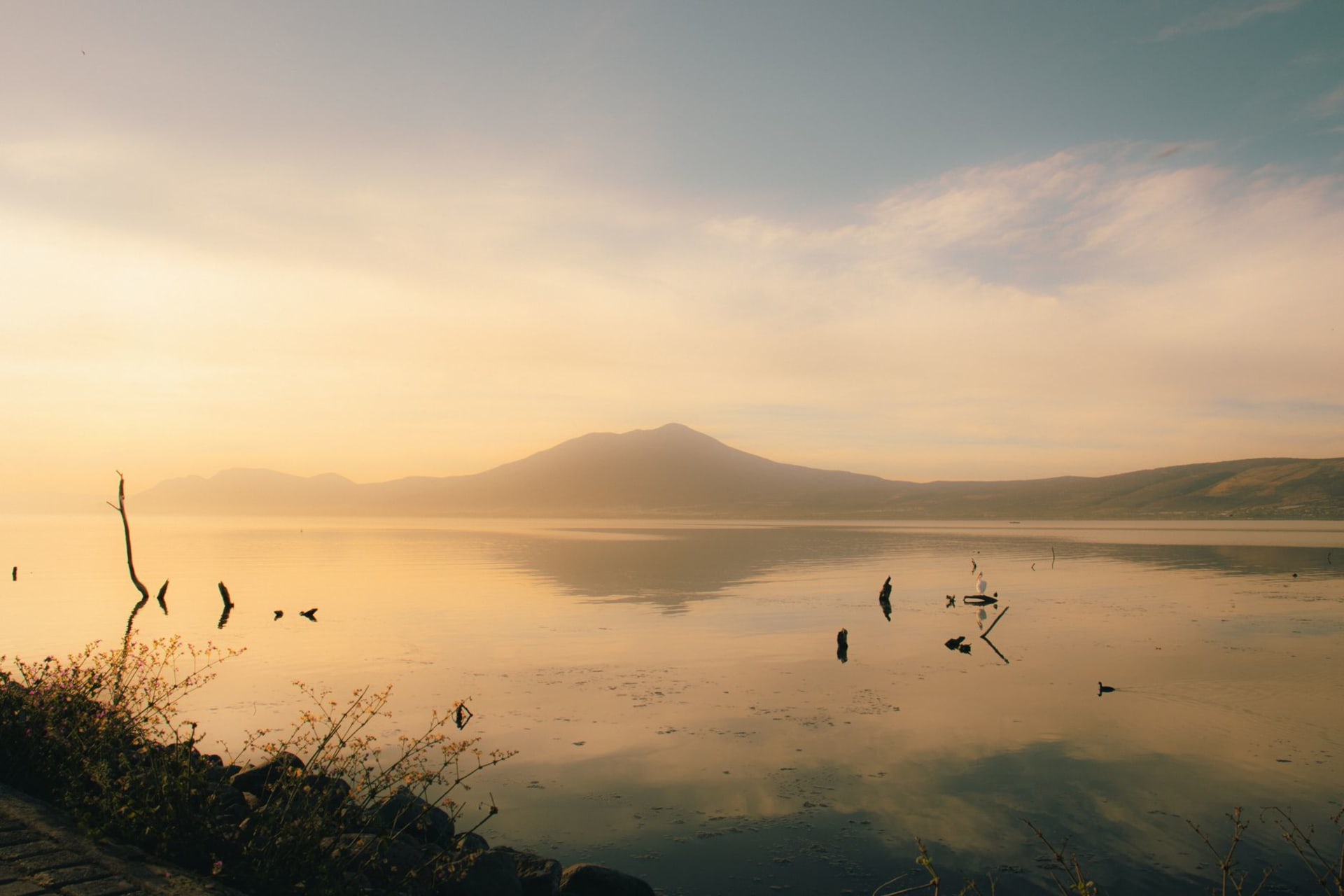
Yojoa sits at about 640 meters elevation, flanked by Cerro Azul Meámbar to the east and Santa Bárbara to the west. The mornings have a weight to them — heavy with humidity, smelling of vegetation and mud and the particular green smell of still water — and the light comes in slowly through cloud that usually doesn’t burn off until nine or ten. I hired a fisherman named Cristóbal to take me out in his dugout before sunrise. He charged the equivalent of five dollars and said nothing for the entire two hours, which was exactly the right move. We floated past herons that didn’t acknowledge us, and at one point a kingfisher shot across the bow like a thrown stone.
D&D Brewery
This might seem like an abrupt segue but it isn’t: one of the legitimate reasons to visit Lago de Yojoa is a craft brewery called D&D, operated by an American family on the lake’s north shore and producing the best beer I had anywhere in Central America. The taproom is open-air, looking out over the water, surrounded by trees full of birds whose names I still can’t tell you. The pale ale is cold and hop-forward and tastes almost surreal after weeks of Salva Vida. I had three in a row watching a pair of ospreys work the shallows and felt no guilt whatsoever.
The Waterfalls Above the Lake
The eastern shore near the town of Peña Blanca gives access to several waterfalls that tumble off the flanks of Cerro Azul Meámbar. The most visited is Pulhapanzak, on the Lindo River — a proper cascade that drops about forty meters into a turquoise pool, and in which it is possible (for an extra fee and with a guide) to swim behind the curtain of water through a narrow cave. Lia refused this on the grounds that it looked like a very effective way to drown, which is a fair read. I went anyway. The sound inside that cave — everything amplified, water everywhere — is one of those sensory experiences you can’t photograph.
Eating at the Lakeside Comedores
The shoreside restaurants near Los Naranjos serve fried mojarra — a local freshwater fish — with rice, fried plantains, and curtido, the Central American pickled slaw that improves everything it touches. It costs almost nothing, arrives fast, and tastes like the lake itself: clean, a little muddy, deeply satisfying. I ate here three times in two days and only stopped because I ran out of excuses to stay.
When to go: The dry season (November through April) means clearer skies and better visibility for birding, but the lake holds its birds year-round. Cerro Azul Meámbar’s cloud forest is actually moodier and more atmospheric in the rainy season if you don’t mind damp. Pulhapanzak Falls runs highest after rains — dramatic but the cave swim is rougher. Midweek is noticeably quieter than weekends.