An eastern highland town built on cigars and corn, where a festival dedicated entirely to maize shuts down the streets once a year and cigar factories keep working every other week of it.
Danlí sits in El Paraíso department, close enough to the Nicaraguan border that the accents and the rhythm of daily life felt subtly different from anywhere else I’d been in Honduras — a little slower, a little more insular, the kind of town that clearly doesn’t organize itself around visitors because it rarely gets many. I arrived a few days before the Feria del Maíz, the annual corn festival that has run for decades and takes over the entire town center with parades, corn-based dishes I’d never encountered before, and a genuinely infectious civic pride in a crop most people elsewhere take completely for granted.
Before the festival crowds arrived, I toured a small cigar factory on the edge of town — Danlí shares the tobacco tradition of Santa Rosa de Copán further west, built by the same wave of post-revolution Cuban expertise, though on a smaller and less internationally marketed scale. The roller who showed me around, a man who’d been doing the job for over thirty years, moved through the process with an economy of motion that made it look less like craft and more like breathing, and the finished cigars were bundled and stacked in a back room that smelled overwhelmingly, pleasantly, of cured tobacco.
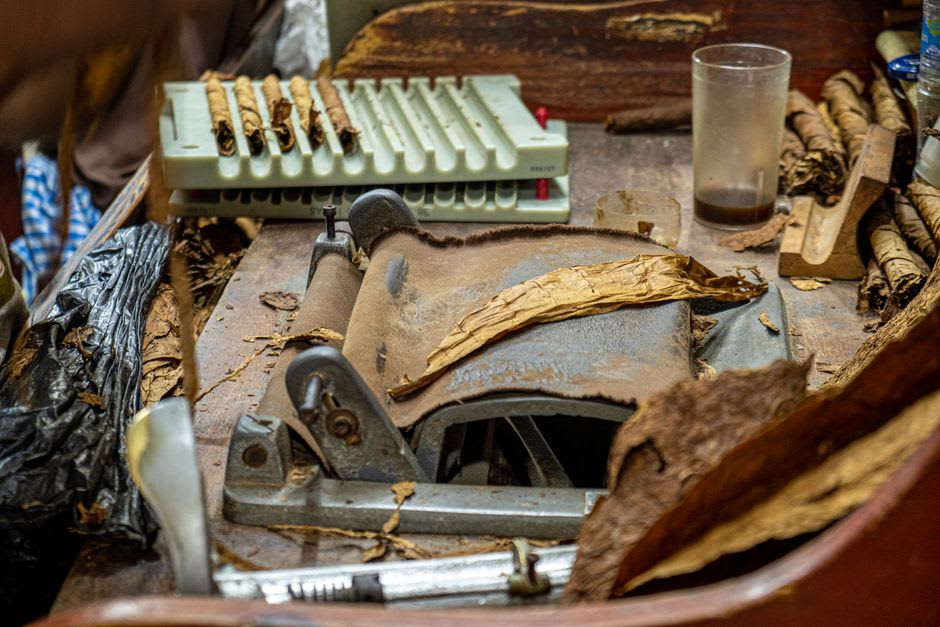
The colonial center, modest compared to bigger western towns, still has a plaza worth an evening walk — a church, a scattering of food carts, kids playing football against a wall painted with a mural I never fully understood but liked regardless. During festival week the whole plaza transforms: corn tamales, elotes locos piled with condiments, atol de elote served hot despite the daytime heat, and a parade with floats built almost entirely from corn husks and stalks, an agricultural celebration with a level of civic effort I hadn’t seen directed at a single crop anywhere else.
A short trip out of town, the road toward Yuscarán climbs into cooler hill country known for its aguardiente distilleries, and I spent an afternoon there with a friend I’d made in Danlí, tasting the local cane liquor at a small operation that had clearly been doing this the same way for generations. It felt like the kind of detour nobody plans but everybody’s glad they took.
When to go: The Feria del Maíz runs in early August and is worth timing a visit around if festivals interest you. Cigar factory visits are possible year-round on weekdays — call ahead, as most are small family operations without formal tourist schedules.
Keep exploring
More from Honduras
 honduras
 Gracias
The colonial capital of Central America for a brief sixteenth-century moment, now a quiet mountain town of cobblestones and thermal springs at the foot of Honduras's highest peak.
Explore honduras
 Isla del Tigre
A volcanic island in the Gulf of Fonseca where Honduras's Pacific coast quietly exists, black sand beaches ringing a cone with three countries' volcanoes visible from the summit.
Explore honduras
 La Ceiba
Honduras's self-declared party capital where white-water rivers tumble out of cloud forest and straight into a Caribbean coast that never quite sleeps.
Explore honduras
 La Mosquitia
The largest intact rainforest north of the Amazon — a roadless wilderness of river channels, indigenous villages, and almost complete silence that requires effort to reach and rewards that effort without reservation.
Explore honduras
 Lago de Yojoa
Honduras's only natural lake sits between two national parks in a bowl of cloud forest, producing the country's best craft beer and some of Central America's most rewarding birdwatching.
Explore honduras
 Marcala
A misty highland coffee town in La Paz department where cooperatives have quietly built one of Central America's most respected organic coffee regions.
Explore