Otaru
"Otaru does that specific thing a good small city does — it makes you wish you lived there instead of just visiting."
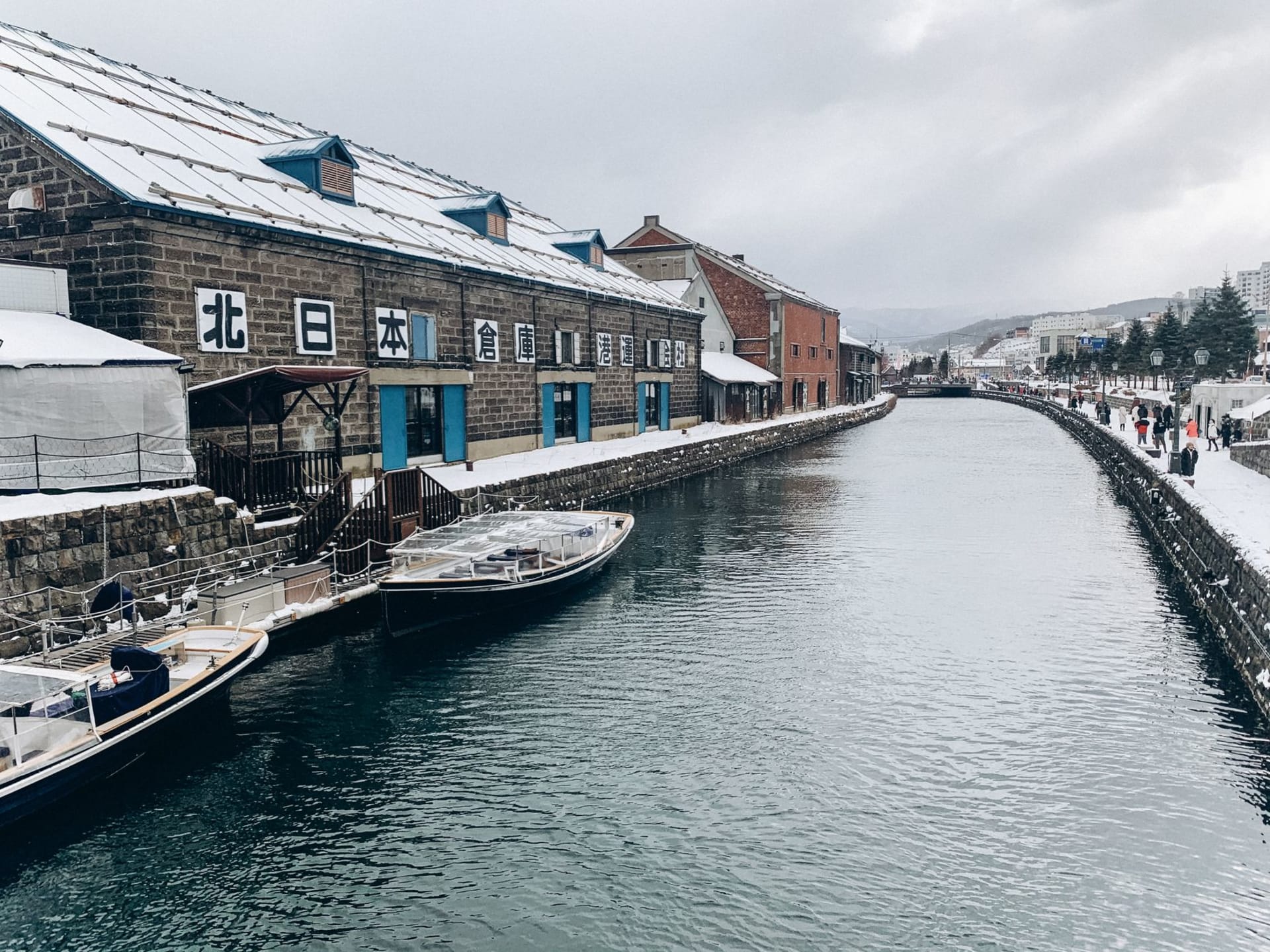
I arrived in Otaru on a grey February afternoon, stepping off the train to find the canal already lit with gas lanterns in the dusk, their yellow light trembling on the dark water. The canal runs through the old herring district — this was once the wealthiest town in Hokkaido, when the herring came in such astronomical numbers that fishermen grew rich overnight, built stone and brick warehouses along the water, and then watched the herring population collapse in the 1950s and take the fortune with it. What remained were the buildings, which are now restaurants and wine bars and music box shops and glassblowing studios, and a harbor that still functions even as it has learned to coexist with tourism. I walked the canal bank in the cold for half an hour, my breath visible, watching the lantern light shift on the water, and felt that particular pleasure of arriving somewhere that has made something beautiful out of something lost.
The glassblowing tradition came to Otaru through the fishing industry — the floats used for herring nets were blown glass, and the local craftsmen who made them eventually turned their skills toward decorative work when the fish disappeared. The glass shops along Sakaimachi Street sell everything from simple spheres to elaborate chandeliers, and the workshops in the back of some of them are open to visitors. I watched a glassblower work in one shop for twenty minutes, the molten glass moving on the end of his pipe like something alive, the colors introduced by metal oxides as vivid as stained glass in bright sun. He didn’t seem to notice me watching and I didn’t disturb him. The work required a quality of attention that shouldn’t be interrupted.
For a town of its size, Otaru’s sushi is remarkable. The fish comes off boats from the Sea of Japan and the canal-adjacent Otaru port, and the several sushiya on the narrow streets behind the Sankaku Market have the slightly exhausted confidence of places that don’t need to prove themselves. I sat at a counter and ate a succession of nigiri — amber-colored firefly squid so fresh they were still translucent, pale ikura that burst differently from the mass-produced kind, flounder so white it was almost blue. The counter chef worked without speaking much, placing each piece in front of me with a slight tilt, the way you’d present something worth looking at.
The Otaru Music Box Museum occupies a converted former rice warehouse near the canal, and is the kind of place you expect to be tacky and find unexpectedly affecting. The collection runs to thousands of boxes, from tiny Swiss mechanisms to elaborate Japanese lacquer pieces that play for several minutes, and the sound they collectively produce when the floor is quiet — a layered, overlapping shimmer of different melodies at different tempos — is genuinely strange, like music being discussed by several people at once.
When to go: Year-round, though each season has its character. Winter is the most atmospheric — the canal lanterns against snow is the image most associated with the town, and the Otaru Snow Light Path festival in February fills the canal banks with hand-made candles. Summer brings easier travel and better weather for cycling along the canal. Autumn is quiet and underrated. Spring, when the cherry trees along the canal bloom, is very brief and very good.