
Noboribetsu
"The sulfur hits you at the bus stop — Noboribetsu announces itself the way very confident places do."
The bus from Noboribetsu station dropped me at the onsen resort village and I smelled it before the doors were fully open: that specific dense sulfur smell, the egg-and-mineral combination that is either deeply unpleasant or deeply reassuring depending entirely on your relationship with volcanic heat. In the fifteen minutes since the snow had started, and the resort street — all ryokan facades and souvenir shops — was coated in white, the sulfur smell rising through it like something unwilling to be covered. I picked up my bag and walked toward the steam.
Jigokudani — Hell Valley — sits a ten-minute walk above the village, a volcanic valley where the Noboribetsu hot spring system vents its excess through boiling pools and fumaroles in the grey earth. The landscape is barren by design: the sulfurous gases kill most vegetation on the valley floor, and what remains is pale yellow and grey rock, pools of cloudy water in impossible greens and whites, and steam that moves horizontally in the wind like something trying to escape. The color of the water changes by the hour depending on which mineral solution is dominant — I saw the same pool pale green at ten in the morning and milky white by two in the afternoon. A wooden walkway loops the valley, and visitors move along it with a speed that suggests everyone is equally uncertain whether to hurry through the smell or to stop and appreciate how completely the place commits to its theme.
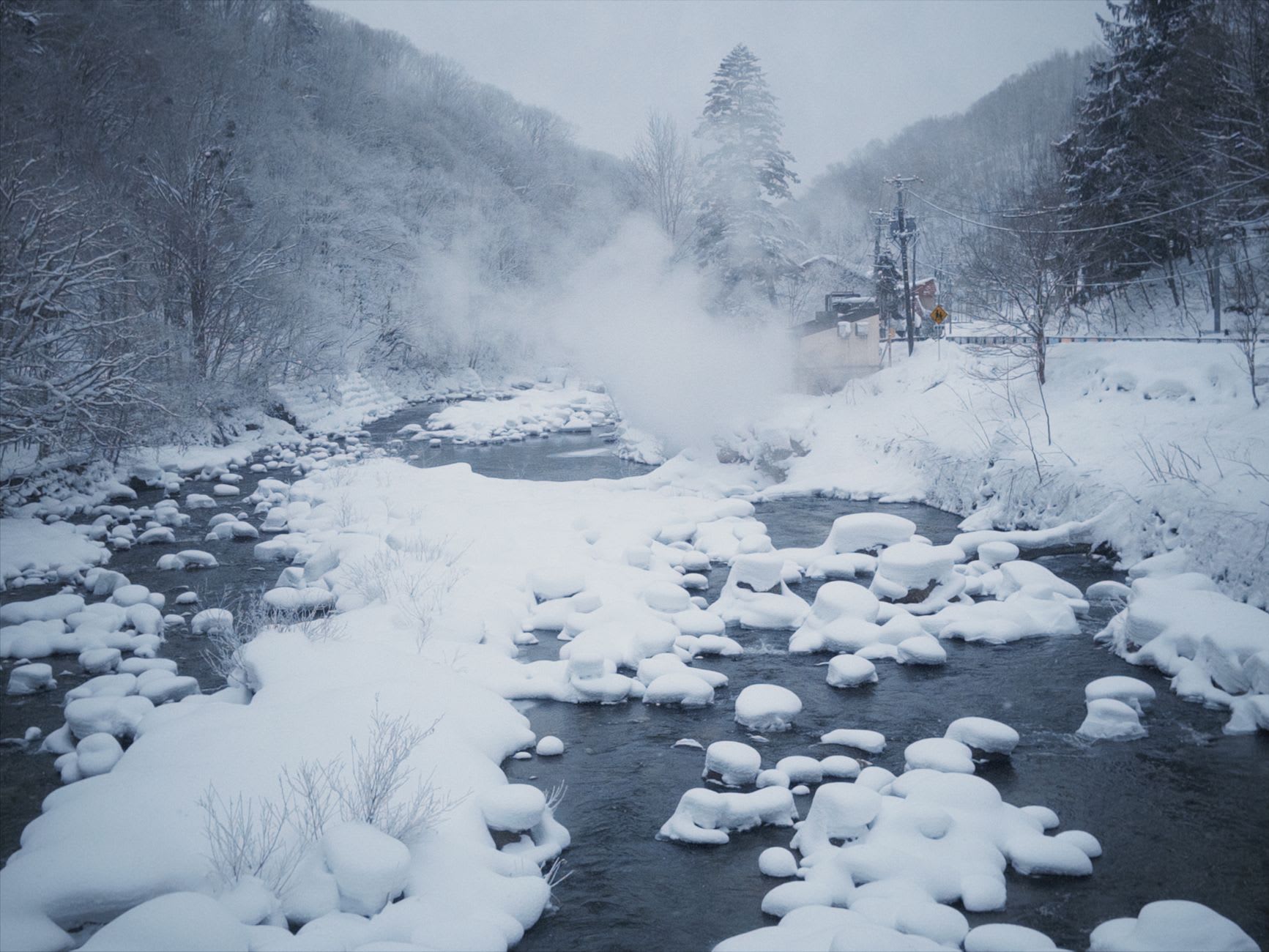
The ryokan I had booked had eight types of bath — or so claimed the card slipped under my door at check-in. I understood this to be standard hot spring resort marketing and went to test it. Eight turned out to be roughly correct. The milky-white sodium chloride pool. The iron spring that left my skin smelling faintly metallic. The outdoor rotemburo looking into a bamboo garden, snow gathering on the rim of the wooden bath while my hair froze in the cold air. The indoor bath of near-black water from the manganese spring, uncomfortably hot, the kind of hot where you get out before you want to. I spent four hours cycling through them with short breaks for cold water and a nap, and emerged at seven for dinner feeling so thoroughly cooked and replenished I could barely hold a conversation. The dinner was kaiseki — a succession of Hokkaido ingredients presented in the elaborate form of a traditional multi-course meal — and I ate it slowly and gratefully and almost fell asleep over the final miso soup.
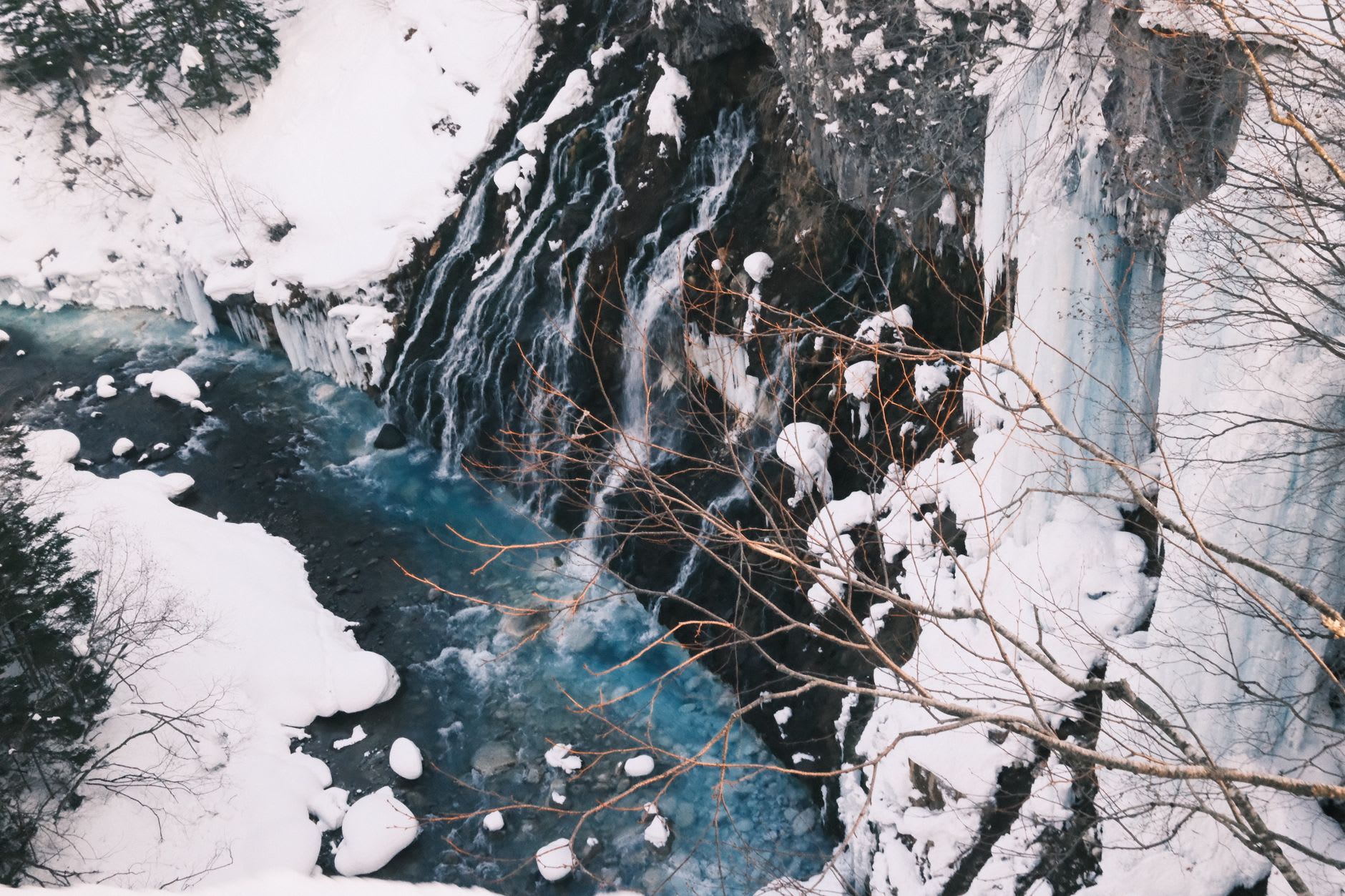
The surrounding area holds more than the valley. Kuttara Lake, twelve kilometers north, is a caldera lake of exceptional clarity and peculiar isolation — no rivers feed it or leave it, like Mashu, and it has the same contained, self-sufficient quality. The forest along the Noboribetsu River above the resort holds brown bear territory, and in spring the bears are occasionally spotted from the resort area itself, which the hotel staff mentioned with the casual pride of people who find wildlife a reasonable feature of daily life rather than an inconvenience.
When to go: Year-round. The onsen are the reason to come and the onsen work in every season. Winter is the most atmospheric — bathing outdoors while snow falls is a specific pleasure available nowhere else at this concentration. The Snow Festival in February draws visitors but the resort is large enough to absorb them. Summer is quieter, the valley walk more comfortable, the surrounding forest walkable. Avoid Golden Week in early May if you dislike crowds.