Biei
"The road kept offering another perfect view and I kept stopping the bike — Biei is a place that makes you late for things."
I had rented a bicycle in Biei town and set out for the Patchwork Hill course on a morning in early September when the light had that particular autumn sharpness, the kind that makes distant things look close and close things look significant. The road climbed gently away from town through fields of potato and wheat, the hills folding and unfolding around each bend, and I understood within twenty minutes why the photographers come here. These hills don’t have dramatic peaks or waterfalls or obvious focal points. What they have is composition: the way the colors of different crops divide the slopes into broad irregular panels — green beet against golden wheat against dark brown fallow against the pale green of late soybeans — and the way the sky here, with no mountains crowding the horizon, seems to go on forever above it all.

The Blue Pond — Shirogane Blue Pond — sits about twenty minutes south of town on the road toward Shirogane Onsen. I had seen photographs and was prepared to be underwhelmed, which is sometimes the only preparation that works. What I found was a stretch of still water the color of aluminum or slate depending on the light, with the bleached white trunks of dead birch and larch trees standing in it at odd angles, their reflections broken by the surface. The color comes from aluminum hydroxide seeping from the volcanic rock upstream — a geological accident that looks entirely deliberate, like someone installed the lake as a design feature. In the photographs it looks unreal. Standing in front of it, it still looks unreal, which is unusual. Most places that look unreal in photographs look disappointingly normal in person. This one holds.
The road that loops north of town — past the Ken and Mary Tree, the Seven Stars Tree, the Christmas Tree Tree, all poplars and oaks and elms that have become tourist attractions by virtue of being beautiful specimens in photogenic locations — is best cycled in the late afternoon when the shadows lengthen and the light turns the fields to warm gold. By then most of the tour buses have gone, and you have the roads largely to yourself, moving slowly through a landscape that seems designed for exactly this pace.

Biei town itself is modest — a main street with a few restaurants, a bakery that makes excellent curry bread, a small local cheese producer whose shop sits at the edge of the fields. I ate lunch at a counter restaurant run by a woman who served only one thing, a set lunch of local vegetables and grilled pork, changing daily. The pork had the mineral quality you get from animals that eat good grass and move around. The potato salad was made from a Hokkaido variety I didn’t know, dense and yellow, with a flavor that had nothing in common with the watery supermarket potato I grew up with.
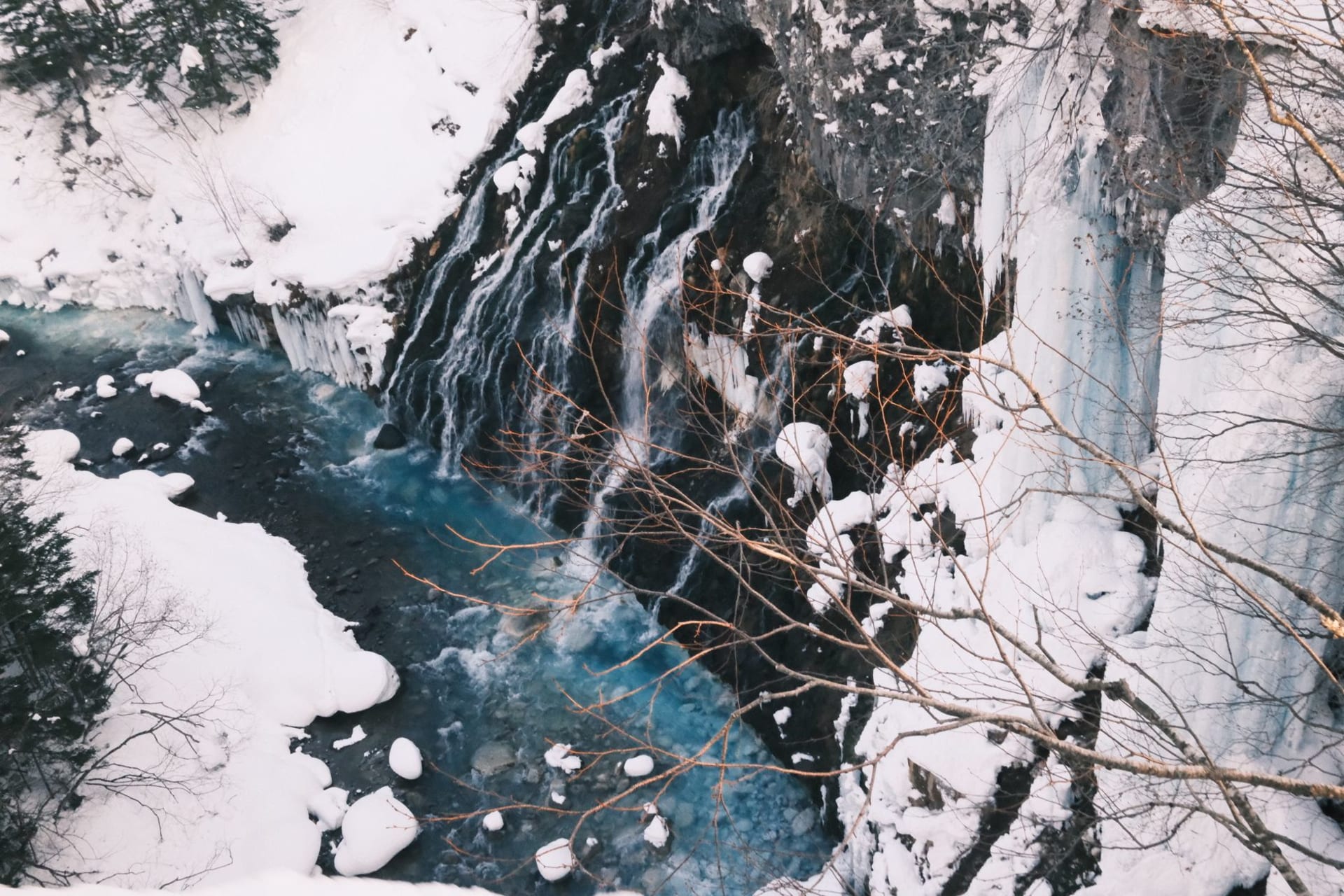
When to go: June through October. Late June brings green fields of canola and beet. July sees sunflowers. September is the best month — harvest colors, clear skies, and the autumn light that makes the hills glow. Winter is spectacular if you have a car: the snow-covered fields are beautiful and the Blue Pond takes on a different character entirely when half-frozen.